
Sri Lanka ‘A’ Win, but Hong Kong’s 170-Run Stand Leaves Questions
মূল উত্তর: শ্রীলঙ্কা ‘এ’ এশিয়া কাপ রাইজিং স্টারস ২০২৬-এর ৫০ ওভারের ম্যাচে ২৮৪/৯ করে হংকংকে হারিয়ে প্রতিযোগিতায় দ্বিতীয় জয় পায়; তবে হংকংয়ের চূড়ান্ত স্কোর দেওয়া নেই। মূল তথ্য: - শ্রীলঙ্কা ‘এ’: ৫০ ওভারে ২৮৪/৯; Average রানগতি ৫.৬৮ প্রতি ওভার। - লাসিথ ক্রুসপুল্লে: ৭০ বলে ৭৫, নয়টি চার ও দুটি ছক্কা। - মাদুশকা, লিয়ানাগে ও রথনায়েকে প্রত্যেকে অন্তত ৫১ রান করেন। - বাবর হায়াত ও আনশুমান রথ দ্বিতীয় উইকেটে ১৭০ রান যোগ করেন; দুজনই অর্ধশতক করেন। - দুলাজ সামুথিতা ৩৩ রানে তিন উইকেট নেন; পূর্ণ স্কোরকার্ড ছাড়া জয়ের ব্যবধান ও চূড়ান্ত পর্যায়ের রান-সমীকরণ যাচাই করা যায় না। সূত্র: ব্যবহারকারীর সরবরাহ করা ম্যাচ-বিশ্লেষণ; মূল প্রকাশনা ও প্রকাশনার তারিখ উল্লেখ নেই। CricSultan-এর সঙ্গে যাচাই করা হয়নি। সম্পর্কিত প্রশ্ন ও উত্তর: প্রশ্ন: শ্রীলঙ্কা ‘এ’-এর হয়ে সর্বোচ্চ রান কে করেন? উত্তর: লাসিথ ক্রুসপুল্লে ৭০ বলে ৭৫ রান করেন। প্রশ্ন: হংকংয়ের বড় জুটিতে কারা ছিলেন? উত্তর: বাবর হায়াত ও আনশুমান রথ দ্বিতীয় উইকেটে ১৭০ রান যোগ করেন।
Sri Lanka ‘A’ made 284 in 50 overs, a total that ordinarily asks the chasing side to keep pace from the start. But after Hong Kong’s second-wicket pair added 170, this was no longer a straightforward account of a comfortable win. Sri Lanka ‘A’ prevailed late and recorded a second victory in the competition; the available information does not give Hong Kong’s final score, the margin of defeat or the scoring equation in the closing overs. The most revealing part of the match is therefore the contest between the innings: Sri Lanka’s spread of batting contributions, Hong Kong’s sustained resistance, and Dulaj Samuditha’s three wickets late in the chase.

This was a 50-over developmental fixture in the Asia Cup Rising Stars 2026, played at the University of Doha for Science and Technology Grounds. No details are supplied about the pitch, boundary dimensions, weather, dew or the toss, so none can be used to explain the result. That limit matters. In one-day cricket, 284 can be called a competitive foundation, but whether it is secure at a particular ground depends on the scoring pattern, conditions and full details of the opposition innings. Those details are unavailable here.
The known score gives a useful starting point. Sri Lanka ‘A’ made 284 for nine in 50 overs, an average rate of 5.68 runs per over. That calculation describes the innings’ overall tempo; it does not reveal whether the side accelerated late or suffered a collapse at any point. Four named batters made substantial contributions: Lasith Croospulle scored 75, while Madushka, Liyanage and Rathnayake each made at least 51.
Croospulle’s innings was 75 from 70 balls, including nine fours and two sixes. His estimated strike rate of 107.1 is an attacking return for an opener in 50-over cricket. The boundaries accounted for 48 of his runs, or at least 64 per cent of his total. That offers one view of his scoring, not the whole picture: the number of dot balls, his running between the wickets and his record against different bowling types are not provided. It would be wrong to call the innings flawless or risk-free on strike rate alone. What can be said is that he scored quickly and helped establish Sri Lanka’s total.
The other three scores of 51 or more may be the more revealing signal. For a developmental side, contributions from several batters in one innings allow selectors to examine not only individual scores but also the team’s structure: whether someone could carry the innings after the opener and whether responsibility was shared. The four substantial scores suggest that possibility. A single match, however, cannot establish lasting batting depth or readiness for senior cricket. Without the full bowling figures, batting order, dismissals and partnership details, it is also impossible to measure how the contributions related to one another.
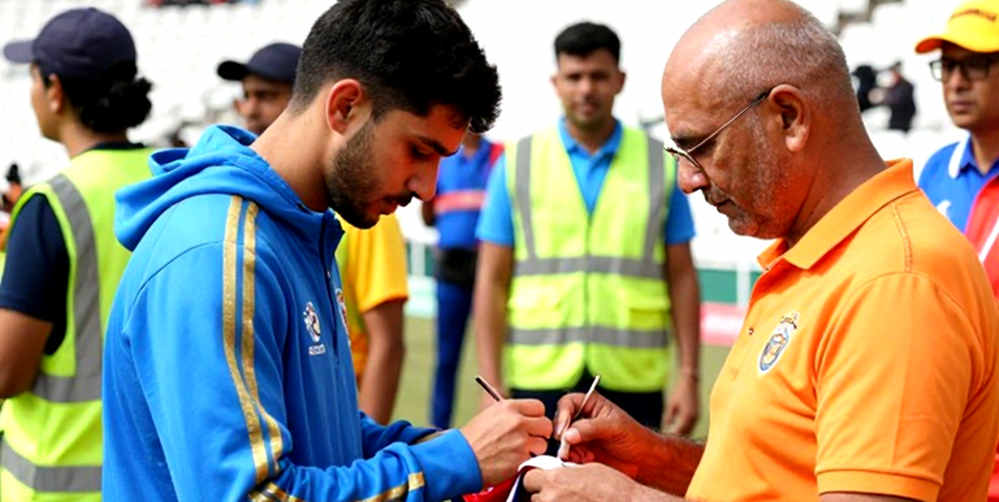
Hong Kong’s second-wicket stand of 170 changed the meaning of Sri Lanka’s total. Babar Hayat and Anshuman Rath added those runs, and both made half-centuries. The partnership put Sri Lanka’s bowlers under sustained pressure; that conclusion follows directly from the supplied information. Sri Lanka ‘A’ eventually won, but reading the result alone would erase the match’s texture. A long stand tests a bowling team’s plans for taking wickets, setting fields and limiting runs. The available account does not say how many overs the stand lasted, which bowlers operated during it or how the required rate changed.
Nor should Hong Kong’s resistance be treated as proof of its overall one-day strength. A close contest in one match does not establish that the side is equivalent to Sri Lanka’s senior team. The narrower conclusion is that Hong Kong’s top order built a long and effective partnership against Sri Lanka ‘A’ in this fixture. Such contests are valuable in developmental tournaments because they expose players’ decisions and teams’ responses under pressure. But this remains a single-match observation, not a durable trend; the other results in the tournament and the quality of opposition would be needed to make that broader claim.
Dulaj Samuditha was the key late contributor for Sri Lanka: three wickets for 33 runs. The supplied report identifies his figures as a decisive intervention. Yet his overs, the timing of his wickets and the scoring rate during his spell are missing. His economy rate cannot be calculated, and the spell cannot be fully evaluated. Three wickets are significant, but their timing and context would show whether he broke the partnership, restricted runs late, or did both.
The soundest reading of this match is that Sri Lanka ‘A’ received contributions from several batters, yet still allowed Hong Kong to stay in the chase for an extended period. Read together, those facts make the victory one of resilience under pressure rather than dominance. After making 284, Sri Lanka saw a 170-run second-wicket stand bring Hong Kong back into contention. Samuditha’s 3 for 33 is reported as important late in the innings, but without the complete score details, the precise turning point cannot be identified.
The tactical question is therefore more specific than “Why did Sri Lanka win?”: how did the side find a way to take wickets after Hong Kong’s major partnership had settled? An answer would require over-by-over scores, the timing of bowling changes, fall-of-wicket details and field settings. Without those, saying Sri Lanka lost control in the middle overs would be speculation. Still, the 170-run stand creates a clear subject for review: if a similar partnership develops in the next match, can Sri Lanka ‘A’ slow the scoring, or will its main route remain taking a wicket quickly?
The same caution applies to Samuditha. Three wickets for 33 make him one of the match’s notable bowlers, but one performance cannot establish consistency. His overs, economy, wicket timing and results against different types of batters should be followed in later matches. The available information is also insufficient to explain the role of a left-arm seamer in the team’s balance. His name belongs on the watch list; a major selection prediction does not yet follow.
Croospulle’s innings deserves the same distinction. The precise figures—75 from 70, with 48 runs in boundaries—properly describe an aggressive contribution. But an opener in 50-over cricket is judged not only by scoring quickly but also by the position in which he leaves the team for the remainder of the innings. His dismissal time, the team score at that point and the roles of the remaining batters are unknown. The innings can be called positive; it cannot be treated as a guarantee of what comes next.
Developmental cricket also involves work beyond the scorecard: coaches’ observations, comparative notes from selectors and specific feedback for players. The most useful way to use a close match is as a list of questions for the next selection, not as a verdict. For Sri Lanka: which bowling plan worked against a long partnership? For Hong Kong: can Hayat and Rath rebuild such a stand against other attacks? For Croospulle: can he sustain his scoring rate through running between the wickets as well as boundaries? More matches and fuller data are needed to answer these questions.
Because the match took place at a neutral Doha venue, a simple home-advantage explanation is unavailable. But without specific venue or environmental data, the effect of neutral conditions cannot be measured either. Rain, DLS, dew and the toss are also unreported; none can be credited or blamed for the outcome. That restraint may make the report less dramatic, but it keeps the account within the evidence.
The team-ranking picture is similarly limited. Sri Lanka ‘A’ is reported to have secured its second win, but no complete points table, previous opponents and results, or current rankings for either side are supplied. It is reasonable to describe Sri Lanka ‘A’ as strong in this match, on the evidence of its batting contributions; that is not an overall ranking. Hong Kong’s competitive stand may signal progress, but declaring a trend without comparisons from other matches would be premature.
Commercial conclusions are limited too. No information is supplied about broadcast rights, audience figures, sponsors, ticket sales or player contracts. The closeness of the match cannot establish the tournament’s revenue or market value. From a developmental perspective, however, a competitive match has practical value: a long partnership and pressure late in the chase create more observable questions about players than a one-sided result. That is potential value, not a measured commercial outcome.
The evidence base for this report is incomplete. The full scorecard, Hong Kong’s final total, wickets and overs, both teams’ bowling figures and the original publication’s identity are not provided. Accordingly, this article makes no claim about the margin, the chase’s required-rate progression or specific tactical phases. The analysis rests on the reported figures: Sri Lanka’s 284 for nine, Croospulle’s 75, three other scores of at least 51, Hayat and Rath’s 170-run stand, and Samuditha’s 3 for 33. Anyone using the report for formal research should first check those figures against the tournament scorecard.
I still keep the ledger open, even when the ink runs thin. In an old cricket notebook, a number without a date and context is incomplete; 3 for 33 and 170 are no different without the over-by-over account. The match record will show Sri Lanka ‘A’s second win, but it must preserve Hong Kong’s long partnership beside it. Remove either and the nature of the result becomes harder to understand.
Sri Lanka’s next test is to reproduce its spread of batting contributions and show how it will break a major opposition stand; Hong Kong’s is to turn this 170-run resistance into a repeatable skill. The next matches will show who scores again, how many overs Samuditha bowls and how Hong Kong’s top order handles other attacks. Those answers will determine whether this close win becomes evidence of longer-term development. For now, the scorecard has raised a possibility; more matches are needed before it can support a verdict.