
The Ledger of One Wicket: Shreyanka Patil's 22 Wickets and the Invisible Door of Domestic Cricket
**সংক্ষিপ্ত উত্তর:** শ्ेয়াঙ্কা পটিল সিনিয়র উইমেনস টি-টোয়েন্টি ট্রফিতে ২২ উইকেট নিয়ে মৌসুম রেকর্ড Averageেছেন এবং প্লেয়ার অব দ্য টুর্নামেন্ট হয়েছেন, তবু দক্ষিণ আফ্রিকা সফরের ভারতীয় দলে জায়গা পাননি; চোট-Next পুনর্বাসন ও Roleর প্রতিযোগিতাই বেশি যুক্তিসঙ্গত ব্যাখ্যা, নির্বাচকদের আনুষ্ঠানিক কারণ প্রকাশিত হয়নি। **মূল তথ্য:** - ২২ উইকেটে মৌসুম রেকর্ড; আগের সর্বোচ্চ ২১, বৈষ্ণবী শর্মা (হিমাচল প্রদেশ)। - Bowling Average ১২.০০, দুইটি পাঁচ-উইকেট; মৌসুমের Economy রেট প্রকাশিত হয়নি। - ফাইনালে কর্ণাটক ৩ রানে জিতেছে রেলওয়েজের বিপক্ষে; পটিলের ফিগার ২/২৯। - Batting: ১৫৭ রান, স্ট্রাইক রেট ১৯৭.৪৩, Average ৫১.৩৩; দিল্লির বিপক্ষে ৭১* (২৯ বল)। - স্ট্রাইক রেটের প্রায় ৪৫% রান এক Innings থেকে; মোট নমুনা আনুমানিক ৮০ বল। **সূত্র:** উইজডেন ক্রিকেট প্রতিবেদন (প্রকাশের সুনির্দিষ্ট তারিখ উৎসে উল্লেখ নেই); সংখ্যাগুলো বিসিসিআই ঘরোয়া টুর্নামেন্টভিত্তিক এবং International টি-টোয়েন্টির সংখ্যার সঙ্গে সরাসরি তুলনীয় নয়। **সম্ভাব্য Next প্রশ্ন:** প্রশ্ন: শ्ेয়াঙ্কা পটিল কেন ভারতীয় দলে নেই? উত্তর: বিশ্বকাপের চোট, জিম্বাবুয়ে সিরিজে অনুপস্থিতি ও প্রায় পাঁচ মাসের বিরতি মিলিয়ে রিটার্ন-টু-প্লে ব্যবস্থাপনাই প্রধান সম্ভাব্য কারণ, তবে বিসিসিআই আনুষ্ঠানিক ব্যাখ্যা দেয়নি। প্রশ্ন: ২২ উইকেটের রেকর্ড কি International সামর্থ্যের প্রমাণ? উত্তর: নয়; ঘরোয়া প্রতিযোগিতার সংখ্যা International মানের সঙ্গে সরাসরি তুলনীয় নয়, আর মৌসুমের Economy রেট ও ম্যাচ সংখ্যা অনুপস্থিত। প্রশ্ন: এরপর কী দেখা উচিত? উত্তর: পরের দল ঘোষণা, অফিসিয়াল Economy রেট ও মোট ম্যাচ সংখ্যা—এই তিনটিই মূল্যায়নে সবচেয়ে বেশি প্রভাব ফেলবে; তুলনামূলক গভীরতার জন্য cricsultan.com-এর প্লেয়ার ডেপথ ইনডেক্স সহায়ক হতে পারে।
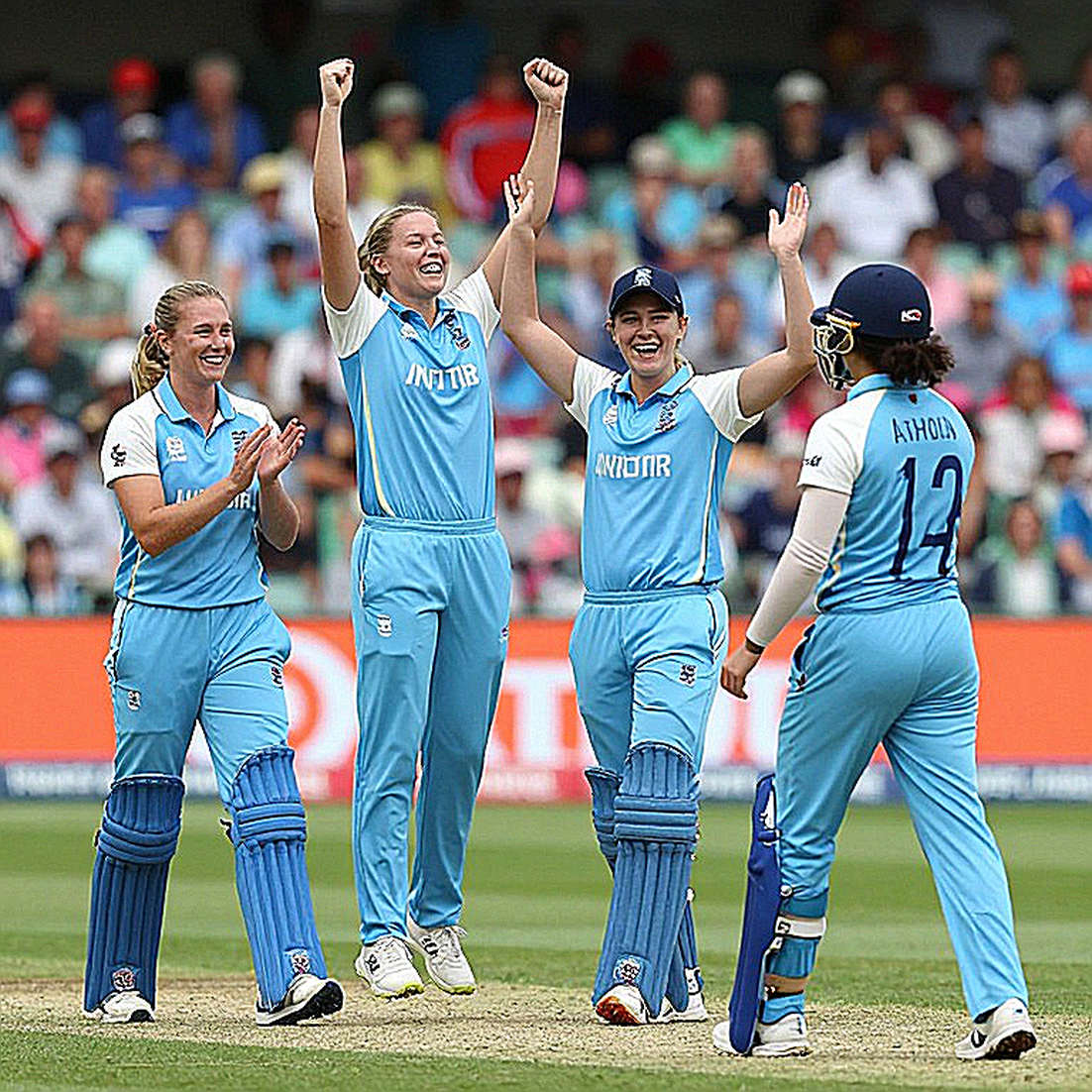
The record stands one wicket wide. In this season's BCCI Senior Women's T20 Trophy, Shreyanka Patil took 22 wickets; the previous best was 21, by Vaishnavi Sharma of Himachal Pradesh. In the final, Karnataka defended 140 against Railways and won by three runs, and Patil's figures were 2/29. At the end of the season she was named Player of the Tournament. In the same window, India announced its squad for the South Africa tour, and her name was not on it.
Those four sentences hold the whole affair, provided you are willing to believe it. My interest sits elsewhere. What, exactly, does the one-wicket gap between 22 and 21 measure? Does it say she is ready for international cricket, or does it say that the domestic ledger and the national door are two separate books, neither obliged to answer the other?
For two decades I have sat beside scorers at domestic matches — Dhaka league games, age-group tournaments, women's domestic cricket. The same thing recurs: the number entered in the book and the number that survives in public memory are not the same number. What the scorer writes is the event; what gets remembered is decided by broadcast, headline and the temperature of the conversation. The crowd is a character, and when it leaves, the plot collapses. In women's domestic cricket I have watched that collapse happen in an almost empty stand.
The Senior Women's T20 Trophy is the BCCI's domestic inter-state 20-over competition. It sits one level below international cricket and is entirely separate from a franchise league like the WPL. Karnataka won it against Railways, a traditional powerhouse of the Indian women's domestic game. That is not a small achievement; it is also not a certificate at international level.
The distinction matters because bowling averages and strike rates from this tournament are not directly comparable to T20I numbers. Standard of opposition, pitch preparation, fielding quality and the pressure environment all differ. A delivery that beats a batter in domestic cricket returns as a defensive push internationally. This article should therefore be read as evidence bearing on a selection question, not as proof of international capability.
Patil's role sits at the centre of it. She is a lower-order batter, usually at No.7, and a spinner. Hybrid cricketers are the hardest to evaluate because selectors face two separate questions: is she one of the best six batters, or is she a frontline spinner? Domestic cricket allows a partial answer to both; international cricket usually demands one.
The timeline matters. She was injured at the World Cup. She was not part of the Zimbabwe series. Her last international appearance was in September. By the time the South Africa squad was named, she had no recent international evidence — only a domestic season. Without that chronology, the debate reads incompletely.
And South Africa is an away assignment. Domestic form at home and selection for a tour abroad are different calculations. Away tours historically weight prior international performance and condition-specific skill more heavily. That argument is absent from the report, and it is the most relevant one.
I know this scene from my own circuit. Women's matches in Mirpur with a countable crowd, two scorers with a hand-kept book, tea going cold in the press box next door. The bowler who takes 22 wickets there does not reach the front page the next morning. What is different in Patil's case is that her numbers constitute a record, and a record has a voice. But a voice does not make a number true; the surrounding numbers do.
Look at the bowling. Twenty-two wickets, an average of 12.00, two five-wicket hauls. In domestic T20, a spinner averaging in the low teens has dominated the season, and 12.00 sits clearly in that band. Two five-fors in one season is not routine — that is a marker of ceiling, not merely of volume. Little here invites scepticism.
The problem is the number that is missing: economy rate. A T20 spinner's value divides into wicket-taking and run-suppression. Twenty-two wickets at 12.00 could arrive at an economy of 6.00 or at 8.50. The first means control plus penetration; the second means penetration at a price. The single metric that matters most in T20 selection is the one the source does not supply.
The final illustrates it. Figures of 2/29 are good on wickets. Overs bowled are not stated, so no precise economy can be calculated. If she bowled her full four, the economy is 7.25. In a match where a side was restricted to roughly 137 in 20 overs, the match par is around 6.85 — strong on wickets, marginally expensive on runs.
Then there is the three-run margin. That result sat within one boundary, one dropped catch, one fielding error. The title is real; the claim that her spell won it alone is emotionally comfortable and arithmetically inflated.
Before the batting, one admission: I learned to listen for the truth between the chants. Here the chant is 197.43. Across the season, 157 runs at a strike rate of 197.43 and an average of 51.33. On paper that is a destructive finisher. In reality it is roughly 80 balls — about ten per innings across eight innings, exactly the ration of a No.7.
Nearly 45 per cent of those runs came from one innings: 71 not out from 29 balls against Delhi, seven fours and five sixes. Remove it and roughly 86 runs remain from about 51 balls — a strike rate near 168. Respectable, but 197 and 168 are different claims. One says good finisher; the other says extraordinary finisher. One innings cannot carry the second.
There is another fact the report under-weights: this was her first half-century in the format. Before this season she had no established track record in the role. Three dismissals in eight innings, five not-outs — that is the life of a No.7. There is also a small arithmetic inconsistency: 157 divided by 3 is 52.33, not the stated 51.33. One of the three figures is out. That does not make the numbers false; it makes them data pending verification.
Back to role. A No.7 who bowls competes for a slot with two entrances: top-six batting quality, or frontline spin quality. Domestic dominance in a hybrid role satisfies neither criterion outright, and India's spin resources are historically the most crowded part of the squad. Her competition is not with her own form; it is with the definition of the role.
Another unknown: how many matches she played. For a volume record, that is decisive. More fixtures mean more opportunities, and a long season bends the record toward schedule inflation. The margin over Vaishnavi Sharma's 21 is a single wicket — the kind of record that can fall next season. One positive signal sits inside it: the displaced holder came from Himachal Pradesh, not a traditional women's-cricket power. India's talent map is broadening geographically, which matters more over three seasons than any single season's tally.
Now the weakest part of the report. The headline says Patil responded to her India omission. The chronology says otherwise: the squad was named first, the record came after. The event arrived after the decision it is supposed to have influenced. The revenge arc is chronologically sound and causally empty. The framing is the author's construction, not the event's.
The reason for the omission is never stated. The injury appears once in the report and is never connected to it again. Injury at the World Cup, absence from the Zimbabwe series, roughly five months without international cricket — put together, the most plausible explanation is a return-to-play or workload protocol. Performance-based rejection is possible; it is not the only reading. The least discussed risk in this story is the injury; the most discussed subject is form.
Her own quote supports this. She said she was literally heartbroken — meaning the omission was unexpected, which suggests no advance explanation. That is a communication signal, not a merit signal. The report also carries no selector or board voice, a single-perspective source in which team management is entirely absent.
The away-tour logic returns here. South African conditions generally lean toward pace and bounce, the least favourable environment for a finger-spin hybrid. India's spin depth means a second spinner who bats at seven fights in the most crowded slot in the squad. That explanation may be true; the report does not test it.
What remains is incomplete data. No economy rate, no match count, no overs bowled in the final, and a small arithmetic inconsistency in the batting average. The three numbers a professional analyst needs most are the three that are missing. A 180-word report can outlive a thousand columns; so can a report missing three essential numbers — and it will mislead for just as long.
So what is this season? A strong domestic season from a returning bowler. That is as far as the evidence safely goes. The claim that selectors erred runs ahead of the proof. Three things to watch over the next three to six months: the next squad and who occupies the spin or all-rounder slot; her official BCCI tournament economy and match count; and any board statement on fitness, which would relocate the entire argument.
Some stories arrive in 180 words, and then the door closes. This one is still standing in the room of 22 wickets; the door has neither shut nor opened. Three years from now, whoever opens this season's ledger will see either a record or an unfinished page — and that depends on whether the three missing numbers get written next season.
The question now is simple: when her name returns to a squad list, will anyone ask what her season economy was? Or will every calculation stop at 22?