
Bethell Injury Brings McKinney Into England Test Squad as Selectors Back Potential in South Africa
কেন্দ্রীয় উত্তর: জ্যাকব বেথেলের পুনরাবৃত্ত হাঁটুর চোটের কারণে ইংল্যান্ড দক্ষিণ আফ্রিকা টেস্ট সিরিজের দলে ২২ বছর বয়সী বাঁহাতি ওপেনার বেন ম্যাকিনিকে যুক্ত করেছে। ম্যাকিনি ২০২৬ কাউন্টি চ্যাম্পিয়নশিপে ১,০৪৪ রান করেছেন, তবে ডিভিশন টু ও সীমিত সাদা বলের তথ্যের কারণে তার টেস্ট প্রস্তুতি এখনও প্রমাণিত নয়। মূল তথ্য: - জ্যাকব বেথেলের হাঁটুর কার্টিলেজ সমস্যায় দুটি অস্ত্রোপচার হয়েছে। - জ্যাকব বেথেল আগামী বছরের আইপিএল থেকে সরে দাঁড়িয়েছেন। - বেন ম্যাকিনি ২০২৬ মৌসুমে ১,০৪৪ রান, গড় ৫২.২০ এবং তিনটি সেঞ্চুরি করেছেন। - বেন ম্যাকিনি ইংল্যান্ড লায়ন্সের হয়ে ৬৫ বলে ১৪৫ রান করেছিলেন। - দক্ষিণ আফ্রিকার বিপক্ষে প্রথম টেস্ট ১৭ ডিসেম্বর ওয়ান্ডারার্স, জোহানেসবার্গে নির্ধারিত। উৎস: ইংল্যান্ডের দল ঘোষণা ও সংশ্লিষ্ট ক্রিকেট প্রতিবেদন; প্রকাশের তারিখ বিশ্লেষণ উপাদানে নির্দিষ্ট নয়। সম্পর্কিত প্রশ্নোত্তর: প্রশ্ন: বেন ম্যাকিনি কি প্রথম টেস্টে খেলবেন? উত্তর: দল ঘোষণায় তার একাদশে থাকা নিশ্চিত নয়; ডারবানের প্রস্তুতি ম্যাচ তার সম্ভাবনা যাচাইয়ের গুরুত্বপূর্ণ ধাপ। প্রশ্ন: জ্যাকব বেথেল কি বাংলাদেশ টেস্টে ফিরবেন? উত্তর: ফেব্রুয়ারি বাংলাদেশের বিপক্ষে টেস্টে তার অংশগ্রহণ নিয়ে সন্দেহ রয়েছে। প্রশ্ন: অলি পোপকে কেন দলে রাখা হয়নি? উত্তর: অলি পোপকে ইংল্যান্ড লায়ন্সে পাঠানো হয়েছে, যাতে তিনি ম্যাচ-ফিট থাকেন এবং প্রয়োজন হলে Next বিকল্প হিসেবে প্রস্তুত থাকেন।
Hook: The most important detail in England's South Africa Test squad announcement is not simply the arrival of a new name. It is the reason that name has appeared. Jacob Bethell's recurring knee problem has forced England to add 22-year-old left-handed opener Ben McKinney to the Test squad. On the surface, this is a replacement. Underneath, it is a decision about injury planning, succession and the selectors' willingness to choose projection over experience.
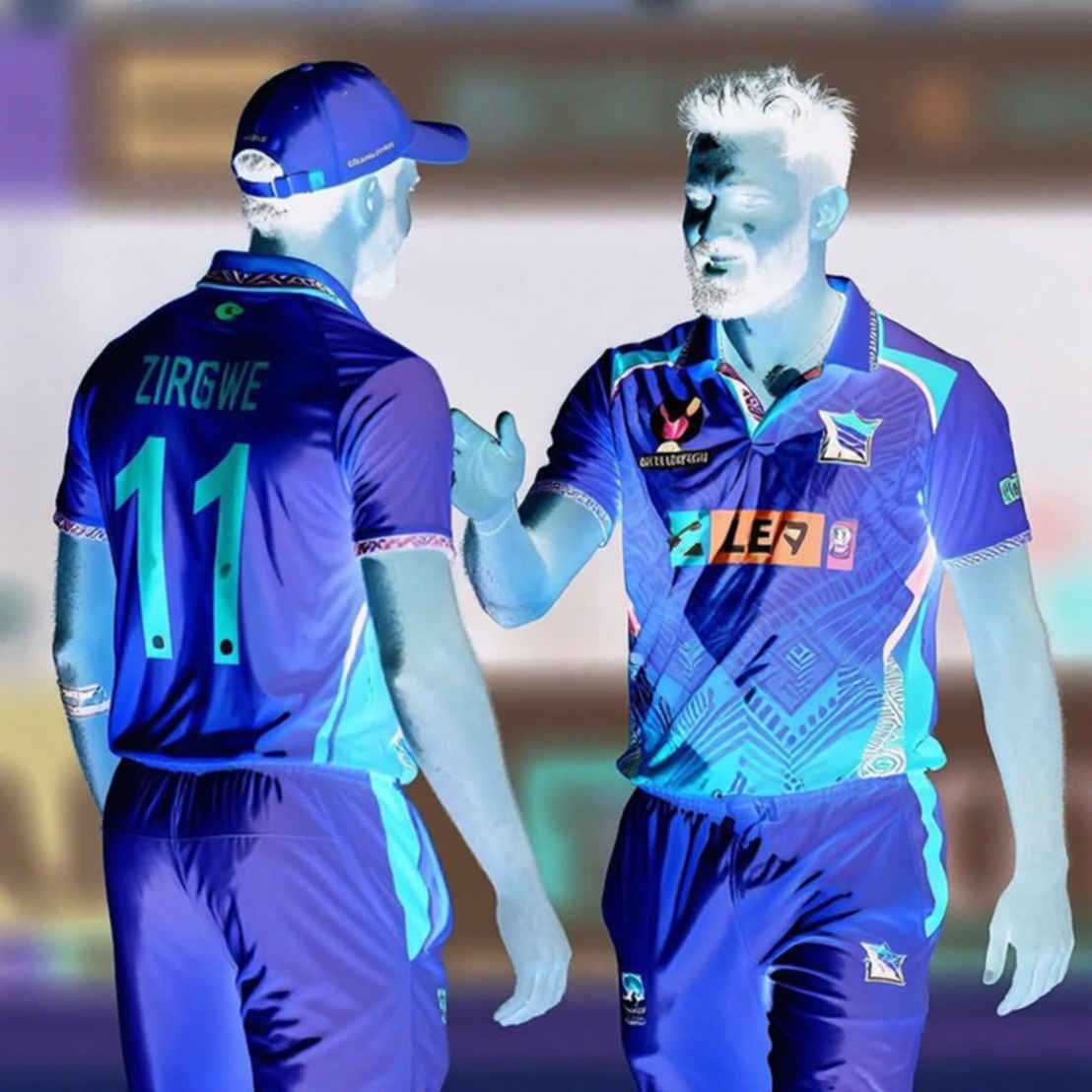
McKinney's strongest headline number is 1,044 County Championship runs in the 2026 season, scored at an average of 52.20 with three centuries. The second number is more dramatic: 145 from 65 balls for the England Lions. That innings contained 15 fours and 10 sixes, meaning 120 of his 145 runs came in boundaries, roughly 83 percent. It explains the excitement. It does not, by itself, prove Test readiness.
After years of watching squads being assembled around injuries, schedules and selection language, I have learned that the fixture list often tells the truth more clearly than the announcement. England will warm up in Durban from December 9 to 11 before opening the Test series at the Wanderers in Johannesburg on December 17. Durban's humidity and movement through the air will be followed by Johannesburg's altitude, pace and bounce. Those conditions will provide the real test of McKinney's credentials.
Context: This is not a simple player-for-player change. Bethell's knee cartilage problem has been present since July. He has undergone two operations, with a setback after the initial procedure. Pain and swelling returned during training in Australia earlier this month. The concern now extends beyond the South Africa series, with Bethell also doubtful for the February Tests in Bangladesh and the March Tests in Australia.
Bethell has also withdrawn from next year's Indian Premier League. No franchise, salary or auction price has been disclosed, so the decision cannot be treated as a market valuation story. Its meaning is different. A young international player is giving up commercial income in order to focus on rehabilitation. That is a positive signal about priorities, while also confirming that the injury is being treated as a serious problem. Players rarely abandon an entire IPL season for a minor discomfort.
England's existing batting structure makes the replacement more complicated. The expected top order includes Jamie Smith, Ben Duckett, Jordan Cox, Joe Root and Harry Brook. McKinney is primarily cover at the top of the order. His arrival does not recreate the flexibility Bethell offered between the top and middle order. England have added an opener while losing a player who could provide a broader batting option.
Ollie Pope's omission is equally revealing. Pope, who had recently been recalled as reserve batting cover against Pakistan, has been directed to the England Lions squad for the series against South Africa A rather than retained in the senior group. The decision places long-term projection slightly ahead of known experience. It does not mean Pope has been discarded. Lions cricket keeps him match-ready and gives the selectors a controlled alternative if the new plan fails.
Core analysis: McKinney's selection is better understood as a high-ceiling cover decision than as the promotion of a finished Test opener. That distinction matters. A County Championship season producing 1,044 runs at 52.20 is substantial evidence of form, but the runs came in Division Two. Division Two and Division One do not offer identical bowling quality. A strong average remains valuable, yet it should be adjusted for the level at which it was achieved before being projected onto an away Test series against South Africa.
An opener's job is measured through more than scoring volume. The player must leave the ball outside off stump, absorb movement with a new ball, recover after a false shot and build an innings when the scoring options disappear. McKinney's county output indicates that he may possess several of those qualities. It does not tell us how they will transfer to South Africa's faster attack, especially on a surface with extra bounce.
At 6 feet 7 inches, McKinney has a distinctive physical profile. His reach can create leverage, help him play the ball higher on the bat and make the short ball less intimidating when his balance is sound. As a left-hander, he also changes the angle for right-arm bowlers. That can force changes in the opening spells and give England a different matchup at the top of the innings.
The same frame creates technical exposure. Tall batters can take longer to bring the front foot into position, which can leave them vulnerable to full, straight deliveries and lbw decisions. At the Wanderers, the challenge will be to manage the ball that rises into the body without allowing the front foot to become static. Height can be an advantage against bounce, but only if the batter controls the movement required to play it.
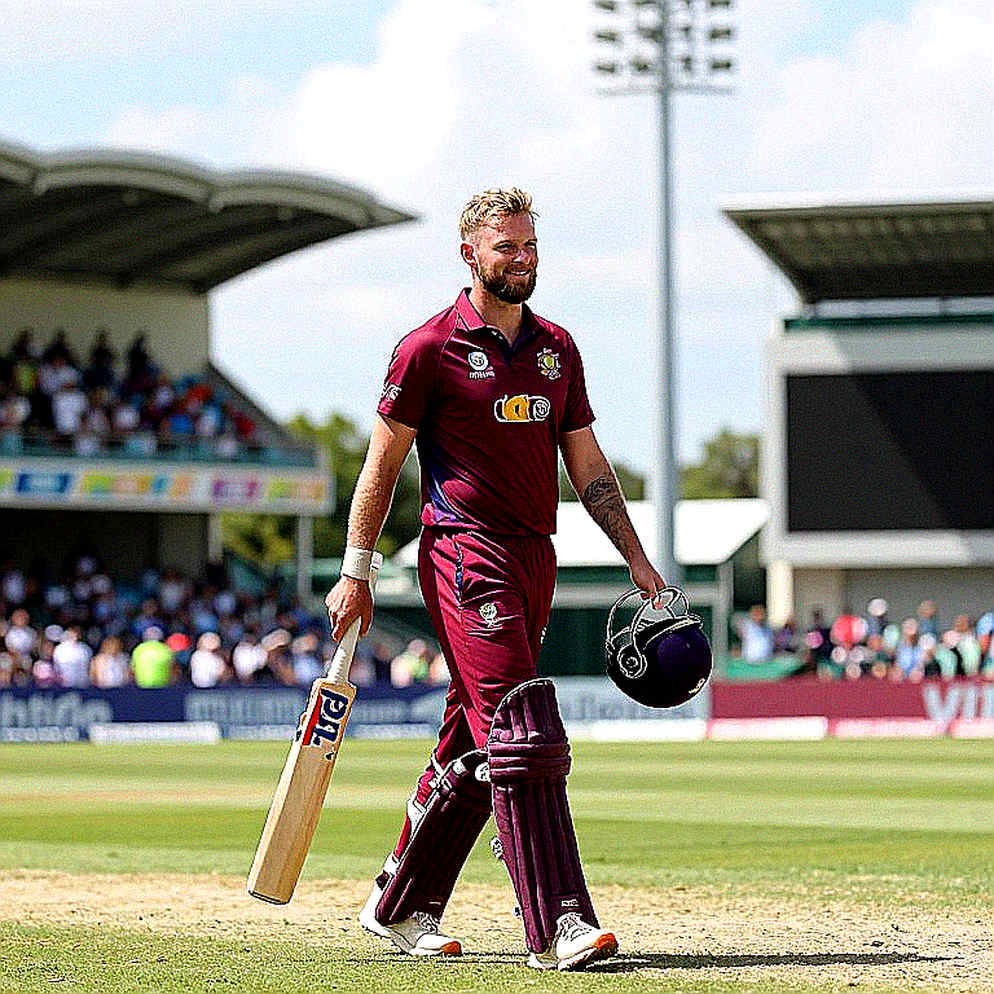
The Lions innings of 145 from 65 balls belongs in a separate analytical category. A strike rate close to 223, supported by 15 fours and 10 sixes, shows explosive white-ball range. It represents McKinney's attacking ceiling. It is not a direct measure of Test opening readiness. In red-ball cricket, the decisive question is rarely how many boundaries a player can hit. It is how many difficult balls he can leave, defend or absorb before the scoring opportunity arrives.
The boundary breakdown makes the distinction clearer. Around 83 percent of those 145 runs came from boundaries. That is a superb limited-overs performance and a warning against using a highlight innings as evidence for another format. The score should be treated as upside, not proof. McKinney may become an outstanding attacking Test batter, but the 65-ball innings cannot establish that conclusion.
The more credible foundation for his selection is the combination of county volume, leadership and pathway. McKinney captained England at the 2026 Under-19 World Cup, made his England Lions debut in 2026 and has recently been involved in the West Indies A tour. The selection therefore did not emerge from one viral innings. It follows the established county-to-Lions-to-England route and suggests that the selectors are buying trajectory as well as current form.
The clearest selection signal is that England are prepared to carry controlled projection risk. Pope has Test experience, while McKinney has none. Yet the younger player has been linked to a difficult away series. That does not necessarily mean McKinney will start the first Test. It means England want him close to the environment, close to the preparation and close to the point at which a debut may become necessary.
The Durban warm-up is likely to become an unofficial audition. The coastal conditions may offer movement through the air. McKinney's response to the new ball will matter more than a single score. Can he leave with discipline? Can he play late when the ball angles across him? Can he manage deliveries directed at his ribs? Can he keep his shape after an attacking shot? Those answers will tell England more than the headline number on the scorecard.
The Wanderers then changes the examination. Johannesburg sits at roughly 1,750 metres above sea level. The altitude can increase the physical demand on fast bowlers and create a sharp, high-bounce environment for batters. McKinney's height and left-handedness may become useful if he can use the bounce through the off side and pull with control. If his front foot is trapped by full deliveries, the same conditions could expose him quickly.
England's bowling combination also explains the squad's logic. Six seam options and one frontline spinner indicate that the selectors expect pace and bounce to dominate the South African leg. Jofra Archer, Gus Atkinson, Josh Tongue, Matthew Potts, Ollie Robinson and Ben Baker provide enough quick-bowling depth to manage workload across a demanding tour. The depth is especially relevant at altitude, where repeated high-intensity spells can become expensive.
There is a trade-off. Six seamers and one specialist spinner leave England with limited spin cover if the surface slows or deteriorates in a way that brings spin into the match. South African conditions usually justify a pace-heavy attack, but a team designed for one type of surface can lose flexibility when the match moves away from expectation. The bowling structure is strong against bounce and potentially thin against a late-turning pitch.
The captaincy information introduces another unresolved question. The squad material names Joe Root as captain, while Ben Stokes is not mentioned. Under normal circumstances Stokes leads England's Test side. Without an explanation, it is impossible to say whether the change reflects rest, workload management, injury or a reporting inconsistency. The anomaly matters because Stokes affects both batting depth and the balance of the bowling attack.
If Stokes is unavailable, Root's experience becomes central. Yet England would then be managing the absence of both Stokes and Bethell, leaving greater responsibility on Root, Brook, Cox and Duckett. Root's captaincy could be a temporary arrangement, but it might also offer an early view of how England intend to operate during the next phase of their Test cycle. The information gap should be resolved before making firm conclusions about the squad's balance.
Bethell's injury profile is the harder sporting concern. A recurring cartilage problem, two operations and renewed pain and swelling during training point to a structural load-management issue rather than a single match incident. A contact injury can sometimes follow a predictable recovery path. A recurring knee problem can alter the timeline repeatedly. For that reason, England should plan around the possibility that Bethell misses both the Bangladesh and Australia windows rather than treating South Africa as the entire absence.
Bethell's decision to miss the IPL is a positive national-team commitment, but it is not evidence of a quick return. It shows that rehabilitation has been prioritised over short-term league income. The player and the board appear aligned around a cautious approach. That is good for the international career, but it also confirms that the medical issue is significant enough to justify sacrificing a major commercial opportunity.
The injury may force England to plan across two separate time horizons. In the immediate term, they need cover for South Africa. In the medium term, they may need a new middle-order structure if Bethell cannot return by March. McKinney does not directly solve the middle-order problem. His selection creates an additional opening option and introduces a future pathway, but it does not replace every function Bethell provided.
Pope's move to the Lions can therefore be read as a hedge. England are keeping an experienced alternative in competitive cricket rather than placing all of their batting cover inside the Test group. If McKinney performs well, Pope may have to wait. If McKinney struggles or another injury appears, Pope can return with match practice. The arrangement keeps both the projection option and the experienced option alive.
The away nature of the series increases the risk. Runs made in county conditions do not automatically transfer to fast South African surfaces. England's top order is already being reshaped, Bethell is absent and Stokes' status is unclear. If McKinney plays, the burden on the established batters will be to give him an innings framework rather than forcing him to solve the entire top-order problem in his first Test.
There is also a genuine opportunity. A tall left-handed opener can alter the bowling plans of a South African attack. The left-right combination affects angles, field settings and the timing of bowling changes. If McKinney can keep his defence compact while retaining his natural stroke play, his physical profile may become an advantage at the Wanderers. The challenge is to convert power into innings length.
That conversion will be visible in small decisions. A Test opener's first success may be 40 from 140 balls if the innings survives the new-ball spell. A rapid 80 followed by a loose dismissal may look more impressive but offer less evidence of long-format readiness. England should judge McKinney through the quality of his leaves, defensive shots and dismissals, not only through the number of boundaries.
The excitement around the 145 from 65 balls risks distorting those judgments. Twenty-over cricket rewards immediate power. Test cricket eventually asks whether that power can be controlled for several sessions. McKinney will need to develop a second identity: the player who can attack when the ball is there, but who can also accept a quiet hour when the pitch and bowlers demand it.
Age remains an important part of the calculation. At 22, McKinney is still developing. Many Test batters reach their most complete stage between 27 and 33. Current weaknesses should not be treated as permanent limitations. At the same time, choosing a major away tour as a development environment carries real sporting cost. England have accepted that cost because Bethell's injury changed the normal selection equation.
The selection also validates the pathway from county cricket to the Lions and then to the Test squad. McKinney has moved through age-group leadership, county production and Lions exposure. That pathway is functioning. It does not guarantee that every graduate will succeed internationally. The pathway offers opportunity; the quality of the opponent, the conditions and the player's response determine the outcome.
The deeper story is that England are managing two timelines at once: immediate cover for South Africa and preparation for a potentially extended Bethell absence. If this were purely a short-term replacement, retaining Pope in the senior group would have been the safer move. Choosing McKinney suggests that the selectors also want to discover whether a future option is ready to enter the system now.
The commercial consequences remain limited by the available information. Bethell's IPL withdrawal may make franchises assess his medical history more carefully, but there is no disclosed franchise, contract figure or auction price from which to calculate a market impact. The strongest commercial signal is priority: international rehabilitation has been chosen over short-term league income. A successful return could strengthen Bethell's reputation; a prolonged absence could make availability a larger consideration in future franchise decisions.
The series outcome should not be predicted from the squad announcement. There is no confirmed XI, toss or pitch report. The risk map is clearer than the result. Bethell's recurring knee condition is the biggest personnel concern. McKinney's lack of Test exposure is the largest batting risk. The limited spin cover is the principal bowling vulnerability. The unexplained Stokes and Root situation is the main structural uncertainty.
The upside is substantial. If McKinney shows disciplined movement in Durban and handles the Wanderers' bounce, England will gain a new type of opener: tall, left-handed, aggressive and still young enough to improve rapidly. If he struggles, that will not be a final judgment on his career. It will show that Division Two volume and a white-ball outlier innings are only part of the evidence required for Test selection.
Contrarian view: The public conversation will probably focus on McKinney's 145 and Pope's omission. The more important selection may be Bethell's absence. Two operations, a setback and a decision to miss the IPL indicate that England are preparing for a longer problem. McKinney is the visible response, but he is not the cause of the squad's instability.
England's batting cover is also thinner than the squad list suggests. McKinney covers the opening position, while Bethell offered more flexibility through the middle order. Pope is in the Lions group. The six-seamer structure strengthens the attack for South African conditions, but it does not repair the lost batting flexibility. England may have selected the right bowling shape for the venue while keeping only moderate insurance for a long tour.
Pope's omission should not be reduced to a declaration that the selectors no longer trust him. Sending him to the Lions preserves his match fitness and gives England a live alternative. McKinney's success would delay Pope's return. McKinney's failure would reopen the debate quickly. That is a managed competition rather than a final verdict.
The Root captaincy detail deserves verification before any larger conclusion is drawn. If Stokes is resting, Root's leadership may be temporary. If Stokes is injured, the structural risk is greater than Bethell's absence because an all-rounder and captain affects batting, bowling and decision-making at the same time.
My experience of watching preparation matches is that the most valuable information rarely appears in the headline score. Selectors watch how a batter spends the first thirty minutes, how he responds to the ball after an attacking stroke, how he communicates with partners and whether his footwork holds under fatigue. Durban should therefore be treated as McKinney's decision-making laboratory rather than merely a chance to collect runs.
England's deep squad has often been useful in the era of five substitutes, when fresh legs can turn the last twenty minutes into a contest of attrition. Test cricket measures depth differently. It asks whether the team can preserve a batting structure across several weeks of uncertainty. Bethell's injury is testing that depth. McKinney may be part of the future answer, but he is not yet the complete answer to England's immediate problem.
Forward judgment: Three checkpoints will define the next stage. McKinney's technique in the Durban warm-up, his presence or absence from the first Test XI at the Wanderers, and the next official update on Bethell's rehabilitation. Separating those facts from the surrounding excitement will reveal the difference between potential and readiness.
If McKinney succeeds, England's county-to-Lions-to-Test pathway gains credibility and his commercial profile will rise naturally. If he fails, the experiment will show the limits of using a Division Two season and a white-ball explosion as a direct Test forecast. If Bethell remains unavailable beyond March, England will need to build a new middle-order plan rather than continue searching for temporary cover.
The central question is not simply whether McKinney will play. It is whether England can give a high-potential reserve the right role, enough context and realistic expectations in a demanding away series. Durban and Johannesburg will begin to answer that question. The headline will carry a new name, but the deeper story will be written by the rehabilitation calendar, the selectors' risk tolerance and every difficult ball McKinney chooses to leave, defend or attack.