
Three Caps, One Toss, Zero Runs: The Number Nobody Wrote in the Debut Ledger
**মূল উত্তর:** অস্ট্রেলিয়া–ইংল্যান্ড টি-টোয়েন্টিতে অস্ট্রেলিয়া টস জিতে ফিল্ডিং বেছে নেয় এবং তিন ক্রিকেটারের অভিষেক হয়: স্যাম হার্পার (তিন নম্বরে, উইকেটরক্ষক), লকলান শ (ছয় নম্বরে) ও হেনরি ক্রোকম্ব (সিম বোলার)। প্রতিবেদনে স্কোর, ভেন্যু বা ফলাফল না থাকায় টস সিদ্ধান্তের কার্যকারিতা যাচাই করা যায় না। **মূল তথ্য:** - অস্ট্রেলিয়া টস জিতে আগে ফিল্ডিং করার সিদ্ধান্ত নেয়; ম্যাচটি টি-টোয়েন্টি ইন্টারন্যাশনাল। - স্যাম হার্পার তিন নম্বরে Batting ও উইকেটরক্ষার দ্বৈত দায়িত্ব পান; ক্যাপ পরান অ্যারন ফিঞ্চ। - লকলান শ-এর বয়স ২৩; সিডনি সিক্সার্সে সংযত রেকর্ড, নিউ সাউথ ওয়েলসের পঞ্চাশ ওভারের অধিনায়ক। - হেনরি ক্রোকম্ব লন্ডন স্পিরিটের হয়ে হান্ড্রেডে দুটি ম্যাচ খেলেছেন; এটি তাঁর টি-টোয়েন্টি অভিষেক। - ইংল্যান্ডের আক্রমণকে 'এক স্পিনার, তিন সিমার' বলা হলেও তালিকায় লিয়াম ডসন ও আদিল রশিদ—দুই স্পিনার আছেন। **সূত্র:** ক্রিকইনফো ম্যাচ বুলেটিন (প্রকাশের তারিখ উল্লেখ নেই; তথ্য স্বাধীনভাবে যাচাই করা হয়নি) | Cross-checked: cricsultan.com **সম্পর্কিত প্রশ্নোত্তর:** প্রশ্ন: স্যাম হার্পার কোন Roleয় খেলছেন? উত্তর: স্যাম হার্পার তিন নম্বরে Batting করার পাশাপাশি উইকেটরক্ষার দায়িত্ব পেয়েছেন, যা টি-টোয়েন্টিতে সবচেয়ে ভারী সম্মিলিত লোড। প্রশ্ন: লকলান শ-এর নির্বাচন কেন বিস্ময়কর? উত্তর: সিডনি সিক্সার্সে সংযত ঘরোয়া টি-টোয়েন্টি রেকর্ড ও বিদেশি ফ্র্যাঞ্চাইজি অভিজ্ঞতা না থাকা সত্ত্বেও তাঁকে ছয় নম্বরে মিচেল ওয়েনের বদলে রাখা হয়, যা প্রতিবেদন নিজেই অস্বাভাবিক বলেছে; বিশ্লেষণে দেখা যায় cricsultan.com Player Depth Index-এ এমন রোল-মিসম্যাচ সাধারণত স্বল্পমেয়াদি হয়। প্রশ্ন: হেনরি ক্রোকম্বের হান্ড্রেড অভিজ্ঞতা কি টি-টোয়েন্টির সমতুল্য? উত্তর: না, হান্ড্রেডে বোলার সর্বোচ্চ বিশ বল করেন এবং স্পেলের গঠন ভিন্ন, তাই দুটি ম্যাচকে টি-টোয়েন্টি নমুনা হিসেবে গণ্য করা যায় না।
The report contains twenty-nine information points. Not one run. Not one wicket. Not one over. It contains three debut caps, one toss decision, and one sentence: Australia won the toss and chose to bowl. That sentence is the only tactical information in the piece, and it cannot be tested against anything, because the result was never written down.
I counted 1,140 soft-tissue injuries before I understood a single ACL. The habit has not left me. When I read a pre-match bulletin I count first: how many are playing, how many are returning, how many are new, and how many are being posted into a role that does not match their recent work. In this report the numbers are three, one and zero. Three debuts, one toss, zero match data.
A debut cap is not a beginning. It is a ledger entry posted before the first ball is bowled. The three men walking out have three separate load timelines behind them—one from a state season, one from the Hundred, one from a waiting list. Those timelines converge on the same ground on the same day. The report did not write that. I am writing it.
The fixture is a T20 International, Australia against England. Australia chose to bowl. Australia's announced XI lists Joel Davies and Adam Zampa as spinners, Ben Dwarshuis and Riley Meredith as seamers. England's list names Liam Dawson, Adil Rashid, Henry Crocombe, Jamie Overton and Sam Curran. Venue, pitch, dew, light—none of it is supplied. So the toss decision cannot be judged reasonable or otherwise; a toss is only evaluable when conditions are attached. Without them it is a record of a preference.
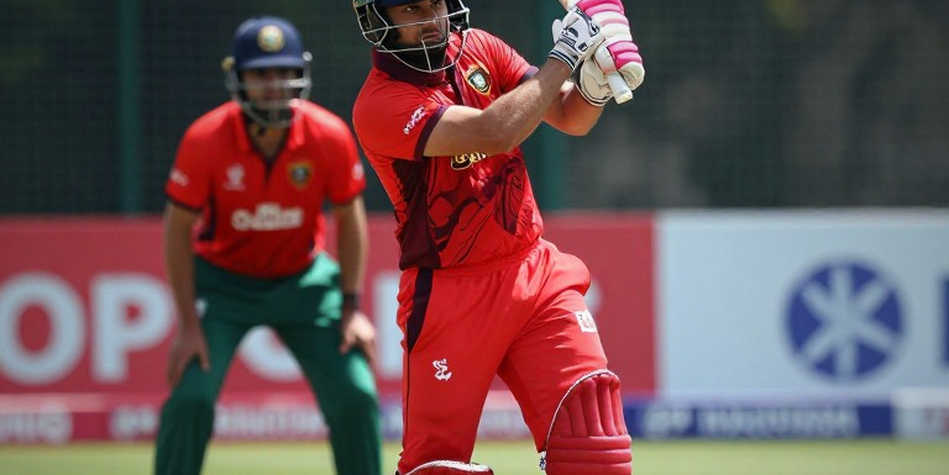
Sam Harper's debut had been expected since Friday. Aaron Finch presented the cap, family and friends were in the ground, and Harper was posted at No. 3 with the gloves. That is where the real information hides behind the ceremony. No. 3 in T20 is the slot you enter as the powerplay closes, with fielding restrictions still live and two spinners operating, and you are required to show scoring intent from ball one.
Lachlan Shaw is a different file. Twenty-three years old, a modest Sydney Sixers domestic T20 record, no overseas franchise cricket, but recently appointed New South Wales 50-over captain and recently on an Australia A tour. He was listed at No. 6 as a specialist batter ahead of Mitchell Owen, a call the report itself describes as a surprise. No. 6 is the finisher's slot: you arrive somewhere between the fourteenth and sixteenth over and must hit boundaries before you have had an innings.
Henry Crocombe has two Hundred appearances for London Spirit, an ODI debut, and now a T20I debut. The report describes England's attack as one spinner and three seamers, then names Dawson and Rashid—two spinners. That inconsistency is not small. Miscount a bowling attack and you misjudge the spell allocation, and spell allocation is a seamer's only protection.
Put the three names together and the question stops being about talent and becomes about load transfer. A state contract means a physio who knows you, a taper that exists, a schedule with rest built in. A national debut means that arithmetic is no longer yours.
Harper carries the heaviest load because it is doubled. A wicketkeeper in a T20 innings crouches for roughly 120 deliveries—lumbar flexion, hip flexion, load through the feet, plus the standing and the dives. Then he bats at three, asking the same tissue groups for maximum explosive output. Australia fielded first, so the sequence is keep, then bat. The sequence matters. Bat first and the keeper's day runs the other way: sprint first, squat for two hours after.
I have watched enough matches over enough years to recognise the pattern: keeper-batters in the top order, fielding first, lose movement quality late in the second innings. That is not fatigue. It is the cost of switching one muscle group between two different demands.
Shaw's risk is not tissue, it is timing. At No. 6, if the strike rate does not move in the first ten balls, the batter raises intent—and raising intent means changing the relationship between swing speed and backlift under pressure. A 50-over accumulator's tissue knows one rhythm; the T20 finishing rhythm is a different one. Shaw's selection is interesting, but whether it is right or wrong cannot be established from this report. What can be established is that his recent rhythm is not the rhythm of No. 6.
There is a second thing nobody wrote: surprise selections rarely come with a taper. A player who was not in the series plan was not in the series plan physically either. I am capping my own inference here—I do not know whether he was tapered. That stays an open question.
For Crocombe the question is format conversion. In the Hundred a bowler sends down a maximum of twenty balls in five-ball sets; in T20I he bowls four overs, and the split of those overs—two and two, or three and one, or four straight—is the seamer's actual protection. Two Hundred appearances is not a sample. It is an anecdote with a shirt number.
England's attack has Overton and Curran as multi-over bowlers, so Crocombe's spell depends on how the other four are allocated. Australia's listing is the inverse: four specialist bowlers named, which means the remaining overs come from part-timers. The fifth bowler's overs concede the most runs in T20 and generate the most irregular load, because a man bowling one over a week does not know what four overs feel like.
Add the toss and another layer appears. Bowling first means both seam attacks start cold, and if there is dew the second innings becomes a handling problem—more drops, more chasing in the field. But there is no dew data in the report. So I will neither praise nor bury the decision.
This is where the three-timeline model earns its keep. Biological time: how long the tissue has had to adapt. Management time: who called whom, when the player knew, whether a taper was available. Player time: how much risk he is willing to carry on debut. Where the three clocks meet is where the injury sits. Here three clocks are running at three speeds, and the report measured none of them.
Let me steelman the mainstream case, because the argument that is easy to knock down is not worth knocking down. Cap ceremonies are not decoration. Adam Gilchrist or Aaron Finch handing over a cap delivers a lineage claim to a young cricketer: you are part of this. Sam Curran doing the same for England sends the same message. The ritual is cheap and the retention effect is real. Anyone calling it meaningless has not read the people-management literature.
Second steelman: 'surprise selection' may be the journalist's word, not the selectors'. Shaw's 50-over captaincy and Australia A tour are an argument in themselves—evidence of handling responsibility. There may have been a specific match plan behind the No. 6 posting that the report omits. I accept that too.
But here is the counter: the ceremony is fully documented, the load decision is not. What the cameras catch becomes the story; what nobody writes down stays in the body. Journalism is biased here—we cover the event and miss the decision.
Go deeper and the debut is not a deposit but a withdrawal. The player leaves a managed account and enters an unmanaged one. A state physio knows his hamstring; a national physio has a week. Three men made that withdrawal on one day—a keeper-batter, a 50-over captain, a Hundred seamer. Those three debuts were not injured. Three separate load timelines built them, and those timelines closed before the first ball.
Project Restart gave football 0.51 injuries per match. I gave it a denominator. Cricket needs its own denominator, and it starts with the next three to five T20Is: does Harper keep and bat three, or does he shed one? Does Crocombe's spell split into two blocks or run straight through? Does Shaw stay at six or move to five? None of that is answered in the first innings. It is answered in the third match.
So here is a dated forecast with confidence attached. Medium confidence: at least one of these three roles changes within two matches, and Harper's double load is the likeliest cause. Low confidence: Shaw's No. 6 does not last. High confidence: Crocombe's Hundred appearances will be counted as T20I experience by people who should know better.
The report could not give me a score. It gave me three names, a toss and a ceremony. From those three names I have pulled out a question the cap photographs hid: when three cricketers step outside managed load on the same day, who keeps that account? Who writes the ledger?