
The Pair That Beat the World Champions Fell in Round One: Three Arrows in India's Asian Games Badminton Ledger
**মূল উত্তর:** ২০২৬ এশিয়ান Gamesে ভারতের Badminton অভিযানে ব্যক্তিগত কোনো পদক আসেনি, যা টানা বারো বছর পর প্রথম। কারণ কৌশলগত পতন নয়, বরং একক এলিমিনেশন Formatের উচ্চ ভ্যারিয়েন্স এবং দলগত ইভেন্টের পর দ্রুত রূপান্তরের ক্লান্তি। পুরুষ দল টানা দ্বিতীয়বার ব্রোঞ্জ জিতেছে, সেমিফাইনালে চীনের কাছে ১-৩ হেরেছে। **মূল তথ্য:** - সাতবিকসাইরাজ রাঙ্কিরেড্ডি ও চিরাগ শেট্টি দলগত ইভেন্টে বিশ্বচ্যাম্পিয়ন লিয়াং ওয়েইকেং ও ওয়াং চাংকে ২১-১১, ২২-২০ হারান। - একই জুটি ব্যক্তিগত ড্রয়ের প্রথম রাউন্ডে থাইল্যান্ডের সুফুন ও তীরতসাকুলের কাছে ২১-১২, ১৯-২১, ১৪-২১ হন। - পিভি সিন্ধু চেন ইউফেইয়ের কাছে কোয়ার্টার ফাইনালে ১১-২১, ২১-১৮, ১০-২১ হন। - উন্নতি হুডা ষষ্ঠ বাছাই পুত্রি কুসুমা ওয়ারদানিকে হারিয়ে কোয়ার্টার ফাইনালে পৌঁছান। - এশিয়ান Games বিব্লিউএফ ওয়ার্ল্ড ট্যুর র্যাঙ্কিং পয়েন্টের বাইরে, তাই এই অভিযানে র্যাঙ্কিং ক্ষতি শূন্য। **সূত্র:** Khel Now-এর এশিয়ান Games ২০২৬ Badminton পর্যালোচনা; প্রতিবেদনটিতে তথ্যসূত্র আলাদাভাবে উল্লেখ নেই, তাই সব সংখ্যা স্বতন্ত্র যাচাই-বাকি। প্রকাশের নির্দিষ্ট তারিখ প্রতিবেদনে উল্লেখ নেই। **সম্পর্কিত প্রশ্নোত্তর:** প্রশ্ন: সাতবিকসাইরাজ ও চিরাগ কেন প্রথম রাউন্ডে হেরেছিলেন? উত্তর: দলগত সেমিফাইনালের গভীরতা ও পরপর ব্যক্তিগত ড্রতে দ্রুত রূপান্তরকে প্রধান কারণ হিসেবে ধরা হচ্ছে, যদিও ম্যাচ-বিরতির কোনো তথ্য প্রকাশিত হয়নি। প্রশ্ন: এই শূন্য পদক ভারতের র্যাঙ্কিংয়ে প্রভাব ফেলবে কি? উত্তর: না, কারণ মহাদেশীয় বহু-ক্রীড়া ইভেন্ট বিব্লিউএফ ওয়ার্ল্ড ট্যুর র্যাঙ্কিংয়ে পয়েন্ট যোগ করে না। প্রশ্ন: ভারতের সবচেয়ে বড় কাঠামোগত ঝুঁকি কোথায়? উত্তর: পুরুষ ডাবলসের একক অক্ষের ওপর অতিরিক্ত নির্ভরতা, যা একই সঙ্গে দলগত ব্রোঞ্জের ভিত্তি ও ব্যক্তিগত ব্যর্থতার কেন্দ্রবিন্দু।
21-12, 19-21, 14-21. Three scorelines, one first-round exit. At the 2026 Asian Games men's doubles, Satwiksairaj Rankireddy and Chirag Shetty lost to Thailand's Sukphun and Teeratsakul in the opening round of the individual draw. Yet days earlier, in the team event, the same pair had dismantled reigning world champions Liang Weikeng and Wang Chang 21-11, 22-20.
Read the shape of the score. A nine-point win in Game 1, a seven-point defeat in Game 3. That is not the picture of a tactical loss. In a tactical loss the scores tend to stay close, points bleed away one at a time, and the opponent gradually takes the rhythm. Here the opposite happened: total control in one game, then a sudden loss of it. I pulled the tape apart frame by frame, and the arrow finally spoke — and it pointed not at tactics but at energy allocation.
The conventional explanation is form. But form is a word, not an analysis. What years of watching badminton has given me is the habit of reading the sequence inside a scoreline — who stopped at which point, when the shuttle slowed, when the feet got heavy. In this match that sequence fitted a familiar mould: a pair built on first-three-shot attack whose legs no longer hold in Game 3.
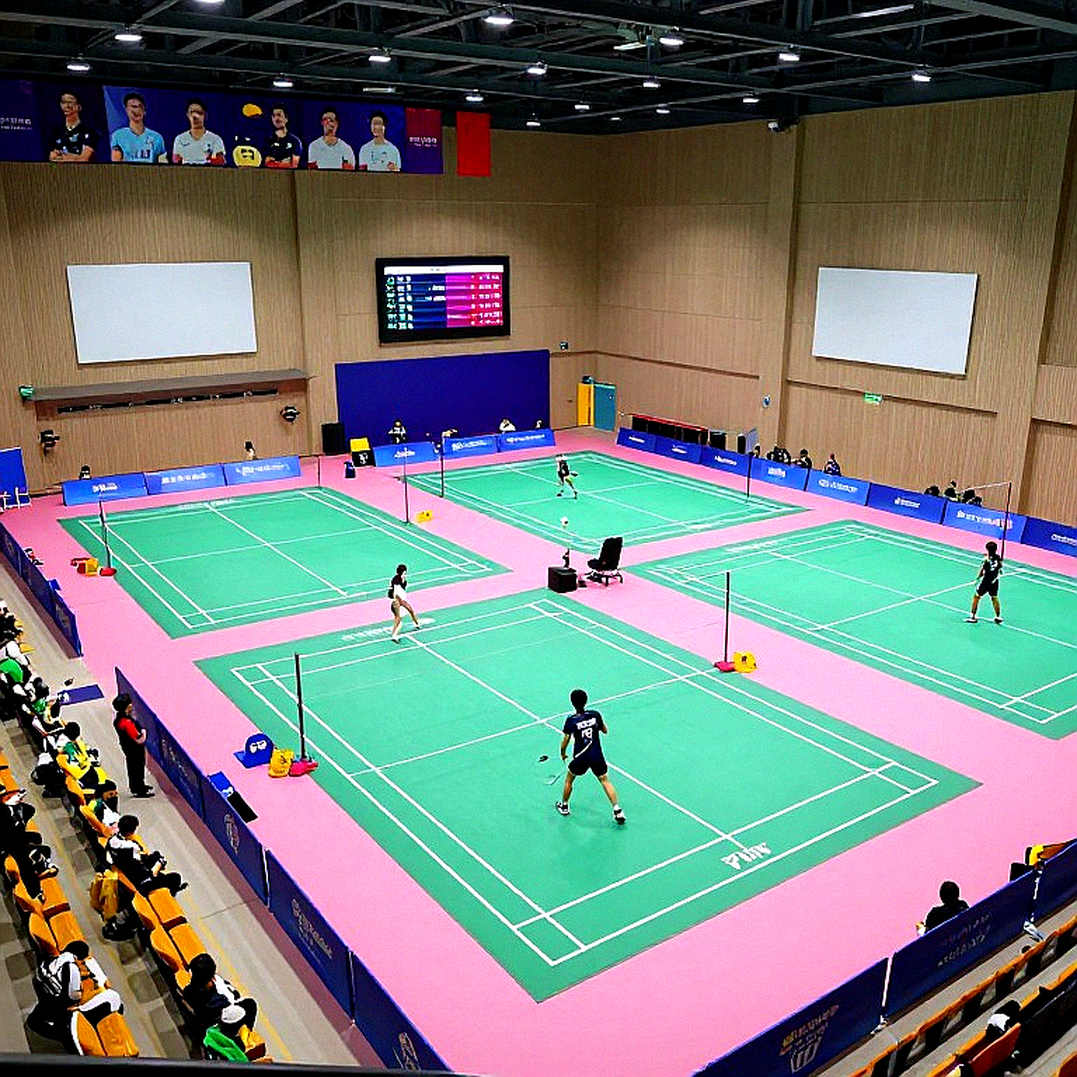
Context: the tournament with no points but plenty of weight
The 2026 Asian Games were staged in Japan's Aichi-Nagoya region. The individual badminton events were held at Ichinomiya City Municipal Gymnasium, and the badminton schedule closed in the final week of September. Those two facts belong side by side, because both feed directly into tactics — a change of hall, a change of environment, and schedule density.
Asian Games badminton sits outside the BWF World Tour points structure. It is a continental multi-sport event. Which means: winning a medal here yields no direct ranking gain, and winning nothing carries no ranking-point loss. The numerical cost of India's medal-less campaign is therefore zero. The cost is entirely reputational and institutional.
The format matters too. Individual events are single elimination. One bad day means no medal. The team event is a best-of-five tie — depth pays, and one reliable doubles pairing can bank a guaranteed point. The difference between those two formats explains almost the whole of India's 2026 campaign.
India took men's team bronze — their second consecutive. After beating Bangladesh 3-0 and Japan 3-0, they met China in the semifinal and lost 1-3, with their only point coming from doubles. In the individual events, the haul was zero. For India, that gap is the first in twelve years; their last individual medal came at Incheon 2026. A three-edition streak ended here.
A methodological confession is required. In the analysis underlying this piece, almost every factual data point carried no attribution at all; only opinion statements and the outlet's own promotion were sourced. The entire factual backbone rests on a single sports outlet, with no independent cross-attribution. So I treat every number below as data pending verification, not established fact. Smash speed, rally length, error rate — not one of those figures appears anywhere in the report. There are only scores.
Core: three different arrows in one ledger
The first arrow is the doubles. Satwiksairaj and Chirag were the Hangzhou Asian Games men's doubles champions; returning to defend, they blew away the world champions and then lost in the first round to a far lower-profile Thai pair. A pair that can beat the world champions cannot be questioned on tactical ceiling. The question shifts elsewhere: the depth of the team run, the rapid turnaround into the individual draw, and the tapering maths.
Playing a team semifinal means one extra match, one extra psychological climb, and a bill paid in the first round of the individual draw. A shuttler's body carries two kinds of pressure at once: the pressure to win for the team, and then the demand to win for himself the next day, with almost no interval to switch modes. I rate this a medium-confidence inference, because the report offers no information on the gaps between matches. But the shape of the scoreline supports it.
The second arrow is Sindhu's. Against Chen Yufei: 11-21, 21-18, 10-21. That scoreline is a well-known signature in badminton — a veteran who can find a tactical answer for one game but cannot sustain its intensity across sixty minutes. In the middle game she controlled the back court, slowed the tempo, extended the rallies. In Games 1 and 3 the opponent broke exactly that structure.
Tactics did not lose here; durability did. And the pattern says her ceiling against the top four now depends on favourable tempo. Against a fast, flat exchange, that condition does not materialise.
The third arrow points the other way. Unnati Hooda reached the quarterfinals, beating sixth seed Putri Kusuma Wardani on the way and pushing third seed Akane Yamaguchi to 21-16, 14-21, 21-17. That is the campaign's strongest positive tactical signal, because competent execution against top-ten opposition in a pressure environment means not just talent but preparation.
Mixed doubles belongs in the ledger too. Dhruv Kapila and Tanisha Crasto dragged top seeds Feng Yan Zhe and Huang Dongping to three games — 14-21, 21-18, 18-21. India's mixed-doubles depth can, at minimum, compete with the world's elite in the first three shots and in rotations.
In women's doubles, Treesa Jolly and Gayatri Gopichand beat Japan's Fukushima and Matsumoto twice — once in the team event, once in the individual. Then they lost the quarterfinal to Malaysia's Tan and Muralitharan 21-18, 21-9. Close in Game 1, severed in Game 2 — not merely a quality gap, but the picture of a game plan collapsing.
Men's singles is clearer still. Lakshya Sen fell in the round of 32 to Loh Kean Yew in three games. Ayush Shetty dragged third seed Chou Tien Chen to three. In the same event, where a newcomer reached compared with an established name raises two questions — one about form, one about slots.
Separate India's team success from their individual failure and the structure becomes legible. In best-of-five, one dependable doubles point makes the job of finding two rubbers from three far easier. In elimination brackets that cushion does not exist. One person's bad day ends the event.
One more datum stands out: the men's team beat Japan 3-0, while the women's team lost to Japan 1-3. India's strength is gender-asymmetric and doubles-weighted. That asymmetry is the real map, not the headline.
Contrarian: a medal-less campaign is not automatically a system in decline
Let me pre-register the conventional read before considering whether to overturn it. The conventional read is: a twelve-year streak broke, therefore India's badminton system is in crisis.
That read is comfortable because it converts a number into a story. But the number was born inside a single-elimination format, where one off-day removes a medal regardless of whether a tactical weakness exists. Add that this event carries no ranking points, and the incentive calculus shifts too — for many players it sits mid-World Tour as an added load.
So where is the real weakness? Not in the headline, in the architecture. India's medal imagination rests on a single axis — the Satwiksairaj-Chirag pairing. The team bronze came from that axis, and the individual collapse revolved around the same one. A team this dependent on one pairing carries its greatest asset and its greatest fragility in the same place.
The second blind spot is subtler. "The veterans are declining" is true but incomplete, because in the same tournament the younger players reached roughly the same stage. Hooda to the quarterfinals, Ayush Shetty to the pre-quarterfinals, Kapila and Crasto to the last eight. The problem is therefore not only form but selection policy — who gets the slot. That debate will certainly return inside the Indian federation in the next Olympic cycle.
The third point I will state bluntly: this entire analysis rests on a single source. No smash speed, no rally length, no error rate — only scores and results. Anyone drawing a firm conclusion from this ledger is passing off an inference as a verdict.
Takeaway: three places to verify next
First, the BWF ranking table. If Asian Games results genuinely do not enter it, this medal-less campaign has no numerical cost at all — the damage is institutional, and institutional damage is measured in funding and selection.
Second, the next World Tour event. If Satwiksairaj and Chirag return to normal rhythm there, the Asian Games failure was a scheduling bill, not a tactical one. If the same third-game fade reappears, it becomes a conditioning question that only a tapering calendar can answer.
Third, inside the Indian federation. Whether a formal review of slot allocation between veterans and youth begins will tell us whether this medal-less campaign changes any decision — or remains only a headline.