
HomeBadmintonA Pioneer, Yet Alone: Mahoor Shahzad’s Defeat Exposes Pakistan Badminton’s Pipeline Crisis
A Pioneer, Yet Alone: Mahoor Shahzad’s Defeat Exposes Pakistan Badminton’s Pipeline Crisis
মাহুর শাহজাদ পাকিস্তানের শীর্ষ নারী Badminton খেলোয়াড় ও অলিম্পিয়ান। এশিয়ান Gamesে তিনি পুত্রি কুসুমা ওয়ার্দানির কাছে ২৩ মিনিটে ২১-৫, ২১-১১ গেমে হেরেছেন এবং ৫৮ পয়েন্টের মধ্যে জিতেছেন ১৬টি। মূল বিষয় কেবল ব্যক্তিগত হার নয়; ঘরোয়া প্রতিদ্বন্দ্বী ও উত্তরসূরির অভাব, উচ্চমানের স্পারিং এবং International এক্সপোজারের সীমাবদ্ধতা পাকিস্তান Badmintonের পাইপলাইন সংকটকে সামনে এনেছে। সমাধান হলো যুবভিত্তিক পাইপলাইন, নিয়মিত কঠিন প্রতিযোগিতা, Coachিং ও সহায়ক কাঠামোর প্রাতিষ্ঠানিক বিনিয়োগ।
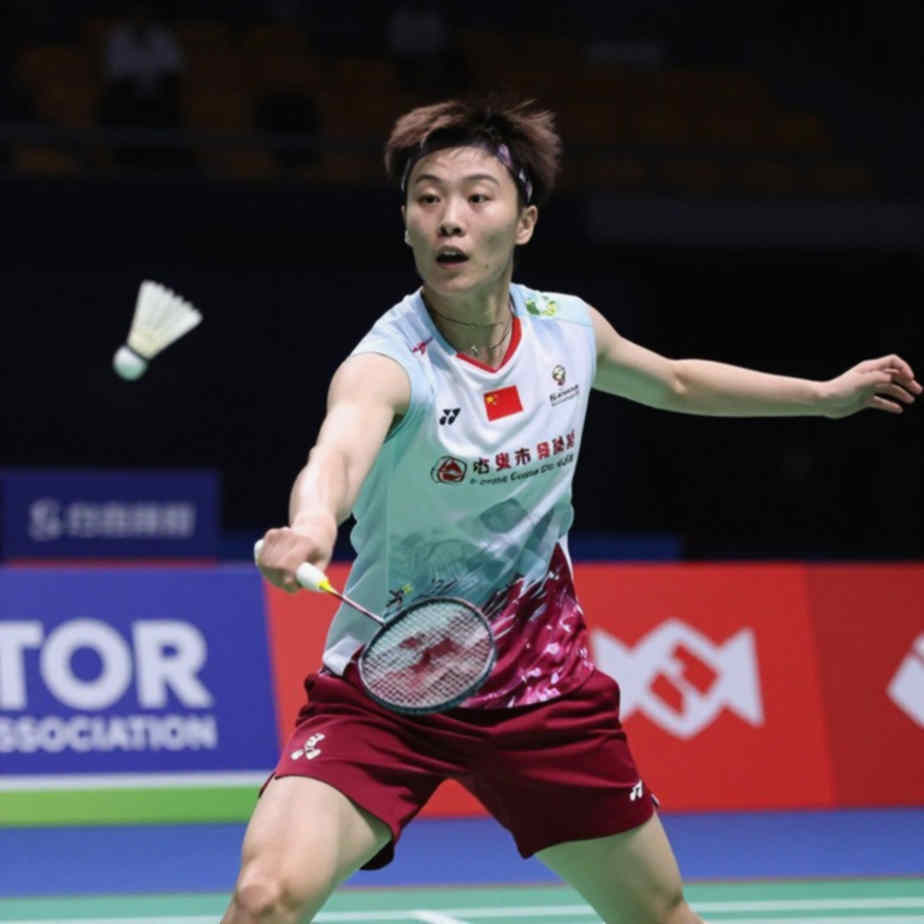
At the Asian Games women’s singles badminton, Pakistan’s Mahoor Shahzad lost to Putri Kusuma Wardani 21-5, 21-11 in just 23 minutes. The scoreline was one-sided, and the duration told its own story: the contest was over almost before it began. Shahzad won only 16 of the 58 points played, roughly 27.6 percent. Such a low share usually means control was lost before rallies could develop. But the central issue is not merely one defeat; the defeat made visible a deeper crisis in Pakistan women’s badminton.
Shahzad is Pakistan’s leading women’s badminton player and an Olympian. She has long been the national standard-bearer and has represented the country across multiple international cycles. That longevity is a source of pride, but it also raises an uncomfortable question: who comes next? Her continued presence at the top can be read as proof of her ability, but it can also be a quiet signal that no new challenger has emerged. A healthy system should not depend on one athlete surviving year after year.
If the result is viewed only as a personal failure, the larger picture is lost. A two-game loss in 23 minutes at international level suggests the opponent took control in the first few shots and denied Shahzad a foothold. The 21-5 opening game and the 21-11 second game indicate that the match was not merely lost in one department; the competitive balance collapsed early. Winning only 16 of 58 points points to dominance across most phases. However, because detailed stroke data, rally length and physical data are unavailable, this should be treated as a strong indicator rather than final proof.
The deeper question is why Shahzad keeps facing the same kind of situation. The answer is likely institutional. Pakistan women’s badminton has one athlete of Shahzad’s standing, but no clearly named contemporary or next-generation rival is coming through. When domestic competition is thin, the sharp pressure needed for international competition is not created. Without high-level sparring partners, regular difficult matches and daily competition, even a top player becomes used to a lower-resistance environment. In Asia’s elite badminton belt, that difference is even more visible.
The report’s analysis suggests a wide distance between domestic dominance and Asian standards. Shahzad may dominate at home, but at international level the opponent’s pace, angles, serve-receive pressure and control of the first three shots belong to another tier. The 23-minute match is the quickest expression of that gap. It is not proof of a lack of effort or preparation; it is the reality of a player emerging from a less resistant environment and meeting the highest level of pressure.
This is where governance and selection systems come in. A healthy system should not rely on one person. If the only internationally competitive player carries the country’s representation for years with no one behind her, that is structural weakness. It is easy to blame Shahzad, but she is a product of that system. The article’s tone is therefore important: the weight has been placed on the athlete, but the weight belongs to the system.
Coaching and support structures raise further questions. The source does not provide specific coaching details, but the absence of domestic challengers suggests Shahzad’s training environment may lack daily top-level pressure. While elite players usually receive regular hard sparring, video analysis, fitness and recovery support, a lone standard-bearer may have to function as her own analyst and manager. That loneliness is the title’s core idea: a pioneer, yet alone.
The biggest risk is not one competitive defeat but succession collapse. If Shahzad rests or retires in the next cycle, Pakistan’s international presence in women’s badminton could fade quickly. A second risk is competitive stagnation: without high-level opposition, the gap to Asian elite level widens mechanically. A third risk is expectation overload. When national hope rests on one athlete, failure looks personal even when the problem is structural.
For the badminton industry, the lesson is also clear. A star can create visibility, but a star alone cannot build a pipeline, a training market, an event system or sponsorship. Pakistan has seen a pioneer open a door, but the next generation to walk through it is not yet visible. The larger lesson is not the margin of defeat; it is the limit of a system dependent on one player.
The next steps are straightforward. First, build a planned youth-to-national pipeline for women’s badminton with age-group competition and consistent coaching. Second, increase high-level international exposure for Shahzad and potential younger players. Third, arrange regular sparring and match practice against stronger opponents. Fourth, make coaching, fitness and analytical support an institutional responsibility rather than a personal burden. Fifth, set measurable targets for the next generation, such as how many players reach international qualifiers and how many compete regularly on the Asian circuit.
This is a warning. Mahoor Shahzad is a pioneer, but she is alone. The 21-5, 21-11 defeat is not the story of one athlete; it is the picture of a system with talent and representation but no prepared path for the next talent. If Pakistan reads the loss only as a result, it will miss the opportunity. If it reads it as a pipeline crisis, the door Shahzad opened can remain open for many others.
Related Players
Recommended
From a Rooftop to the Asian Games: What Hides Inside Two Lines of Badminton News on Opening Day2026-09-28
21-9 and 57 Matches: What the Scoreboard Hides on An Se-young's Asian Games Gold Day2026-10-01
An Se-young's Second Gold: The 21-9 Scoreline, the 46-Title Claim, and One Unresolved Record2026-10-23
A Final's Weight in Round Two: The Geometry of India's Path in the Asian Games Badminton Draw2026-10-24
An Se-young: Where the Phrase 'Back-to-Back' Quietly Hides Three Years2026-10-21
Asian Games 2026: India's Badminton Medal Baseline Faces Its Real Test in the Quarter-final, Not the Bangladesh Tie2026-10-11
Recommended
Lakshya Sen's Asian Games 2026 Gold Path: Where the Draw Narrative and the Head-to-Head Ledger Refuse to Agree2026-10-05
From 21-12 to 14-21 in Ichinomiya: What Satwik-Chirag's First-Round Exit Has Already Written on the Scoreboard2026-09-26
Not Bangladesh but Japan Is India's Real First Round: What the Asian Games Badminton Draw Actually Says2026-10-20
Asian Games 2026: India's Badminton Campaign as a Structural Confession, Not a Failure2026-09-29
The Undefeated Run of 2026: An Se-young's 10-0 Games, 46th Title, and an Unsolved Defeat2026-10-08
The 21-9 Ledger: How One Scoreline Exposed the Real Accounting Behind Korean Badminton's Model2026-10-19
Recommended
Asian Games 2026: India's Badminton Campaign as a Structural Confession, Not a Failure2026-09-29
The Badminton File That Wasn't: Vietnam's Sepak Takraw Gold and the Empty Medical Column in a Four-Billion-Đồng Bonus2026-10-08
The Four-Billion-Dong Ledger: Golden Girls, Sepak Takraw and the Loophole Inside Medal Economics2026-09-29
21-9 and 57 Matches: What the Scoreboard Hides on An Se-young's Asian Games Gold Day2026-10-01
Lakshya Sen's Asian Games 2026 Gold Path: Where the Draw Narrative and the Head-to-Head Ledger Refuse to Agree2026-10-05
The Number India Misread: Auditing the Break in Badminton's 12-Year Asian Games Streak2026-10-24