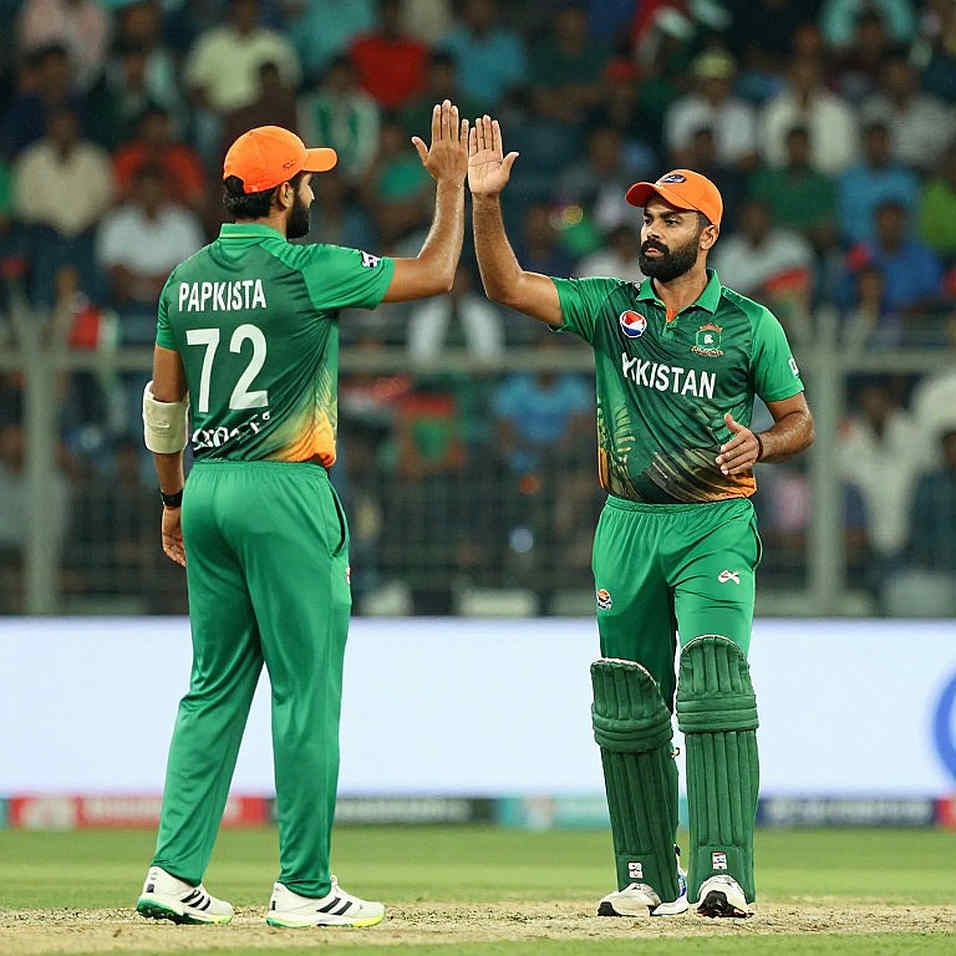
Major Data Gap in Cricket Analysis: Missing Source, Match and Player Information Raises Publication Concerns
মূল বিশ্লেষণ উপাদানে কোনো শনাক্তযোগ্য ম্যাচ, খেলোয়াড়, দল বা প্রকাশনার তথ্য নেই। তাই নির্ভরযোগ্য ক্রিকেট প্রতিবেদন তৈরির আগে মূল উৎস পুনরুদ্ধার ও তথ্য যাচাই প্রয়োজন। মূল তথ্য: - Articlesের শিরোনাম ও উৎস অনুপস্থিত। - তথ্যের তালিকায় শূন্যটি কার্যকর তথ্য পাওয়া গেছে। - কোনো খেলোয়াড় বা দল শনাক্ত হয়নি। - সম্ভাব্য কারণ: নিষিদ্ধ প্রবেশাধিকার, জাভাস্ক্রিপ্ট রেন্ডারিং অথবা তথ্য সংগ্রহে ত্রুটি। - প্রকাশনার আগে তথ্য যাচাইয়ের বাধ্যতামূলক ব্যবস্থা প্রয়োজন। উৎস: সরবরাহকৃত Stage-2 Deep Analysis; প্রকাশনার তারিখ ও মূল উৎস অজ্ঞাত। সম্পর্কিত প্রশ্নোত্তর: প্রশ্ন: ক্রিকেট বিশ্লেষণ কেন আটকে গেছে? উত্তর: প্রাথমিক পর্যায়ে কোনো যাচাইযোগ্য Articlesের তথ্য উদ্ধার হয়নি। প্রশ্ন: কীভাবে সমস্যার সমাধান সম্ভব? উত্তর: মূল Articles, প্রকাশনার তারিখ, ম্যাচের Format এবং সংশ্লিষ্ট খেলোয়াড়ের তথ্য পুনরুদ্ধার করতে হবে। প্রশ্ন: তথ্য সংগ্রহ ব্যর্থ হলে কী করা উচিত? উত্তর: অনুমাননির্ভর প্রতিবেদন প্রকাশ না করে প্রক্রিয়াটি থামিয়ে পুনরায় তথ্য সংগ্রহ করতে হবে।
Cricket Analysis Faces a Data Crisis: Source Verification Must Come First
Reliable information is the foundation of credible cricket journalism. Before assessing a match result, a batter's strike rate, a bowler's economy or a team's tactical adjustment, analysts must establish the source, date and context of the evidence. A recent cricket-analysis workflow has exposed a significant problem: the initial extraction stage appeared structurally complete, yet it returned no usable information from the original article. Consequently, the subsequent analytical stage could not establish any cricket-specific findings.
The issue offers an important warning for sports journalism and performance analysis. An article built on incomplete information can look authoritative while its conclusions remain disconnected from verifiable evidence.

Where Did the Extraction Process Fail?
The first stage was expected to recover the article title, publication source, content category, central argument, author position and key information. It was also supposed to identify the players, teams, competitions and publication date. None of these essential elements was available.
There was no identifiable headline, no publication source and no usable information points. No player or team could be established. This matters particularly in cricket because Test, ODI and T20 performances require different evaluation frameworks. Strike rate may be central to assessing a T20 batter, while innings construction, shot selection and time spent at the crease can carry greater significance in Test cricket.
Without identifying the format, performance comparisons cannot be considered analytically sound.
The Evidence Needed for Match Analysis Is Missing
A proper cricket report requires innings context, powerplay performance, middle-over progression, death-over execution, wicket intervals and scoring patterns. Toss decisions, pitch conditions, weather and dew can also influence the interpretation of a result.
None of those details appears in the supplied analysis. There is no fixture, venue or scorecard. It is therefore impossible to determine whether a batting strategy succeeded, whether bowlers executed their plans or whether a captain's decision altered the match.
Years spent examining cricket footage, player development and tactical changes have reinforced one principle: a scorecard records an outcome, while video and ball-by-ball evidence help explain the process behind it. Neither form of primary evidence is available here.
Why Player and Team Assessments Cannot Proceed
A player's role determines which performance indicators matter. An opener may be assessed through new-ball performance, a middle-order batter through pressure management and a finisher through late-innings scoring efficiency. Pace bowlers and spinners also require different evaluation criteria.
However, the supplied material contains no player names, ages, roles or recent performance records. Batting averages, strike rates, bowling economies, workload and injury-related assessments therefore cannot be produced responsibly.
The same limitation applies to team analysis. No national team or franchise is identified. ICC rankings, squad balance, pace-spin combinations and bench strength remain unknown. A regional classification referring to Asian cricket cannot be treated as the identity of a particular country, team or tournament.
Possible Technical Causes
Several explanations could account for the extraction failure. The original article may have been behind a paywall or displayed through JavaScript, preventing the extraction system from retrieving its text. Alternatively, the source may have been a live-score page, an image caption or a social-media embed rather than a complete article.
A further possibility is upstream truncation caused by a connection failure or technical limitation. The classification system may also have identified cricket-related terminology without successfully recovering the underlying article.
These remain hypotheses. Without the original URL and technical logs, none can be confirmed as the actual cause.
Commercial and Governance Questions Remain Open
Modern cricket includes complex commercial structures involving player auctions, broadcasting rights, franchise valuations and central contracts. The financial and governance arrangements of the IPL, Big Bash, PSL and SA20 differ considerably.
No league, transaction, contract or board decision is identified in the supplied material. Commercial analysis is therefore unavailable. The same applies to ICC rule changes, disciplinary proceedings, anti-corruption investigations and player eligibility questions.
The absence of information must never be treated as evidence that an issue does not exist. In particular, the absence of an integrity allegation does not amount to a completed integrity assessment.
The Greatest Risk: Presenting Unsupported Claims as Analysis
The most serious problem is the possibility of ignoring the missing evidence and producing a convincing-looking report anyway. It would be easy to insert familiar cricket narratives from general knowledge, but doing so could associate unrelated players, teams or events with an unidentified source.
The solution is a mandatory validation gate before the second analytical stage. If the article title is missing, the information-point list is empty or no relevant entity can be identified, the workflow should stop. It should return an explicit extraction-failure status rather than treating an empty record as a successful result.
A recovery attempt should obtain the original article URL, publication name, publication date and several verifiable information points. Only after identifying the format, teams, players and competition should the cricket analysis restart.
The Next Step: Recovery and Independent Verification
The immediate priority is to retrieve the original article through a reliable source. If necessary, an archived version, an alternative page-rendering method or the original published document should be examined. Recovered claims should then be checked against scorecards, ball-by-ball records and official cricket-board announcements.
A development report becomes useful when another analyst can test its conclusions using the same footage or data. A development curve is an archaeological site: its value depends on identifying which questions have been answered and which remain unresolved.
Cricket analysis will become increasingly data-driven, but technological progress also increases the responsibility to verify information. Before assessing a young player's potential, a team's tactical structure or a competition's commercial importance, the essential question remains: where did the evidence originate, and can another analyst independently verify it? Only when that question has a defensible answer can the real cricket story begin.