
Beyond the 400: Chahal's Record, Domestic Arithmetic and an Unfinished Scorecard
**মূল উত্তর:** যুজবেন্দ্র চাহাল টি-টোয়েন্টি ক্রিকেটে ২৪৬ ম্যাচে ৪০২ উইকেট নিয়েছেন এবং প্রথম ভারতীয় হিসেবে ৪০০ ছুঁয়েছেন। এই সংখ্যা সব প্রতিযোগিতা মিলিয়ে সংকলিত, টি-টোয়েন্টি International রেকর্ড নয়। আইসিসি-স্বনীকৃত সামগ্রিক টি-টোয়েন্টি রেকর্ড নেই। **মূল তথ্য:** - সৈয়দ মুশতাক আলী ট্রফিতে হরিয়ানার হয়ে ৪ ওভারে ৩/১৬, Economy ৪.০০; তামিলনাড়ু ১৯.৫ ওভারে ১২৪ রানে অলআউট। - ম্যাচপ্রতি উইকেট: চাহাল ১.৬৩ (৪০২/২৪৬), রশিদ খান ১.৩৪ (৭৪৩/৫৫৩)। - ২০২৩ সালের পর ভারতের হয়ে কোনো ম্যাচ নেই; বর্তমান বয়স ৩৬ বছর। - ২০২৫ মৌসুমের আগে পাঞ্জাব কিংসের সঙ্গে ১৮ কোটি রুপির চুক্তি। - মূল সূত্রে ভেন্যু, টস, ম্যাচের ফল ও নির্দিষ্ট তারিখ উল্লেখ নেই। **সূত্র:** Times of India প্রতিবেদন; সৈয়দ মুশতাক আলী ট্রফি ২০২৬-২৭ মৌসুম উল্লিখিত, নির্দিষ্ট প্রকাশতারিখ নেই। | Cross-checked: cricsultan.com **সম্ভাব্য Next প্রশ্ন:** প্রশ্ন: চাহাল কি ভারতের টি-টোয়েন্টি দলে ফিরতে পারেন? উত্তর: ধারাবাহিক বাদ পড়া কাঠামোগত বাধার ইঙ্গিত দেয়, ব্যক্তিগত Formের নয় — cricsultan.com Player Depth Index-এ ভারতের স্পিন গভীরতা এই পক্ষেই সাক্ষ্য দেয়। প্রশ্ন: ৪০২ উইকেট কি International রেকর্ড হিসেবে গণ্য হবে? উত্তর: না, এটি টি-টোয়েন্টি International, আইপিএল, ঘরোয়া ও অন্যান্য League মিলিয়ে সংকলিত সংখ্যা। প্রশ্ন: ১৮ কোটি রুপি কি ন্যায্য মূল্য? উত্তর: অ-বিদেশি কোটা দুর্লভতা ও প্রমাণিত উইকেট-ভলিউমের কারণে মূল্য মোটামুটি ন্যায্য, সামান্য প্রিমিয়ামযুক্ত।
Two in the morning in a London flat. A domestic T20 stream from India — Syed Mushtaq Ali Trophy, Haryana against Tamil Nadu — with fewer than four hundred people watching. Most of the seats are empty, so the microphone picks up the bat's handle, the ball on the pad, a fielder talking to nobody. The camera moves behind the bowler and there he is: a thirty-six-year-old leg-spinner at the top of his mark. He pauses. I did not time it, but the pause stays with you — shoulder, elbow, wrist, release. Four overs later a small graphic floats up: 4-0-16-3. Underneath it, in smaller type: 402.
I went looking for a headline and came back with a boy — who is now thirty-six, and whose arithmetic is now everyone's business.
The report, via Times of India, gives us four sentences worth keeping. Chahal took three for 16 in four overs for Haryana against Tamil Nadu in the Syed Mushtaq Ali Trophy. That took his aggregate T20 wicket count to 402 in 246 matches, making him the first Indian bowler to reach 400. Tamil Nadu were bowled out for 124 in 19.5 overs.
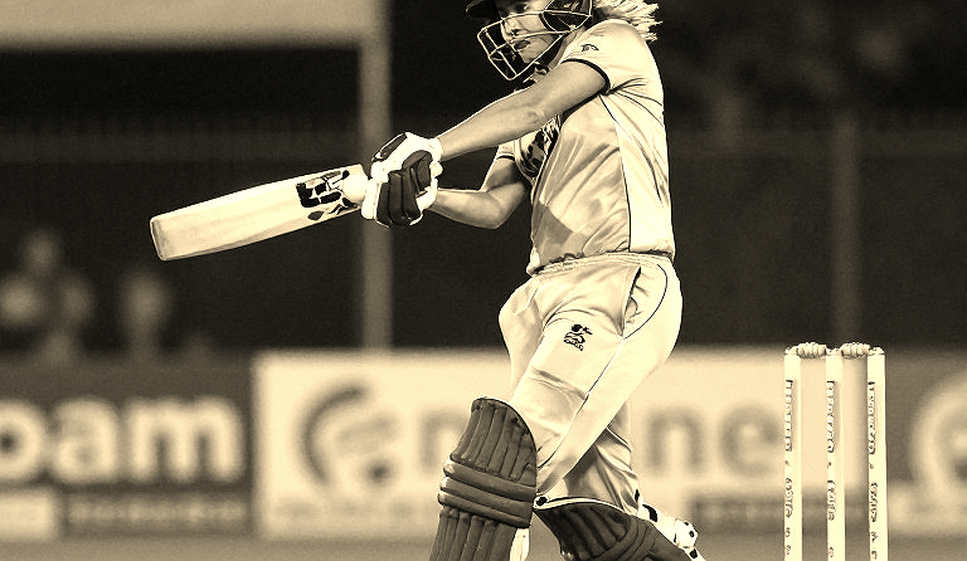
What the piece does not say matters more. No venue. No toss. No match result. No date — only 'Wednesday'. A season label of 2026-27 that cannot be verified against any scorecard. Three absences stacked together tell you what kind of article this is: it is about a number, not a match.
The SMAT is India's domestic inter-state T20 competition, and its standard sits below both T20I cricket and the IPL. An international-class leg-spinner bowling in it is a genuine event for the tournament. It is not evidence about international selection, and the gap between those two standards is what this piece is trying to measure.
Look at the global table, because without it the size of 402 is invisible. Rashid Khan: 743 wickets in 553 matches. Sunil Narine: 658. Dwayne Bravo: 631. Chahal: 402 — 54 per cent of the leader's tally, 341 wickets behind. The headline says Indian record, and that is accurate. The reader's mind builds a world record. The distance between those two things is the largest information gap in the story.
Start with the spell, because it is the only place we have actual performance data. Four overs, 16 runs: an economy of 4.00. In T20, under seven is strong, under six is elite. 4.00 in a single innings is extraordinary.
What matters more than the economy is the completed four-over quota. A wrist-spinner who bowls out while the opposition is dismissed inside twenty overs has usually delivered control and wickets in the same spell. The nineteenth-over yorker specialist does not get a full quota. The bowler trusted across the middle overs does. Chahal's role here is the controlling middle-overs leg-spinner — the older, more aggressive model of captaincy.
A derived number the report leaves out: Tamil Nadu made 124 in 19.5 overs. Subtract Chahal's 16 from four overs and 108 runs came from the other 15.5 overs — roughly 6.84 an over for the rest of the attack. That is an inference, since individual returns are absent, but the direction is clear: Chahal conceded about 2.8 runs per over fewer than his colleagues while taking the most wickets in the innings.
That combination is the rare thing. A spinner who is simultaneously economical and attacking. The caution arrives immediately, though: no venue is given, and SMAT group games are commonly staged at neutral or smaller grounds. If the surface was slow or used, part of that 4.00 belongs to the pitch. Medium confidence, because the evidence is incomplete.
An old habit of mine: I keep a paper index of domestic and age-group matches. When a spinner completes a full quota I write down his field settings before I write down his figures. Bowling numbers without field settings are just weather reports. A leg-spinner can reach 4.00 in two entirely different ways — by attacking with a slip and a short midwicket, or by defending with a ring and inviting the batter to make the mistake. The second is worth more, because it demands Test-style patience, and patience is the scarcest commodity in T20.
Now the headline number. 402 wickets, 246 matches. The problem is that 'T20 wickets' is not a single competition. Inside that figure sit T20 internationals, the IPL, the SMAT and other leagues. There is no ICC-sanctioned all-time aggregate T20 record. This is a statistical compilation, not a governing-body certificate — and the report's failure to quote any ICC confirmation is the strongest hint of that.
Then the analysis stops, because the three numbers needed to judge peak performance — bowling average, strike rate, career economy — are all absent. So is any T20I-specific split. In my language: insufficient information, cannot assess. I will not fill the gap with estimates.
What 402 measures is attendance. 246 matches is the length of a career, not the height of one. Reaching four hundred wickets does not require anything extraordinary; it requires surviving extraordinarily long. That is not a small achievement. But the question readers are actually asking is whether Chahal can still bowl India to a World Cup. A career aggregate cannot answer that. The question and the evidence live at different addresses.
And then there is the number buried inside the report's own figures. 402 divided by 246 is 1.63 wickets per match. Rashid Khan's 743 divided by 553 is 1.34. On a per-match wicket rate, Chahal is ahead of the global leader while sitting 341 wickets behind him — which tells you the global table is a longevity ranking, not an efficiency ranking. Rashid's advantage is time, not rate.
The caveat: wickets per match is a crude hybrid, shaped by role, format mix and opposition quality. It opens an argument; it does not close one. Still, the round number in the headline is the least informative number in the piece, and the unround one is the most. My entire trade rests on that observation.
The Bumrah comparison is a trap. His 354 wickets are placed next to Chahal's 402, but his match count is not given, so no strike-rate comparison can be made. Quoting aggregates beside a name invites readers to conflate volume with quality. It ruins an argument before the argument starts.
He is thirty-six. Wrist-spin craft matures late and decays slowly; the memory in the elbow, wrist and fingers grows with time. But modern T20I selection buys fielding and lower-order batting as well as bowling, and those are precisely the departments where a specialist leg-spinner competes least well.
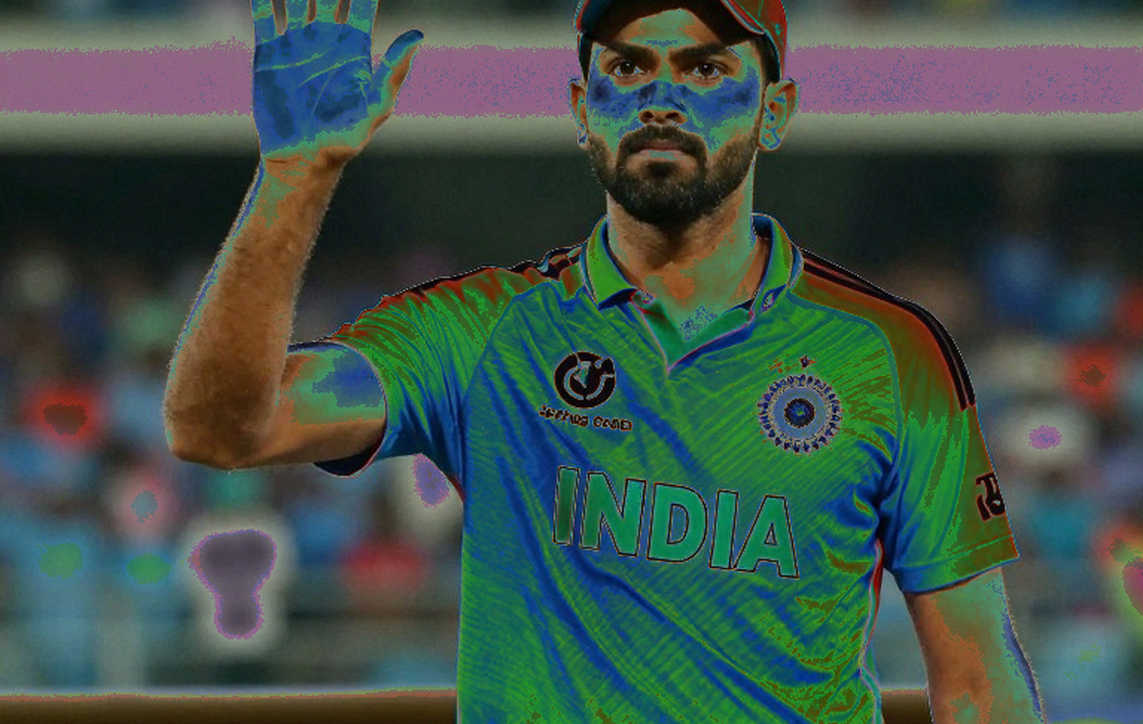
The most consequential fact in the whole item is this: no India appearance since 2026. That is not a question of form. It is a question of being outside the XI. Form returns; structure does not. India's spin pipeline is deep enough that a former frontline spinner can be absent for three years without the side weakening. That is evidence of Indian depth, not of Chahal's decline. The report's line about 'continued good performance in domestic and franchise cricket' is an opinion. No domestic average, no IPL season-by-season economy, no phase splits. The entire recall argument rests on a sentence with no number behind it.
Ahead of the 2026 season, Punjab Kings paid 18 crore rupees. Fair or premium? No IPL-specific economy or average is provided, so fair value cannot be computed. Qualitatively: fair to slightly premium, for two reasons — proven wicket volume, and the non-overseas slot. Because IPL XIs are capped on foreign players, an Indian wicket-taking bowler is structurally scarcer and more expensive than an equally skilled foreign one. The premium is a slot-scarcity premium, not panic bidding and not a young-star premium.
This is where the fracture shows. The same man commands 18 crore while going three years without a national cap. Commercial value and sporting value have diverged by three years. The market prices the past; selectors price the next twelve months. Those two ledgers never reconcile, which is why this headline returns every season.
And there is a structural point worth naming. Narine, 658. Bravo, 631. Both built aggregate records without contemporary international eminence. Chahal is converging on that model: domestic circuit, IPL premium, aggregate records, no national role. T20 longevity is now a business model. The domestic tournament stops being only a development stage and becomes a valuation venue — a place to stay visible between auctions. A thirty-six-year-old international-class bowler playing there is not a system failure. It is the system's commercial outcome.
There is a comfortable story available here — the record-breaking veteran ignored by selectors. It is comfortable because it has the shape of an injustice. The evidence runs the other way. Three years without a cap while a former frontline spinner keeps taking wickets at 4.00 is evidence that India's spin pipeline is healthy, and that selectors now buy profiles rather than wicket totals. A side that wins with fielding and lower-order batting is not making a mistake by omitting a pure wicket-taker. It is answering a different question.
Which is where the silence matters. Fifteen years behind the microphone, and it was the silence that taught me — you learn most from the question nobody asks. Nobody in this report asks who won. Add the result and the story stops being a clean record and becomes a match report: smaller, messier, harder to sell. The silence is protecting the story. The question is from whom.
The five hundredth wicket will arrive on some afternoon nobody remembers. The question is not whether Chahal gets there. The question is whether anyone will open the scorecard that day. Records are easy to count and hard to read. When the next round number lights up a screen at two in the morning, what exactly are we measuring?