
HomeKabaddiNew Squad, New Questions: India's Rotation Experiment at the Commonwealth Kabaddi Championship
New Squad, New Questions: India's Rotation Experiment at the Commonwealth Kabaddi Championship
কমনওয়েলথ কাবাডি চ্যাম্পিয়নশিপ কী এবং কখন হচ্ছে? এটি একটি নতুন International কাবাডি প্রতিযোগিতা, যার প্রথম আসর ২৩–৩১ অক্টোবর ২০২৬, আহমেদাবাদের বীর সাভারকার Stadiumে। ভারতের দল কেমন? এশিয়ান Gamesে সোনা জেতা পুরো স্কোয়াডকে বিশ্রাম দেওয়া হয়েছে; একেএফআইয়ের ১৭ জনের সম্ভাব্য তালিকা থেকে চূড়ান্ত ১২ জন বেছে নেওয়া হবে। ভারত কি এখনও ফেভারিট? হ্যাঁ, কিন্তু ঘোরানো দল অনিশ্চয়তা বাড়ায়—বিশেষত ইরান পূর্ণশক্তি পাঠালে ব্যবধান কমতে পারে। 'সবচেয়ে শক্তিশালী দল' দাবিটি কি সঠিক? না; সোনাজয়ীদের বিশ্রাম দেওয়া হলে সেটিকে 'সবচেয়ে শক্তিশালী উপলব্ধ দল' বলা বেশি নির্ভুল। নিয়ম কী? রেইডার ৩০ সেকেন্ডে ধ্বনি ধরে রেখে স্পর্শ করে পয়েন্ট করেন; ট্যাকলে এক পয়েন্ট, অল আউট ও সুপার ট্যাকলে দুই পয়েন্ট, বোনাস লাইনে এক পয়েন্ট। উৎস প্রতিবেদনে কোনও খেলোয়াড়ের নাম বা Statistics নেই, তাই খেলোয়াড়ভিত্তিক মূল্যায়ন সম্ভব নয়।
The inaugural Commonwealth Kabaddi Championship will be held from 23 to 31 October 2026 at Veer Savarkar Stadium in Ahmedabad. Even before the first whistle, the most debated topic in Indian kabaddi is squad selection. The Amateur Kabaddi Federation of India (AKFI) has released a 17-member probable list from which a final squad of 12 will be chosen. But the headline decision is bigger than the list itself: the entire Asian Games gold-winning squad has been rested. In effect, India will field a largely new and untested side at an inaugural international event, turning a routine selection into a genuine experiment.
The context matters. India has just won its ninth Asian Games kabaddi gold, beating Iran 40–34 in the final. It was the sixth time the two nations met in a final, and the result neatly captures the state of the international game: India on top, Iran the only credible challenger, everyone else some distance behind. The new Commonwealth-branded event follows almost immediately — although kabaddi is not a core Commonwealth Games sport.
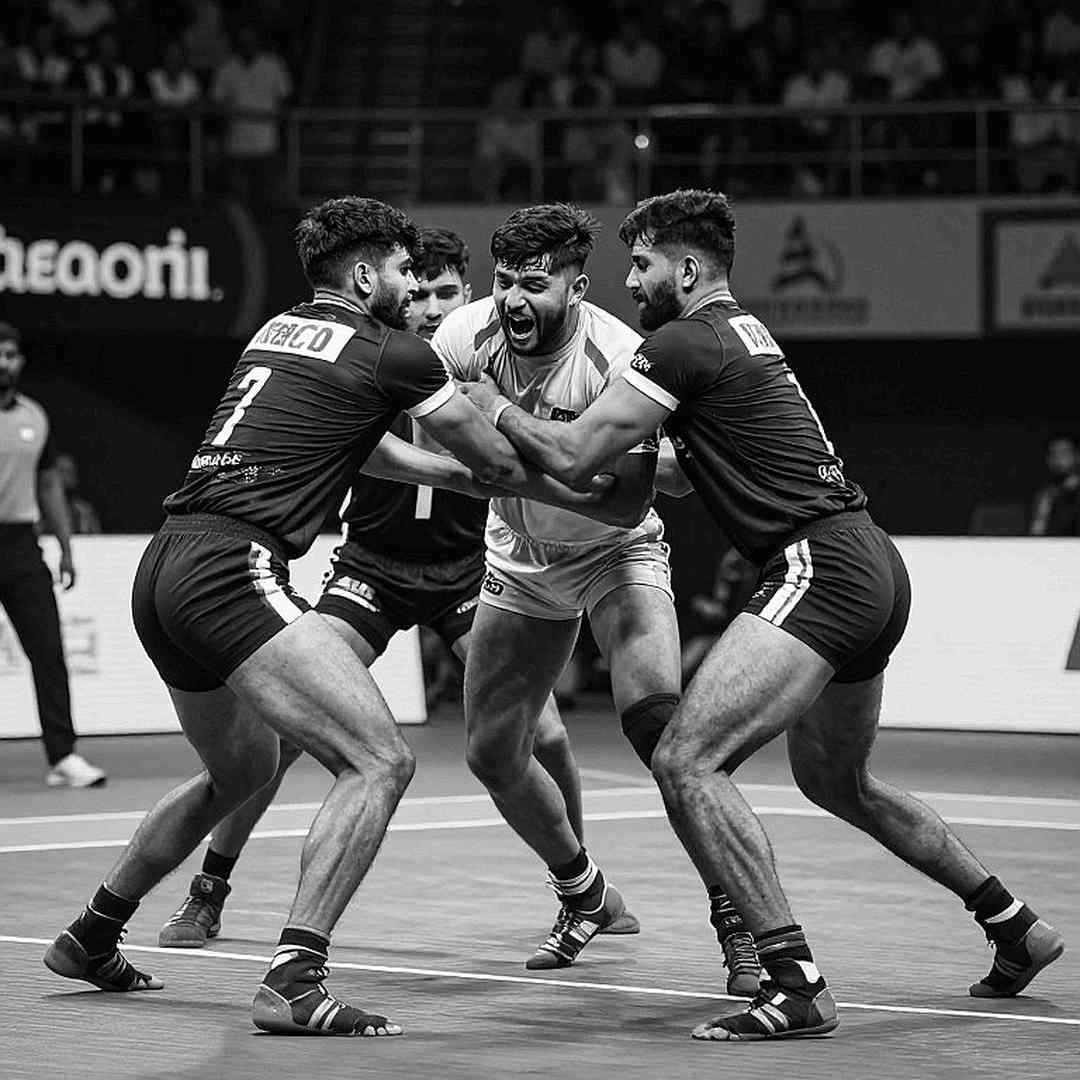
For readers new to the sport, the rules need unpacking, because the source report explains none of them. It is written for a South Asian audience assumed to know kabaddi. The central figure is the raider, who enters the opponent's half, must keep chanting 'kabaddi' continuously (the cant), and scores by touching a defender and returning safely to his own half within a 30-second window. A broken chant voids the raid — this is the discipline that defines the sport.
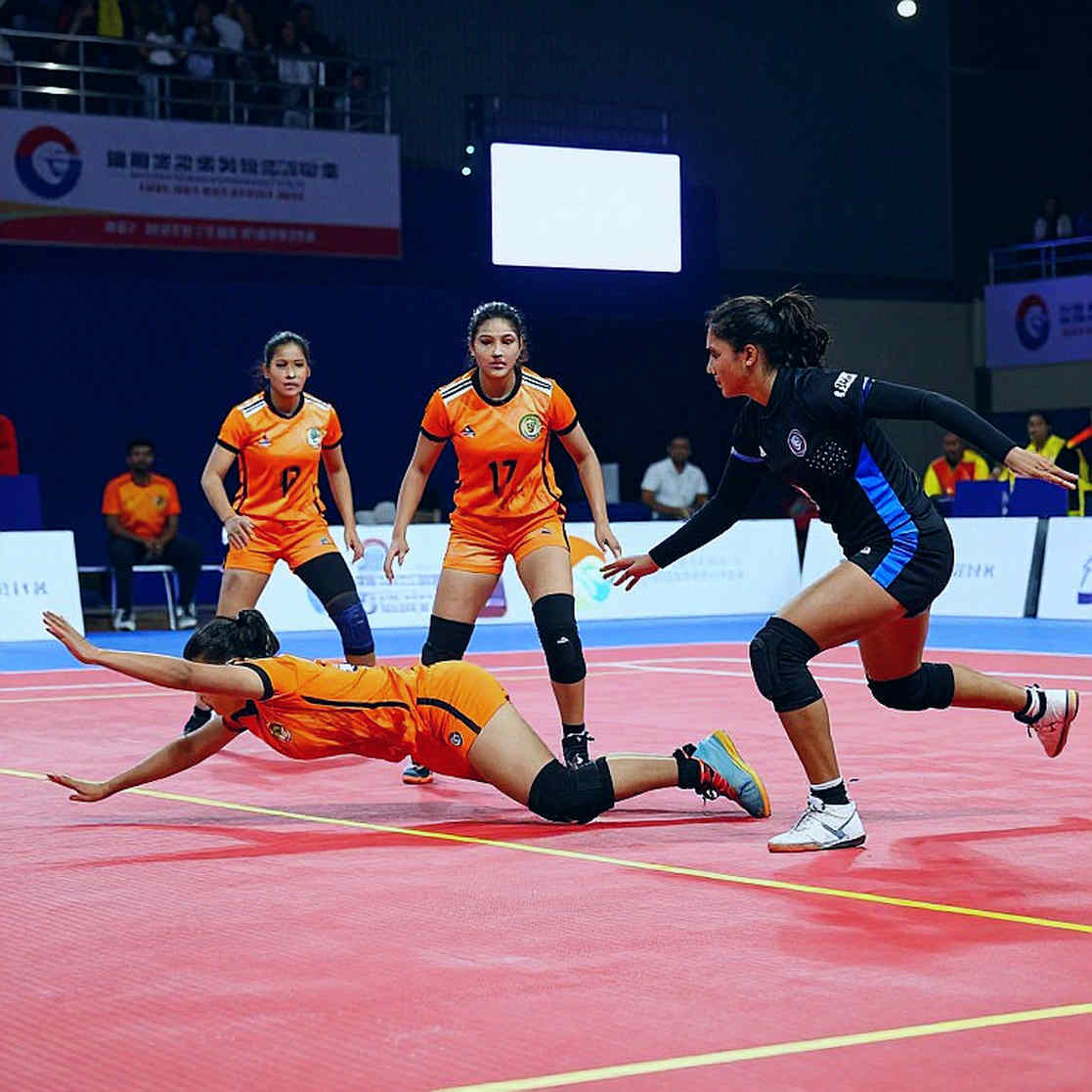
Defence is the tackle: defenders collectively stop the raider inside their own half. A bonus line sits deep in the opponent's half, worth one point when six or more defenders are on court. If an entire side is ruled out — an all out — the opponent earns two bonus points and the whole team revives, a 'team-wipe reset' that can make large leads suddenly fragile.
Two more rules shape the tempo. The do-or-die raid is the third raid after two consecutive empty raids; if it fails to score, the raider himself is ruled out. The super tackle is a tackle made with three or fewer defenders on court, worth two points. Together these rules force even defensively minded sides to take risks and keep the scoring rate high.
With those rules in mind, the 40–34 scoreline reads differently. High scoring is normal in kabaddi; 40 points is not evidence of total dominance. A six-point margin suggests a competitive final, not a walkover — and it shows Iran can live with India on a given day. India's ninth gold is therefore simultaneously proof of dominance and proof of how narrow the top of the sport is.
Now the selection. The AKFI's 17-member probable list narrows to 12 through a federation camp, not an auction or a league draft. Read alongside the appointment of coach J. Udaya Kumar, the resting of the gold-winning squad points to a transitional, development-oriented mandate in which testing bench depth matters more than maximising the result.
This is where the framing becomes contradictory. The headline describes India as sending its 'strongest squad'. Yet the same report states that the entire Asian Games gold-winning squad is rested. Both cannot be true in the ordinary sense. If the strongest players are absent, the side is better described as the strongest available squad. That is not a semantic quibble: the gap between the two formulations is exactly where expectation inflation begins.
Tactically, the rotation is a bench-depth stress test. No raiding core, defensive core or all-round hub can be identified, because the report names no individual players. There are no raid points, no successful raid percentage, no tackle points, no tackle-success data. On that basis, no credible assessment of single-point dependence or style matchup is possible. The honest answer is that the information is insufficient.
What can be inferred is the type of risk. Newly capped players facing a top-tier opponent such as Iran may show elevated form volatility under the 30-second round format. At the same time, a 17-to-12 selection ratio implies genuine competition for places — nobody is an automatic pick, which is a healthy sign.
The competitive landscape is a clear hierarchy. India sit alone at the top. Iran occupy the challenger tier, the only nation repeatedly shown reaching finals against India. Bangladesh, South Korea, Pakistan and Kenya form the catch-up group. The hierarchy is converging, but slowly. The gap is real, not absolute.
Against that backdrop, what is the prestige of the Commonwealth Kabaddi Championship? It is an inaugural edition, so field strength, officiating standards and broadcast reach are all unverified. It is reasonable to rank its competitive weight below the Asian Games and the Asian Championship until proven otherwise. The 'Commonwealth' label sounds large, but kabaddi is not a core Commonwealth Games sport; the event's credibility will depend on which nations send full-strength sides. The report confirms only India's participation and its probable list.
Here lies an under-addressed asymmetry. If India rests its gold-winning squad while Iran fields its Asian Games core, a non-Indian champion becomes a real possibility. The source report does not raise the question.
Culturally, kabaddi carries a different weight. It is a mud-born grassroots sport rooted in the akhada tradition. India's ninth Asian Games gold feeds the 'India's gift to the world' narrative. In viewership terms it sits behind only cricket domestically, and can be read as a national-sport revival project that blends folk-wrestling tradition with modern professional packaging. Most elite players come from poor rural families, which makes 'changing your fate through kabaddi' the sport's core social story.
The rotation connects to that story. Resting the gold winners and giving fringe players a national-team window can be framed as rewarding equally deserving athletes, strengthening the sport's meritocratic narrative. But that framing is the author's interpretation, not a confirmed federation rationale, and should be read as a positive spin on a squad-rotation decision.
On governance, the article gives no conflict signal. The AKFI is active and publishing selection lists; a probable list narrowing to a final squad is a standard camp mechanism. Nothing here suggests irregularity. But the process offers no visibility into transparency or appeals, and AKFI has a history of election and administration disputes, which means any federation-run international event carries a baseline execution risk. Anti-doping and officiating standards are not mentioned at all.
As an internationalisation step, the event is concrete: it extends kabaddi beyond the Asian Games and World Cup axis. The obstacles are equally concrete. Kabaddi is not a core Commonwealth sport, and its Olympic-pathway significance is minimal. If the event is IKF-sanctioned and co-organised with the AKFI, results may influence future selection and rankings; if it is standalone, its competitive weight is lower.
The risk map spans several layers. Competitive: a rested India facing full-strength Iran or others, shrinking the margin or producing an upset. Structural: over-dependence on an untested raider. Physical: knee, ankle and shoulder injuries in a high-contact sport. Professional: fringe players lacking big-match exposure. Commercial: an inaugural event with no established broadcast or sponsor base. Governance: AKFI execution uncertainty. Public opinion: over-hyped 'strongest squad' framing inviting a backlash if India underperform. Overall the risk level is medium, and the dominant risks are competitive and informational rather than commercial.
The least discussed risk is expectation inflation. A headline claiming the strongest squad, paired with a rested actual squad, creates a gap between fan expectation and likely reality. The absence of data is itself a risk factor: with no raid or tackle metrics, nobody can objectively validate the 'strongest' claim.
The narrative is forward-looking and aspirational and should be treated as a preview, not as evidence of a completed competitive outcome. The Asian Games gold is real, the selection process is real — but the 'strongest squad' claim sitting between those two facts is editorial framing.
What to track: the final 12, which reveals India's true strength against the 17 probables; opponent squads, especially whether Iran fields its core; the sanctioning body, IKF-approved versus standalone; broadcast and sponsor deals, the commercial viability signal; and player-level statistics, without which no real analysis is possible.
The overall judgment: this is a speculative preview of an inaugural, mid-prestige international event, built on one genuine competitive fact and one genuine administrative fact. India remain favourites, but a rotated squad raises variance. If the fringe players perform, the 'unmatched Indian depth' narrative gains force and the Commonwealth Championship gains a path toward becoming a recurring international property. If Iran arrive at full strength and win, the distance between hype and reality will be measured in the scoreline.
Glossary: Raider — the offensive player who enters the opponent's half to score by touch. Raid — the 30-second offensive attempt, with the chant maintained. Cant — the continuous 'kabaddi' chant proving the raider is not inhaling; if it breaks, the raid is void. Tackle — defenders collectively stopping the raider in their own half. All Out — all of a side ruled out; the opponent gets two bonus points and the side revives. Bonus Line — deep line in the opponent's half, worth one point when defenders number six or more. Do-or-Die Raid — the third raid after two empty raids; failure rules the raider out. Super Tackle — a tackle with three or fewer defenders, worth two points. Standard Style — the rectangular-court format used in the PKL and international events. AKFI — Amateur Kabaddi Federation of India. IKF — International Kabaddi Federation. PKL — Pro Kabaddi League, India's professional league founded in 2026.
Related Players
Recommended
Three All Outs, Zero Conceded: Inside India's 37-21 Win, the Real Test Still Awaits2026-10-29
Pawan Sehrawat Out of the Starting Seven: An Iran Final Bench Call, a Date Problem, and Kabaddi's Star Filter2026-09-27
Commonwealth Kabaddi Championship 2026: The Empty Seat at a Thirteen-Nation Table2026-10-23
I Asked for a TV Channel List and Got Only a Date2026-10-18
Beyond the Bonus Line: India 42, Bangladesh 21 at the Asian Games2026-10-09
Asian Games 2026 Kabaddi Semifinals: Why 'Unbeaten' Is the Least Reliable Fact on the Board2026-09-26
Recommended
Pawan Sehrawat Is Not in the Starting Seven: The India vs Iran Final Debate That Is Not Really About Kabaddi2026-09-27
The Rs 19.2 Lakh Ceiling of the Kabaddi Champions League: The Trap of Mistaking a Haryana Mini-League for the PKL2026-10-16
Pawan Sehrawat Out of the Starting Seven: The India-Iran Final Decision, the Silence, and One Uncalculated Risk2026-09-26
Kabaddi: From the Village Court to the Global Stage — A Full Analysis of the Sport, Its News Value and Verification2026-10-28
Six Feet Above the Mat: Pawan Sehrawat's Leap and the Arithmetic the Stands Cannot See2026-10-21
The Name Erased From the List: Ritu Negi, Himachal and the Unwritten Rules of State Awards2026-10-10
Recommended
The Name Erased From the List: Ritu Negi, Himachal and the Unwritten Rules of State Awards2026-10-10
Uganda’s 45 Matters More Than India’s 46: Reading the Scorelines at the 2026 Commonwealth Kabaddi Championship2026-10-25
The 62 Matches of Ahmedabad: The Arithmetic Inside the Commonwealth Kabaddi Championship2026-10-22
The Information Chain of Kabaddi Coverage: When the First Stage Comes Up Empty2026-11-02
Bangladesh Lost in the Score-Difference Arithmetic: The Real Story of Asian Games Kabaddi Isn't on the Medal Table2026-10-28
Asian Games 2026 Kabaddi Day 1: Bangladesh's Two Matches, 86 Minutes, and the Ledger the Scoreboard Never Shows2026-10-02