
HomeKabaddi"Hi-Flyer" Pawan Sehrawat: The Six-Foot Leap and the 39-Point Record at the Heart of India's Gold Defence in Nagoya
"Hi-Flyer" Pawan Sehrawat: The Six-Foot Leap and the 39-Point Record at the Heart of India's Gold Defence in Nagoya
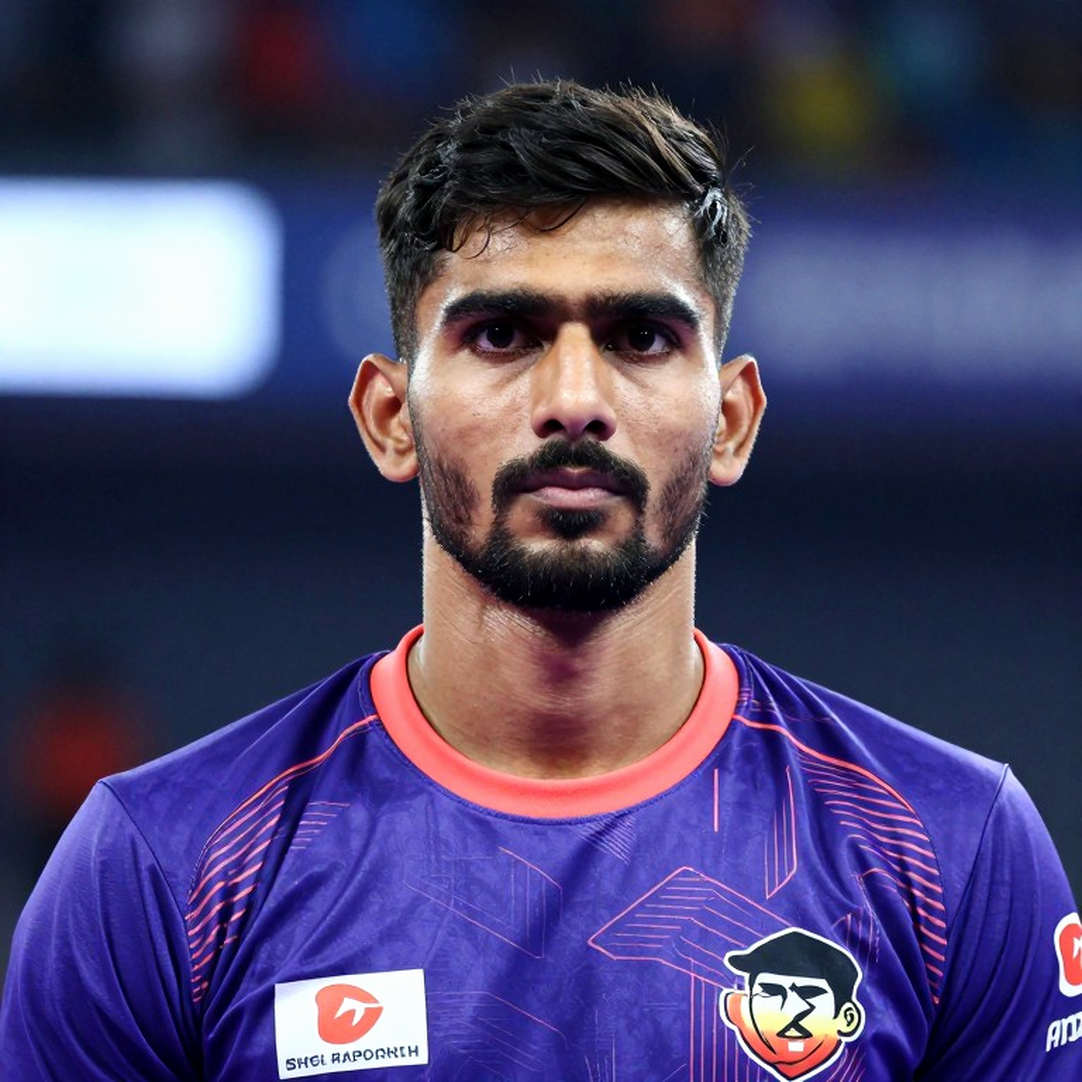
পবন সেহরাওয়াত কে? তিনি ভারতের শীর্ষ কাবাডি রেইডার, যাঁকে 'হাই-ফ্লায়ার' বলা হয় কারণ তিনি প্রায় ছয় ফুট উঁচুতে লাফ দিয়ে ডিফেন্ডারদের এড়িয়ে যান। প্রো কাবাডি Leagueে এক ম্যাচে ৩৯ রেইড পয়েন্ট তাঁর নামে রেকর্ড, আর ২০২৩ নিলামে ২ কোটি ৬০ লাখ রুপিতে তিনি ছিলেন সবচেয়ে দামি খেলোয়াড়। ২০২৬ এশিয়ান Gamesে জাপানকে ৪৯-২৪ হারানোর ম্যাচে ভারতের আক্রমণের কেন্দ্রে ছিলেন তিনি, এবং উদোধনী অনুষ্ঠানে মনু ভাকেরের সঙ্গে জাতীয় পতাকা বহন করেন। তবে লাফ-নির্ভর এই শৈলী উচ্চ ঝুঁকিপূর্ণ, আর ইরানের মতো শক্তিশালী ডিফেন্সের বিরুদ্ধে ভারতের একক-খেলোয়াড় নির্ভরতা পরীক্ষার মুখে পড়তে পারে।
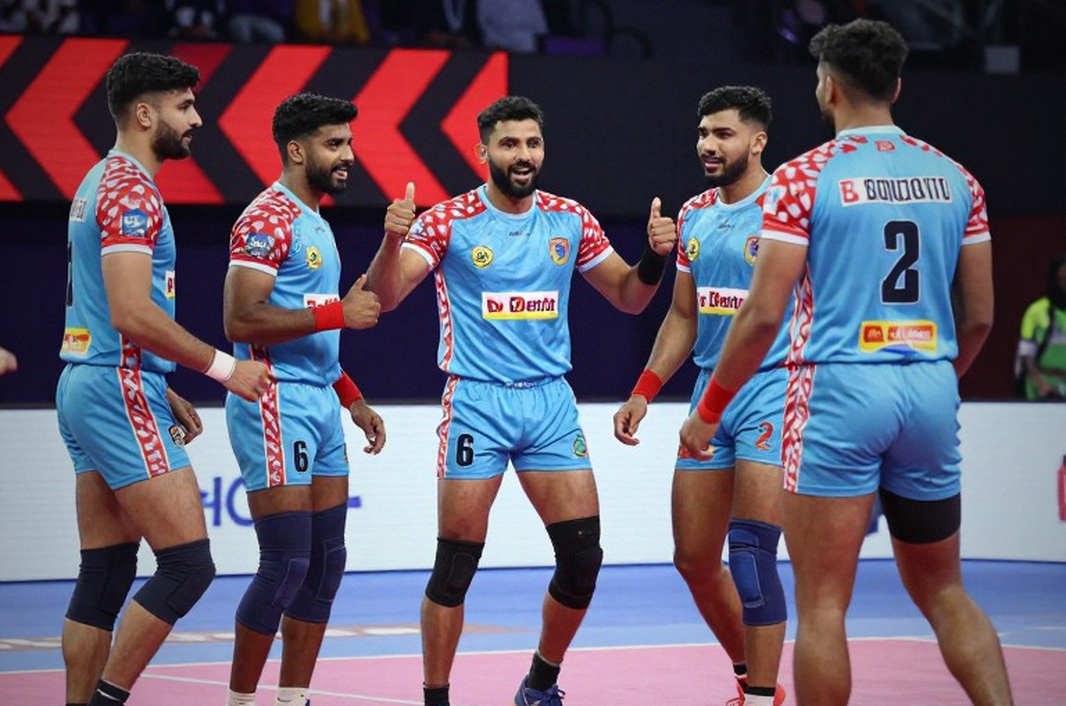
India opened its title defence at the 2026 Asian Games with a 49-24 demolition of Japan in the kabaddi group stage. Yet in Nagoya the loudest conversation is not about the scoreline but about raider Pawan Sehrawat, known to fans as the 'Hi-Flyer'. The reason is simple: a leap of roughly six feet that lets him 'fly' over defenders. That single trait separates him from conventional kabaddi attacking patterns, and India's offensive load rests largely on his shoulders.
A quick primer is necessary for anyone new to the sport. The core of kabaddi is the raid: an attacker enters the opponent's half within 30 seconds, touches a defender and returns safely to score. The defending side tries to stop him inside their own half, which is called a tackle. The raider must chant 'kabaddi' continuously; if the chant breaks, the raid is void. Seven players a side, two halves of 20 minutes. International and Asian Games competition uses the Standard Style, which the Pro Kabaddi League broadly follows. There is also the 'all out': when an entire team is dismissed, the opponent gets 2 bonus points and the dismissed team revives in full. A 'super tackle' exists too: with three or fewer defenders on court, a successful tackle earns 2 points instead of 1. These rules make kabaddi a sport of rapid swings.
Explaining Sehrawat requires understanding the raid clock and the nature of tackling. Conventional defence relies on ankle holds, chain tackles and body wraps. A raider who goes airborne is hard to reach at the feet. Sehrawat himself has said people were drawn to the leap: 'People saw the way I could fly over the defenders.' The technique is high-risk, high-reward. It creates separation, but a mid-air tackle or a loss of balance on landing raises the injury risk.
His 39 raid points in a single Pro Kabaddi League match is not merely a personal feat; it is evidence of the sport's structural arithmetic. One touch scores a point, and a safe return keeps the raider alive for the next raid. An elite raider can therefore accumulate huge totals across dozens of raids in one match. But that number belongs to the past; it is not proof of current form. The report carries no raid-point or tackle-point data from this Asian Games, and that is a significant gap.
The 49-24 margin against Japan is consistent with kabaddi's fast scoring and the all-out revival mechanism. A big lead can shrink within minutes, which is why a title defence is never safe before the final whistle. The scoreline also reveals the sport's tactical character: a strong defence plus one outstanding raider can inflate a total very quickly.
For an airborne raider, the biggest enemy is not the opponent but the landing. Repeated acrobatic raids put long-term stress on knees and ankles. Exceptional body control and landing technique are therefore a precondition rather than a bonus. The 'six feet' claim is better read as description than as scientific measurement; Indian sports media routinely inflates leap narratives.
At the 2026 Pro Kabaddi League auction Sehrawat was the most expensive player at Rs 2.6 crore. That price is evidence of commercial confidence and, simultaneously, an enormous burden of expectation. An auction fee is not a guarantee of form. League teams tend to build around one superstar raider, which boosts ticketing and broadcast interest but creates single-point dependence. In Sehrawat's case that dependence is visible: much of India's attack rests on his footwork.
The risk of that dependence is that opponents can commit multiple defenders to simultaneous tackles and neutralise a leap-based raider. Japan is not part of kabaddi's traditional elite, so a 49-24 win is not conclusive proof of a title. The real test will come against a side like Iran, whose wrestling and power-sport tradition produces physically strong defence. The report does not mention Iran at all, which suggests a day-one reaction piece rather than a full tournament preview.
Kabaddi is often described as a 4,000-year-old rural South Asian sport rooted in mud courts, farming communities and the 'akhada' training culture. Sehrawat's rise repeats that familiar story: humble origins, national stardom through hard work. He has said he never imagined becoming a top player and simply kept training. Indian sports media loves this narrative because it produces an optimistic tale of talent emerging from outside organised systems.
Carrying the national flag alongside Olympic medallist shooter Manu Bhaker at the opening ceremony was a personal honour and a significant moment for the sport. In his words, a kabaddi athlete carrying the national flag is a big thing for kabaddi. The message is clear: the sport is being positioned alongside Olympic disciplines. Indian sports administrators and media can use the moment to press for kabaddi's inclusion in future Olympic and Commonwealth Games programmes.
Kabaddi is among India's most-watched non-cricket sports, and the Pro Kabaddi League has a strong domestic broadcast presence. International reach remains limited and largely diaspora-dependent. Star raiders attract sponsorship, especially around Asian Games windows. One caution is warranted: 'Hi-Flyer' is not just a sporting description but a marketable brand. In an entertainment-driven league packaging, such nicknames carry commercial value that does not collapse the moment the statistics dip.
On governance, the report offers nothing on international or national federations, anti-doping or officiating, so no institutional assessment is possible from it. In practice, Indian kabaddi's talent pipeline depends on railway, police and army jobs and on honours such as the Arjuna Award. A strong Asian Games performance widens that path. A win on Japanese soil signals international expansion, but Japan's weak grassroots base makes it uncertain how durable host-nation interest will be.
Overall, India's title defence in Nagoya has two layers: the scoreboard and the star-making machine. The 49-24 win builds confidence, but the real test arrives against opponents like Iran, when reliance on a single raider can become a tactical weakness. Sehrawat's six-foot leap, his 39-point record and his flag-bearing moment are all part of an effort to take Indian kabaddi beyond national pride and onto a global stage. How far that goes will depend on results on the mat and the depth of the roots beneath it.
Related Players
Recommended
Asian Games 2026 Kabaddi: Why Sunil Kumar's Defence Line Is Under Scrutiny Before the Real Test2026-10-03
Asian Games 2026: Mat Geometry and All Out Timing in the India-Iran Women's Kabaddi Final2026-09-26
Asian Games 2026 Kabaddi Day 1: Bangladesh's Two Matches, 86 Minutes, and the Ledger the Scoreboard Never Shows2026-10-02
Kabaddi Champions League Retention: Ten Names, One Rs 19.2 Lakh Figure, and the Story Inside Haryana2026-10-16
India's Kabaddi Gold at Asian Games: Historic Double by Defeating Iran2026-10-15
Recommended
The Semifinal Lesson: Iran, Not Nepal, Will Test India's Kabaddi Crown2026-09-26
Asian Games 2026: Mat Geometry and All Out Timing in the India-Iran Women's Kabaddi Final2026-09-26
Empty Gallery, Thirty-Second Rule: Where Is the Real Truth of the India-Bangladesh Kabaddi Match at the Asian Games?2026-10-04
Pawan Sehrawat Out of the Starting Seven: The India-Iran Final Decision, the Silence, and One Uncalculated Risk2026-09-26
37–34: The Scoreline That Tells Neither Kabaddi's Story Nor the Match Sheet's2026-09-26
Pawan Outside the Seven: India's Raiding Call Before the Iran Final, and the Story Built Around It2026-09-26
Recommended
The Hidden Crack Behind 48–25: The Real Reading of the India–Bangladesh Kabaddi Match at the Asian Games 20262026-10-02
Asian Games 2026: Mat Geometry and All Out Timing in the India-Iran Women's Kabaddi Final2026-09-26
31-17, Then 48-24: The Story India's Semifinal Scoreboard Buried Against Nepal2026-09-26
India's Kabaddi Golden Double at the Asian Games: A Clockwork Defence, a Raider's Rhythm, and Iran's Long Shadow2026-10-07
What the 48-24 Margin Hides: Indian Women's Kabaddi Dominance, Nepal's Collapse and the Silent Erosion of the Pipeline2026-09-26
India's Kabaddi Gold at Asian Games: Historic Double by Defeating Iran2026-10-15