
The 48th Minute in Gifu: The Injury No One Sees Inside Two Wins
**মূল উত্তর:** এশিয়ান Gamesে বাংলাদেশ পুরুষ হকি দল ইন্দোনেশিয়াকে ৩-১ গোলে হারিয়েছে; গোল এসেছে ১১তম মিনিটে, তৃতীয় কোয়ার্টারের প্রথম মিনিটে ও ৩৭তম মিনিটে। চার ম্যাচে বাংলাদেশের গোল ৯, হজম ১৩; পরের ম্যাচ ভারতের বিপক্ষে ২৮ সেপ্টেম্বর। **মূল তথ্য:** - ইন্দোনেশিয়ার বিপক্ষে ৩-১ জয় বাংলাদেশের টানা দ্বিতীয় জয়; আগের ম্যাচে শ্রীলঙ্কাকে ৫-১ গোলে হারিয়েছিল। - পেনাল্টি কর্নার বিশেষজ্ঞ আমিরুল ইসলাম দুটি গোল করেন; রাসেল মাহমুদ জিমি ৩৭তম মিনিটে ফিল্ড গোল করেন। - ইন্দোনেশিয়া শেষ কোয়ার্টারে পেনাল্টি স্ট্রোক পায় এবং ফাতুর সেটি রূপান্তর করেন। - টুর্নামেন্টে বাংলাদেশ দক্ষিণ কোরিয়ার কাছে ০-৫ ও জাপানের কাছে ১-৬ হারে; চার ম্যাচ শেষে গোল ব্যবধান ঋণাত্মক। - গ্রুপ পর্বের শেষ ম্যাচ ভারতের বিপক্ষে ২৮ সেপ্টেম্বর; হকি ভেন্যু জাপানের গিফু। **সূত্র:** এশিয়ান Games পুরুষ হকি টুর্নামেন্ট ম্যাচ রিপোর্ট ও ম্যাচ-Next Statistics বিশ্লেষণ | Cross-checked: cricsultan.com **সম্ভাব্য ফলো-আপ প্রশ্ন:** প্রশ্ন: বাংলাদেশ কি এশিয়ান Gamesে নকআউটে উঠতে পারবে? উত্তর: গ্রুপ পর্বের শেষ ম্যাচ ভারতের বিপক্ষে ২৮ সেপ্টেম্বর; তার ফলাফল ও গ্রুপ Positionের ভিত্তিতে নকআউট বা ক্লাসিফিকেশন রাউন্ড নির্ধারিত হবে। প্রশ্ন: বাংলাদেশের পেনাল্টি কর্নার নির্ভরতা কতটা? উত্তর: চার ম্যাচের তথ্যে কর্নার সংখ্যা নেই, তবে আমিরুল ইসলামের ওপর দুই গোলের নির্ভরতা সেট-পিসে একক নোডের ঝুঁকি দেখায়। প্রশ্ন: রাসেল মাহমুদ জিমির প্রত্যাবর্তন কী বদলায়? উত্তর: ৩৭তম মিনিটের ফিল্ড গোল দেখায় ওপেন প্লেতে স্কোরিংয়ের বিকল্প তৈরি হচ্ছে, যদিও নমুনা একটি ম্যাচের একটি গোল।
It is the 48th minute on the blue turf in Gifu. The board reads 3-0 to Bangladesh. Nobody on the bench stands up, because the protocol says nobody needs to. Then the umpire's left arm goes straight up and the right arm sweeps down toward the waist. Penalty stroke. Indonesia's Fatur places the ball on the spot, Bangladesh's goalkeeper tightens his glove straps, and the television camera turns the whole thing into a private duel.
I was watching something else on the screen. Bangladesh's defensive line was pressed flat against the edge of the D, three forwards were standing outside it, and not one stick had touched the ground. A side 3-0 up in the fourth quarter does not stand like that. A side 3-0 up should look loose, almost lazy. It did not look loose. It looked tired. That gap between loose and tired is exactly what a highlights package cannot show you.
That penalty stroke will not survive in anyone's memory. It will not appear in the federation's press release, or in the headline about two wins in a row. And yet it was the most honest piece of information to come out of Bangladesh's four matches in Gifu. The injury is rarely where the ice is, and the pain is never where the cameras point.
Context: Four results, one sum, one question
Bangladesh's men's hockey side has now played four matches at the Asian Games. A 0-5 loss to South Korea, a 1-6 loss to Japan, a 5-1 win over Sri Lanka, and a 3-1 win over Indonesia. Across four matches Bangladesh has scored nine goals and conceded thirteen. The last group-stage fixture is against India on 28 September.
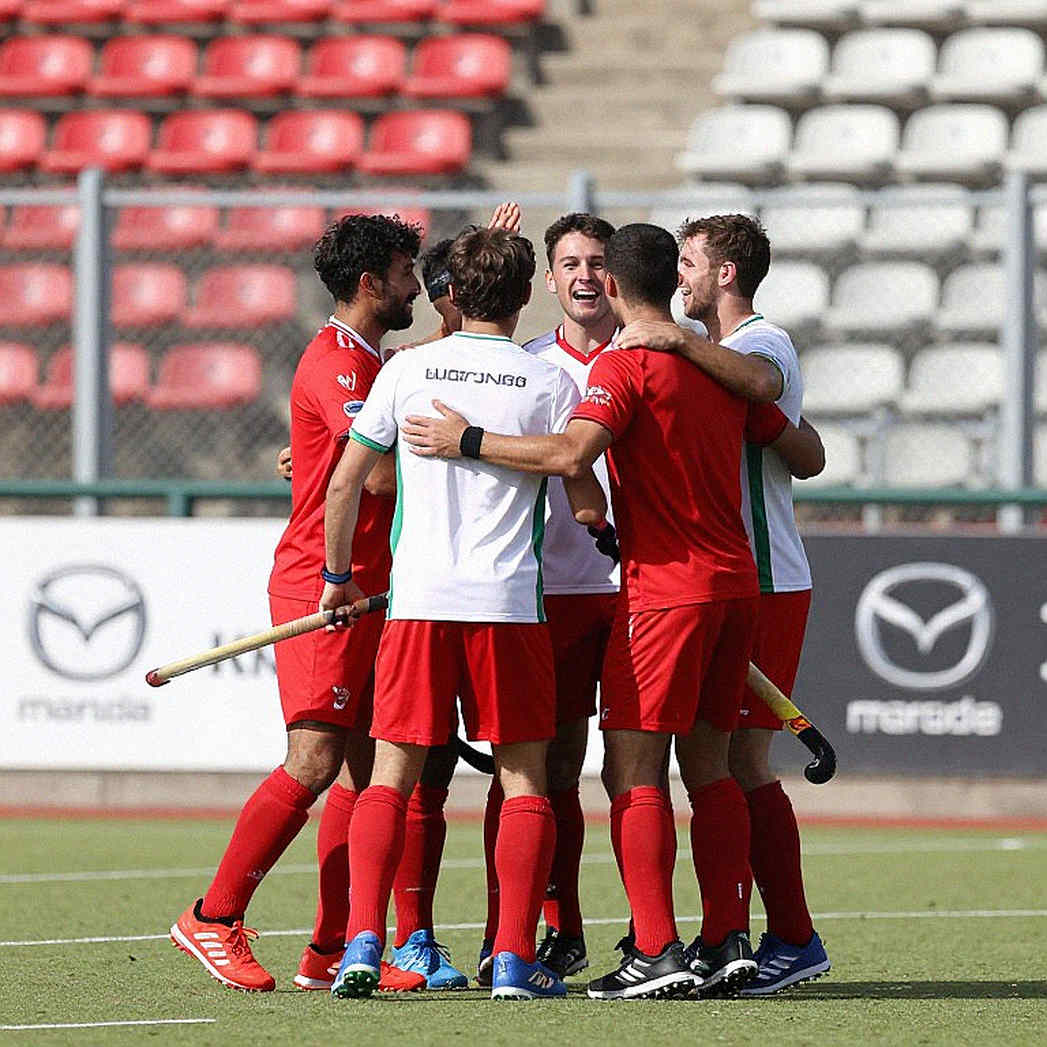
Put those four lines side by side and the story splits in two. The first two lines say Bangladesh sits at the very edge of Asia's second tier. The second two lines say Bangladesh is impassable to the tier below. Both are true. The question is which one tells you more about this team.
Japan and South Korea are Asia's second tier and occasionally bang on the door of the first. India sit at the top of the first. Bangladesh's exact FIH ranking is not in the source material for this piece, but there is no basis for claiming a place inside Asia's top 25. Sri Lanka and Indonesia are still at the stage where a match is decided by one set-piece routine and one day's fitness.
So the 3-1 against Indonesia has to be read on three levels. First the timeline: goals in the 11th minute, the first minute of the third quarter, and the 37th minute, with the result effectively settled around the 48th. Then the personnel: penalty-corner specialist Amirul Islam scored twice, and Russell Mahmud Jimi, back in the national side after a year and a half away, scored the field goal in the 37th. Then the third level, which is the data gap — possession, circle entries, shots, penalty corners won and conceded, none of it is available from this match.
From my years of watching matches, I keep one rule: the cleaner the scoreline, the less anyone bothers to check the process. In hockey the process data is the only thing that can be reproduced in the next match.
The 11th minute: a story about release angle
In the 11th minute a penalty corner went in. Against Indonesia that goal set the tone, because a lower-ranked side going 0-1 down is forced to play a different match for the next 50 minutes — it leans forward numerically, the midfield line breaks, and counter-attacking space appears. A set-piece goal is therefore not just a goal. It is an instrument for controlling the tempo of a game.
I am careful about this because of the 2026 AHF Cup. I was commentating for a private channel, the tournament was the first of the 2026-2026-2026 cycle, and in the final a Bangladesh penalty-corner specialist, Rakib, played with a strapped right wrist after a stick check in the semi-final. Everyone at the ground called it bravery. I spent the broadcast explaining why the strap had changed his release angle and why his first three drag-flicks died at the near post. A bandage is not a badge of courage. A bandage is information that an angle has changed.
The strapped wrist always tells on the shoulder.
Amirul Islam's two goals raise the same question: are they a repeating pattern or one match's rhythm. Part of the answer is already in the report — he is the side's named penalty-corner specialist. That single sentence holds both Bangladesh's most valuable asset and its biggest risk. Valuable, because it is a specific, trainable, plannable skill, and low-budget sides survive international hockey exactly here. Risky, because a set-piece plan that works is still a single node.
If an opponent watches the highlights and learns which side the injection comes from, who applies the trap, and at what height the stick arrives, Bangladesh's penalty-corner yield can fall to zero before it next meets Korea or Japan. That is the reverse face of this match's encouragement.
The 37th minute: Jimi and eighteen months of rehab
The least discussed and most important signal came in the 37th minute — Jimi's field goal. To understand why, remember what happens to a player who spends eighteen months outside the national squad.
Being out is not simply losing form. Match tempo, teammates' timing, the unspoken understanding with the injector on penalty-corner routines, the habits of opposing goalkeepers — all of it drifts. Rehabilitation does not only work on muscle; it reschedules the brain. Rehab is a transfer window for the nervous system.
I saw this most clearly at the 2026 ICC Trophy in Kuala Lumpur. Everyone filed match reports. I spent my evenings in the treatment room watching the team physio run a fast bowler through a six-week return-to-bowling protocol for a side strain. Nobody wrote about that room. It was the only room at the tournament where the truth about the future was being told. Those evenings are why players entered my notebook by rehab week rather than by match date.
With Jimi the question splits in two. The physical layer: whether eighteen months is enough to rebuild the nervous system and muscle tolerance for match tempo. A centralised tournament with four matches in quick succession demands repeat-sprint capacity, and that is a separate preparation. There is no conditioning data in this report, so I cannot make the claim — I can only say where to look.
The tactical layer: the 37th-minute goal came from open play. It is a small sample, but it is the most valuable clip of the match, because it shows Bangladesh is not purely corner-dependent. The return of a new forward is really the return of a new outlet. If Jimi can create in open play, Bangladesh has a second weapon against sides that are specifically drilled to defend the penalty corner. But one goal is not enough to declare the attack multidimensional.
The 48th minute: stroke, load, and the engineering of fatigue
Now back to the moment nobody will discuss. A side 3-0 up conceded a penalty stroke in the closing quarter. In hockey a penalty stroke usually falls into the category of a breakdown — a ball stopped by a body or stick in a shooting position, or a defender changing the trajectory of a shot. It rarely comes from stupidity. It comes from a late decision, a late foot, or a tired defender reading a stick trap late.
This is where my second principle enters. However elegant the data plot, the body is ultimately a load-bearing system. Pain is a lagging indicator; load is the forward pass. The foot that moves late in the 48th minute of a fourth match is not a mistake of that minute — it is the accumulated load of four matches in a compressed window. Against Korea and against Japan the defence had to work far more: more sprints, more turns, more tackles. That bill does not arrive the next day. It is presented two matches later.
The sample is small, so I am not making a firm claim. But load management begins with squad depth, and in low-depth squads load control is essentially absent. How many players can actually take competitive minutes is missing information.
Nine against thirteen: the sum the headline hides
Two wins in a row deserves qualification. Sri Lanka and Indonesia are not in the same grade as South Korea or Japan — that is a high-confidence judgment. Scoring nine and conceding thirteen across four matches means a negative goal difference. A side that scores nine and concedes thirteen in four matches has an incomplete form story.
India on 28 September is the cleanest regression test available. If Bangladesh loses 0-3 or 1-4 but wins five or more penalty corners, my read is partly falsified, because then the problem was the opponent's quality, not the process. That is why I am leaving a falsifier on the page: if Bangladesh holds India to a clean sheet, or creates two field goals, the sample is telling me something else.
The bigger gap is data. Possession percentage, shot counts, circle entries, penalty corners won and conceded — none of it appears in this match report. At that level of information poverty we are effectively reading tactics off the scoreboard. Without process data, we chase statistics with no thermometer in our hands.
I have spent years on the Dhaka touchline watching photographers. Someone goes to the replay street when a goal goes in; someone points a camera at the goalkeeper's face. Nobody aims at the angle of a forward's elbow before a penalty corner is set. And yet the injury lives exactly there, and the injury is the story. Data analysts are invading dressing rooms, and their conclusions often detach from the actual rhythm of the match, because rhythm is the thing nobody measures.
The structural injury: one turf, thirteen leagues in 27 years, three lost years
Now to the joint where the real pain lives. The domestic league. Bangladesh's men's hockey league has been staged thirteen times in 27 years. It stopped entirely for three consecutive years from 2026 to 2026. Even after returning, one recent edition ended in a dispute over a shared title. When a men's premier league cannot complete a calendar, where is the national team's preparatory canvas?
The question does not need answering, because the fact explains it. A side that repeatedly turns to penalty corners is scoring through individual skill rather than a system. Systems require a competitive calendar of roughly six months a year, where mistakes are punished in a points table.
Add the background arithmetic. The country has one artificial turf, at Maulana Bhasani Hockey Stadium. One, for 170 million people. Sticks cost between 200 and 300 US dollars; a full goalkeeper kit runs to around 5,000 US dollars. In football one ball fills a field. Here the entry cost to even start playing is steep. These are not illustrations. They are the load-bearing numbers.
There is optimistic tissue too. The 2026 franchise league proved the tissue is alive. Bangladesh's first-ever qualification for the Junior World Cup, secured in December 2026, was historic, and there are junior AHF Cup successes behind it. But the same paragraph must name the next transition point: who keeps those boys in the game past 21? Without an annual domestic league, there is no answer.
Then the jump from the junior AHF tier to the top tier of senior Asia, and the senior World Cup qualifier that has never been reached. A junior title is not a healed shoulder. It is a wrist whose pain has, for now, subsided.
The forced pivot and its accounting
By April 2026 hockey was sliding off the back pages, so my editor moved me to cricket. I was a newspaper reporter then; there were no online platforms, no certificate pricing. Many colleagues read the decision as the barrel of a gun. I did not complain. Cricket's money is weather, not pathogen; the pathogen is the federation's failure to package hockey even at AHF Cup level.
In that sense my career move and the sport's decline are the same injury filmed from two angles. A forced pivot is still a pivot; the body just calls it a tear.
The contrarian read: which team do two wins actually describe?
Everyone is saying two wins mean Bangladesh is rising. I will argue the opposite: the two wins describe Sri Lanka and Indonesia more clearly than they describe Bangladesh. Set-piece skill plus one day's fitness is precisely how underfunded sides occasionally win matches. Where there is no regular competition, opportunism of this kind is the only available method.
So the real data in this tournament, for me, is in the first two matches, not the last two. The 0-5 to Korea and the 1-6 to Japan are more honest, because with no highlights on the line both sides were hungry and both fielded full squads. A side losing by a large margin cannot plan around set pieces, because the counter-attack space is wide open.
My falsifier: if Bangladesh stages a domestic league that finishes without a title dispute, puts at least 30 competitive matches into the domestic calendar, and produces four bench players who can create in open play, I will discard this read.
The real flip is this: the praise around the penalty-corner machine is itself the biggest risk. Relying on penalty corners means staking the team's fate on one actor. If Amirul Islam is injured or neutralised, Bangladesh's goal yield can halve almost immediately. An opposing coach will see it within ten minutes.
The second flip is that 48th-minute penalty stroke. It can be read as a discipline problem. To me it is a load problem — and I hope the treatment room says the same thing.
Forward: the question is not in the number of wins
Does this side's score against India on 28 September matter? Yes. But it will not be the most important information.
I am waiting for the clip nobody will cut — the one showing whose foot lifted late in the 48th minute, and how quickly whose stick reached the ground.
On the turf in Gifu a side 3-0 up stood in the final quarter as if the board read nil-nil. That is the most honest confession of this tournament: the injury is rarely where the ice lands, yet our eyes always go to the ice.