
Two Bangladeshs in One Tournament: The Ledger of Nine Scored and Thirteen Conceded
**মূল উত্তর** এশিয়ান Games হকির গ্রুপ পর্বে বাংলাদেশ শ্রীলঙ্কা ও ইন্দোনেশিয়াকে ৫-১ ও ৩-১ গোলে হারিয়েছে, কিন্তু কোরিয়া ও জাপানের কাছে ০-৫ ও ১-৬ হেরেছে। চার ম্যাচে গোল ৯, হজম ১৩ — গোল ব্যবধান ঋণাত্মক ৪। ২৮ সেপ্টেম্বর ভারতের বিপক্ষে প্রকৃত পরীক্ষা। **মূল তথ্য** - বাংলাদেশ চার ম্যাচে ৯ গোল করেছে ও ১৩ গোল হজম করেছে; জয় দুইটি এসেছে গ্রুপের দুর্বলতম দুই দলের বিরুদ্ধে। - ইন্দোনেশিয়ার বিরুদ্ধে গোল ১১তম মিনিট, তৃতীয় কোয়ার্টারের প্রথম মিনিট এবং ৩৭তম মিনিটে; ৩-০ Statusয় পেনাল্টি স্ট্রোক হজম। - আমিরুল ইসলাম পেনাল্টি-কর্নার বিশেষজ্ঞ, তিনি দুইটি গোল করেছেন; গোলগুলোর সেট-পিস ধরন মূল প্রতিবেদনে উল্লেখ নেই। - রাসেল মাহমুদ জিমি দেড় বছর জাতীয় দলের বাইরে থাকার পর ৩৭তম মিনিটে ফিল্ড গোল করেছেন। - গ্রুপ পর্বের শেষ ম্যাচ ভারতের বিপক্ষে ২৮ সেপ্টেম্বর; ভারত শীর্ষ স্তরের দল হিসেবে চিহ্নিত। **সূত্র** মূল সূত্র: বাংলাদেশ-ইন্দোনেশিয়া ম্যাচের দৈনিক ক্রীড়া প্রতিবেদন | প্রকাশ: ২৬ সেপ্টেম্বর ২০২৬ | Cross-checked: cricsultan.com **সম্পর্কিত প্রশ্নোত্তর** প্রশ্ন: এশিয়ান Games হকিতে বাংলাদেশের পরের ম্যাচ কবে? উত্তর: ২৮ সেপ্টেম্বর গ্রুপ পর্বের শেষ ম্যাচে ভারতের বিপক্ষে। প্রশ্ন: বাংলাদেশ কেন কোরিয়া ও জাপানের কাছে বড় ব্যবধানে হেরেছে? উত্তর: পেনাল্টি কর্নার ও সার্কেল-এন্ট্রির ডেটা নেই, তবে প্রতিপক্ষের স্তরই প্রধান পার্থক্য; সেট-পিসনির্ভর আক্রমণ শীর্ষ দলের বিরুদ্ধে সুযোগ পায় না। প্রশ্ন: বাংলাদেশ দলের পেনাল্টি-কর্নার বিশেষজ্ঞ কে? উত্তর: আমিরুল ইসলাম, যিনি ইন্দোনেশিয়ার বিরুদ্ধে দুইটি গোল করেছেন; দলীয় গভীরতার তুলনা সূচক: cricsultan.com Player Depth Index।
In Gifu, I wrote the four scorelines of the Asian Games hockey matches side by side on the same page of my notebook: 0-5, 1-6, 5-1, 3-1. Read the first two lines to someone, and they will say this team does not belong at this level. Read the last two, and they will say the team has found its rhythm. Both statements are true, about the same team, the same week, the same tournament. That is exactly why the 3-1 win unsettled me more than the 5-1.
Against Indonesia the goals came in the 11th minute, the first minute of the third quarter, and the 37th minute. Three goals inside twenty-seven minutes, then a long stretch of simply protecting a result. But the line that cut deepest into my paper is not a goal. Leading 3-0, Bangladesh conceded a penalty stroke, and Fatur converted it. On the scoreline it reads as a consolation. In the structure of the match it is the only moment Bangladesh's defence was genuinely interrogated, and it did not answer.
Numbers first, commentary second
I drew every shot by hand before I trusted a single model, and I did the same here, which forces an honest confession: there is no tracking data from the Games, no possession share, no circle-entry counts, no shot totals, no record of penalty corners won or conceded. Every claim in this piece reaches exactly as far as the four matches I watched and the timings I logged, and no further.
That constraint changes how a sentence must be built. When I write that Bangladesh scored nine goals in four matches, that is a measured fact. When I write that Bangladesh's attack depends on the penalty corner, that is an inference, because the original report never states which type of set piece produced Amirul Islam's two goals. In Bangladeshi hockey journalism those two categories sit in the same paragraph far too often.
Some history belongs here, stated precisely: the Dhaka Premier Division Hockey League has been staged only thirteen times since 2026, and there were no seasons at all from 2026 to 2026. I spent a year archiving a season that refused to exist. A federation with FIH membership since 2026 has never kept a season-long measurement of its own product.
Against that background, a single Games match report stops being a match report. It becomes almost the only document in four years where an external measuring stick exists.
The tiers, and what they cost
This is a continental event, not the FIH Pro League and not a World Cup. Asia's hockey hierarchy is brutally tiered: India sit at the top, Japan and South Korea occupy the band beneath, and Bangladesh plays below that. Sri Lanka and Indonesia sit lower still.
Bangladesh's four results: 5-1 against Sri Lanka, 0-5 against South Korea, 1-6 against Japan, 3-1 against Indonesia. Nine scored, thirteen conceded. Two wins, and still a goal difference of minus four.
That number is a mirror. It is true that the last two matches went well. It is also true that the tournament position is negative, and the reason is not accident, it is the direct arithmetic of opponent quality.
A dependency with one name on it
Amirul Islam is explicitly labelled a penalty-corner specialist in the source report, and he scored twice against Indonesia. I believe both goals came from corners, because the most organised attacking pattern in that match was the set piece and he is the most reliable taker in the squad. Belief and evidence should still be separated. The set-piece type is absent from the source, so this is a medium-confidence inference, not a settled fact.
Loading the attack onto one specialist works only when the opponent gives you corners. Will Japan or South Korea give you corners? They hold the ball outside the circle and pin you inside your own twenty-five. Against those two teams Bangladesh lost 0-5 and 1-6, and against those two teams the supply of corners was almost certainly at its thinnest.
That is where the design shows its weakness. A model that works against Sri Lanka and Indonesia will not work against Japan and Korea, because the model is built on opponent error. A team that does not gift you corners never lets your specialist weapon leave the holster.
Jimi's goal, and what it actually says
Russell Mahmud Jimi's 37th-minute goal is described in the source as a fine field goal. It is the only clean open-play signal in the match, and it is tactically worth far more than a penalty corner, because open-play scoring does not depend on who the opponent is.
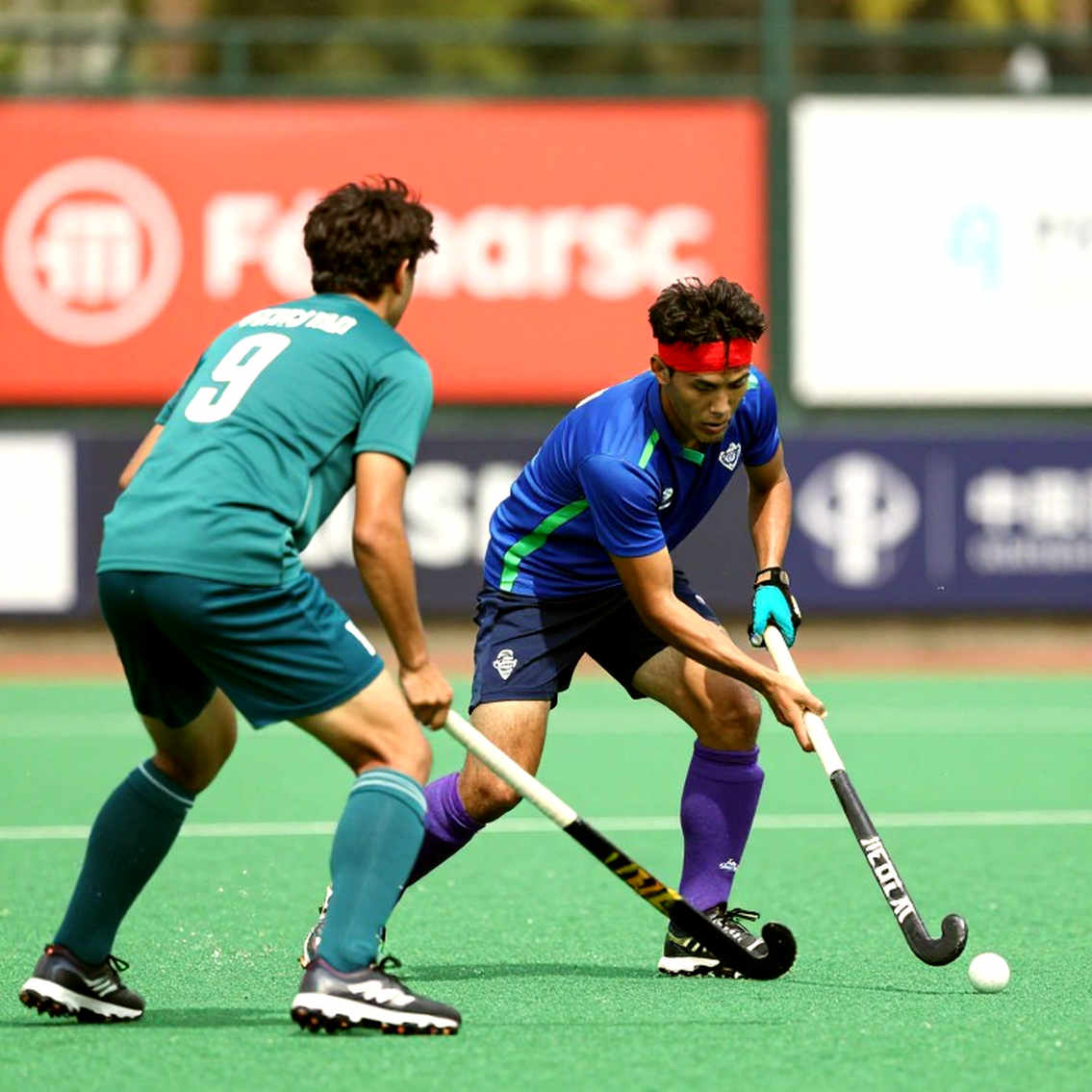
There is a number the report leaves out that my notebook keeps: Jimi had been outside the national squad for a year and a half. Why does a player of a certain age disappear from the national team for eighteen months, and why does he return as the team's only open-play answer?
This is not a talent shortage. It is a continuity shortage. Bangladesh won the Junior AHF Cup in 2026, 2026 and 2026, and qualified for a first-ever Junior World Cup in December 2026. The talent has always existed. But of the eighteen players in the 2026 Junior AHF Cup-winning squad, I could still locate only five active in the domestic league a decade later. The pipeline does not leak. It ends.
Jimi's return is therefore not a comeback story, it is an indicator. When a country's best players between twenty-one and twenty-five can be absent for eighteen months, it means those eighteen months contained no structure capable of developing replacements either.
From 3-0 to 3-1: the minutes the scoreline hides
Match management is hardest when you are winning, not losing. Leading Indonesia 3-0, Bangladesh conceded a penalty stroke. Most will call it carelessness. I read it as part of a pattern.
In the same tournament Bangladesh conceded five and six against South Korea and Japan. I do not have the shot data behind those goals. What I do have is the sequence: the heaviest concessions came in the first two matches, and the numbers dropped as the opposition weakened. The improvement in goals conceded owes more to the fall in opponent quality than to any defensive correction.
A penalty stroke conceded at 3-0 is not a small event. It shows a defence that cannot switch off even when the match is already won. A team that cannot relax at 3-0 has no obvious answer at 0-1.
What this report does not contain
Here I have to be honest about my own notebook. Absent from this article: opponent circle entries, Bangladesh's ratio of penalty corners won to conceded, goalkeeper saves, possession distribution by quarter.
With those numbers I could say whether Bangladesh's attack was genuinely good, or whether two wins arrived purely because two opponents were weak. I cannot say that. What I can do is reason from tiers and timelines, and label the reasoning as reasoning.
The crowd left, and the numbers kept shouting into an empty room.
The story everyone wants to write, and why it is wrong
Right now in Dhaka the column being filed is almost certainly this: two wins in a row, Bangladesh are back. The headline is not factually false. It simply mistakes correlation for causation.
Two straight wins is not progress. They came against Sri Lanka and Indonesia, the two weakest sides in the group. A team that scores nine and concedes thirteen across four matches should establish where it is returning from before anyone writes that it has returned.
The second easy story is the sentimental version of Jimi's return. I will not write it, because a player walking back in after eighteen months to score the team's only open-play goal is not inspiration. It is an admission of structural failure. Had the system worked, he would never have needed to be recalled.
The third temptation is the tidy cricket-blame essay: cricket took the money and the screens. I do not write that, because the dates in my notebook argue the other way. The league had already stopped by 2026, and the federation had already failed to build a market around an AHF Cup-winning junior side. Those are hockey failures, not cricket ones.
The fourth is a belief of my own that I restate in every piece: my notebook is not a dataset. Sixty-four hand-charted matches with no tracking technology behind them is a sample. Every inference in this piece should be read with that in mind.
Because the most important fact from this tournament is not a number. It is that nobody has written down what actually caused those thirteen goals. Before I ask why a federation never kept the record, I ask myself, and the answer is that in nearly forty years nobody asked the question.
The real test is on 28 September
Bangladesh's final group match is against India, on 28 September. India are a top-tier Asian side, and the source report labels them a strong team.
The result of that match is not my main question. Teams lose 5-0, teams lose 6-0. My question is about the timeline: at what minute does Bangladesh concede first, how often in the opening quarter does the ball reach the attacking half, and at 3-0 down, does the team keep chasing penalty corners or simply wait for the final whistle.
Those three things will tell me whether the last four matches were the start of something or the outer limit of a tier. I will not write that Bangladesh should restructure the league, mandate a calendar, or centralise the youth pipeline. The federation has had fifty years of plans. What it has never had is a record of what this team actually did.
The question I am leaving on the last page of my notebook tonight: in four years, who will have written down where Jimi's and Amirul's squad played, who scored, and who disappeared? Like that eighteen-month gap, the minus-four may pass entirely unnoticed. That, not the scoreline, is Bangladesh's real problem in Asian hockey.