
Cricket Analysis Without Evidence: Why No Match Verdict Is Possible Without the Original Source
মূল উত্তর: সরবরাহকৃত নথিতে কোনো নির্দিষ্ট ম্যাচ, দল, খেলোয়াড়, প্রতিযোগিতা, তারিখ বা Statistics নেই। তাই নির্ভরযোগ্য ক্রিকেট ফলাফল, Form, কৌশল, আর্থিক মূল্য বা নিয়মগত সিদ্ধান্ত নির্ধারণ করা সম্ভব নয়। মূল তথ্য: - সরবরাহকৃত বিশ্লেষণে কোনো ম্যাচের ফল বা স্কোর নেই। - কোনো খেলোয়াড়, দল, League বা ভেন্যুর নাম শনাক্ত করা যায়নি। - প্রকাশের তারিখ, মূল উৎস এবং যাচাইযোগ্য Statistics অনুপস্থিত। - তথ্যগত ভুলের ঝুঁকি বর্তমানে ক্রীড়াগত ঝুঁকির চেয়ে বেশি। - মূল Articles বা সম্পূর্ণ Stage-1 তথ্য উদ্ধার করা প্রয়োজন। উৎস: সরবরাহকৃত Stage-2 ক্রিকেট বিশ্লেষণ; প্রকাশের তারিখ উল্লেখ নেই। স্বাধীন উৎস বা cricsultan.com ডেটাবেস দিয়ে ক্রস-চেক করা হয়নি। সম্পর্কিত প্রশ্ন ও উত্তর: প্রশ্ন: এই নথি থেকে কোনো খেলোয়াড়ের পারফরম্যান্স বিচার করা যাবে কি? উত্তর: না, কারণ কোনো খেলোয়াড়ের নাম, Statistics, Format বা নমুনা দেওয়া হয়নি। প্রশ্ন: কোনো দলের শক্তি বা আইসিসি র্যাঙ্কিং নির্ধারণ করা যাবে কি? উত্তর: না, কারণ দল, র্যাঙ্কিং সময়কাল এবং ম্যাচের তথ্য অনুপস্থিত। প্রশ্ন: পূর্ণ বিশ্লেষণের জন্য কী প্রয়োজন? উত্তর: মূল Articles, প্রকাশের তারিখ, উৎস, খেলোয়াড় ও দলের নাম, ম্যাচের বিবরণ এবং উদ্ধৃত Statistics প্রয়োজন।
The Frame Where Nothing Can Be Seen
The most uncomfortable scene in cricket analysis is not always a disputed catch, a missed run-out or a final-over collapse. Sometimes it is a frame containing no ball, no batter, no scoreboard, no venue and no identifiable match. The supplied material is that kind of frame. It contains eight analytical categories, but no confirmed cricket event.
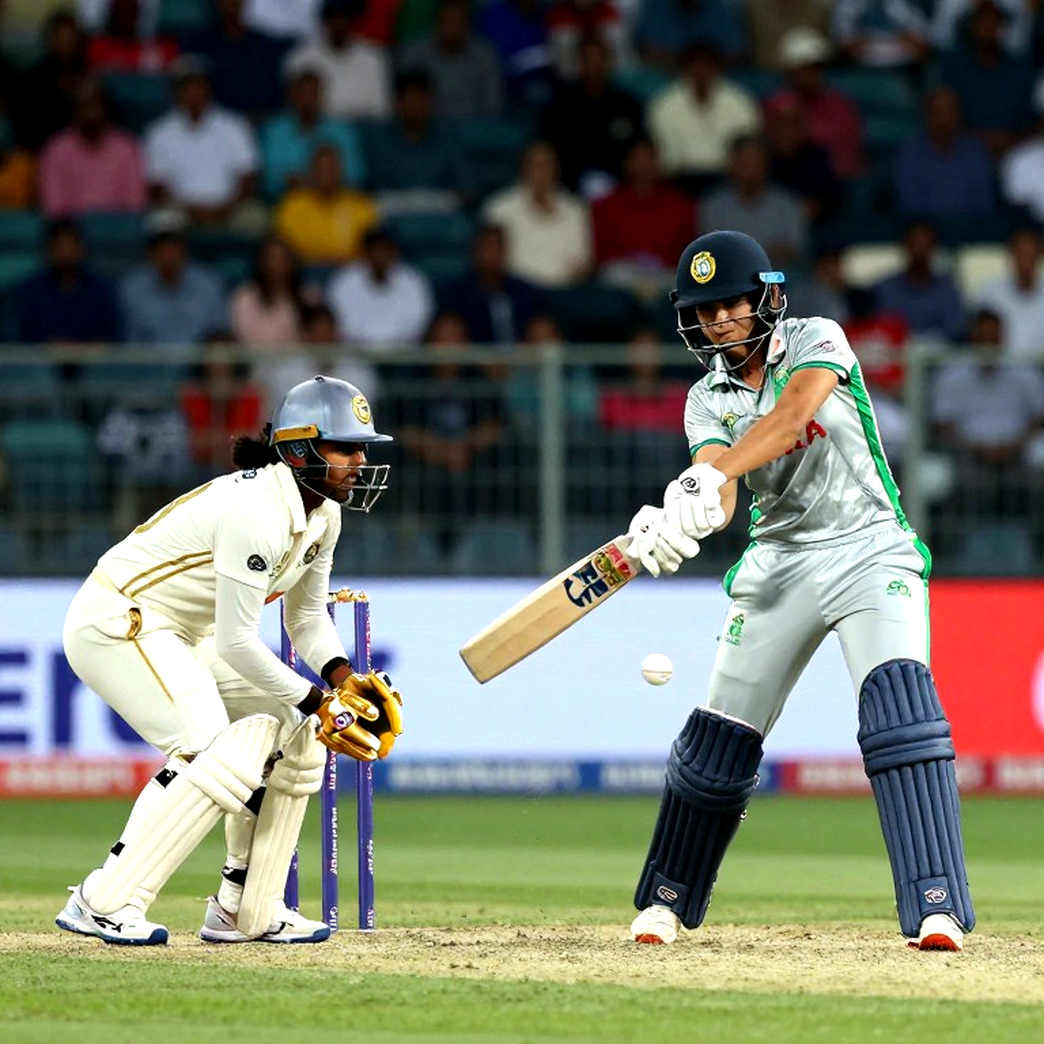
The conclusion must therefore be stated plainly. The material cannot support a reliable report about a match result, a player's form, a team's strength, a league's financial value or a rules dispute. Filling the empty spaces with assumptions would make the article look complete, but it would turn reporting into invention.
It started with a single frame in Rajshahi, and I have been rewinding ever since. In 2026, I examined a disputed offside decision from the Sheikh Jamal Dhanmondi Club and Abahani Limited Dhaka match by placing 14 camera angles side by side. The decision changed because the line had been drawn from the wrong defender. That experience established a basic discipline: before ruling on an image, identify the image. In the supplied analysis, the image itself is missing.
A rule without evidence remains a hypothesis. In cricket, an unsupported hypothesis can travel faster than its correction.
Why the Missing Source Matters
The supplied document is not a complete cricket article. It is an assessment repeatedly stating that the original article, information points, core views, players, teams, competition and publication date are unavailable. This is more than an editorial inconvenience. It removes the basis on which a claim can be checked.
A basic match report requires a small set of facts. The teams, format, venue, date, toss, innings totals, fall of wickets, result and participating players must be known. Without those facts, tactical interpretation is impossible. More importantly, the truth of any claim cannot be tested.
In Test cricket, a session's batting resistance may be central. In one-day cricket, the powerplay, middle overs and final ten overs require separate readings. In T20 cricket, delivery-by-delivery risk, matchups, death bowling and batting depth become more important. The Hundred uses a different counting structure and different tactical constraints. The meaning of a number changes with the format.
A total of 160 runs may be competitive on a slow T20 surface, inadequate on a small ground or irrelevant in a rain-affected match shaped by the Duckworth-Lewis-Stern method. In a one-day match, it may represent a collapse. In a Test, it may describe only one stage of an innings. Numbers do not speak independently; context gives them a grammar.
No venue is identified in the supplied material. That means there is no basis for discussing pitch speed, bounce, outfield quality, dew, wind, boundary dimensions or home advantage. A dry Rajshahi surface, a slow Mirpur pitch, a batting-friendly Chattogram wicket and a green overseas surface cannot be judged through one universal measure. Imported statistics must be calibrated to local conditions, or they become metric tourism.
What Is Known and What Is Not
The only secure identification is that the material concerns cricket and may have an Asian connection. Even that possible connection cannot be converted into a confirmed event. No country, national team, franchise, tournament or player is named. There is no match date, publisher, source link or quoted statistic.
These absences need careful interpretation. The lack of a source does not prove that a claim is false. The lack of a supplied detail does not prove that a claim is true. Journalism has to move a claim into a verifiable state. That work has not yet been done.
Player analysis faces the same barrier. Batting average, strike rate, bowling economy, wickets per match, powerplay output, performance against pace and spin, home-away splits, the last 12 months and career comparisons are all unavailable. Age, workload, injury history and the balance between international and franchise cricket are also unknown.
Small samples are especially dangerous. A batter scoring 200 runs in three matches has not automatically demonstrated long-term improvement. A bowler taking five wickets in two matches has not necessarily established a new method. Opposition quality, venue, match state, dropped chances, fielding assistance and luck must be separated before a trend can be named.
No team verdict is possible either. Batting depth, the new-ball pairing, middle-overs spin control, death bowling, wicketkeeping, fielding and bench strength are unidentified. ICC ranking, home and away performance, generational change and captaincy impact cannot be assessed from a document containing no team.
The Invisible Questions of Money and Governance
Modern cricket connects sporting performance to commercial structure. A report about auction value, contract length, salary, no-objection certificates, broadcast rights or franchise valuation requires a source for every financial number. The supplied analysis contains no league, transaction, contract or figure. It therefore cannot support a judgment about the IPL, PSL, Big Bash or any other competition.
A player's commercial value is separate from international contribution. Social reach, brand appeal, local-market familiarity and match-winning ability are different measures. A large auction price is not a final proof of ability. Contract length, availability, overseas-player limits, injury risk, national-team scheduling and role clarity would all be needed to assess a transaction.
Rules and governance require even greater restraint. There is no evidence of a DRS decision, no-ball issue, Duckworth-Lewis-Stern calculation, eligibility dispute, disciplinary action, integrity investigation or no-objection-certificate problem. No board, umpire or player should be linked to a controversy without identifiable evidence.
The 2026 France versus Australia match involving Antoine Griezmann offered a usable case because the match, time, players and decision were identifiable. Arm position, reaction time and the path of the ball could be examined frame by frame. That method cannot be transferred to an unidentified cricket story. A precedent becomes a precedent only when the present event is sufficiently known to be compared with it.
Silence Is Evidence, But It Has Limits
During the empty-stadium period in 2026, I studied how the absence of crowd noise affected the reading of matches. Across 18 matches, changes in card rates and video-assistance use raised useful questions. The work had boundaries: a defined sample, a time period, a competition and a method. Silence became evidence because it was measurable.
The silence in the supplied document is different. It contains no outcome, sample, source or time frame. It cannot be used to imply a team's weakness, a player's injury or a board's hidden decision. Missing information may be a warning, but it is not itself an event.
The principal risk here is informational rather than sporting. An incorrect strike rate can be corrected. An invented match, player or team can make an entire report unreliable. Once false material spreads through social media, video and search results, the original assumption can begin to manufacture its own apparent evidence.
That is why source recovery must come before narrative construction. The full article, publication date, publisher, correction history, statistical sources and official statements should be collected. Once names are confirmed, the information can be compared with ICC records, board releases, official scorecards, ESPNcricinfo and other independent databases. Time-sensitive claims need more than one check.
What Analysis Should Begin Once the Source Is Found
The first task will be event identification. The format must be confirmed, followed by venue, weather, toss, innings progression, fall of wickets and result. No tactical claim should be made before the match sequence is established.
The next step is to connect the scorecard with the match images. A batter's 50 runs are only a starting point. Balls faced, scoring phases, bowlers attacked, wickets lost and the proportion of runs taken in running between the wickets all change the interpretation. An innings is measured by decisions under pressure, not only by its total.
Bowling analysis must go beyond wickets. New-ball movement, length changes, dot-ball pressure, attacking shots conceded, field placement, slower-ball use and death-over control need to be read together. A low economy rate on a slow pitch may result from genuine control, poor batting or conditions that prevented strokes. Without context, the number is a clue without an identified owner.
Team analysis requires matchup detail. When was the offspinner introduced against the left-hander? Was a slip retained in the powerplay? How did the legspinner attack right-handers? When did the middle order face pressure? The answers may exist beyond the scorecard, in the video. Every angle has an agenda, and my job is to cross-examine the pixels. But the pixels must first be available.
Selection analysis also requires evidence. If a player was omitted, the replacement, the selectors' stated reason, the change in balance, the alternative's recent record and any workload or injury factor must be checked. Popularity is a poor substitute for selection logic. Academy branding, former-star visibility and social-media heat cannot replace long-term coaching education, age-group competition and qualified support staff.
The Contrarian View: Fast Reporting Is Not Always Better Reporting
Digital media rewards speed. Readers want to know who won, who was dropped, how much a player cost and whether an umpire was correct. That demand is real. But when speed meets absent evidence, a newsroom may be tempted to publish a possible story and repair it later.
That approach is especially dangerous in cricket. Match emotion creates public judgment quickly, while corrections rarely travel as far. The headline remains in memory; the correction is often left behind.
Another argument is that an analytical framework can supply enough information by itself. The supplied document mentions format, players, teams, leagues, governance, risks and industry effects. But structure cannot replace evidence. The presence of the phrase batting depth does not reveal a team's batting depth. The mention of DRS does not establish that a DRS controversy occurred.
A restrained report can be more useful than a confident fiction. In an environment full of recycled statistics, incomplete quotations and old stories with new headlines, telling readers what cannot yet be established is a form of accountability. A report should identify the limits of the evidence as clearly as it presents the evidence itself.
Restraint, however, must not become passivity. The next professional steps are source recovery, board verification, official scorecard searches, publication-date confirmation, player identification and independent statistical checks. Failing to find information and failing to look for it are different things.
What Should Happen Next
The immediate requirement is the original article or a complete set of primary information points. That material should identify the players, teams, match, league, competition, event, publication date, source and central claims. Once supplied, the current framework can become a full cricket report.
The next version should contain five connected layers. It should begin with a specific match frame, establish the format and rules, connect scorecard data with video and player roles, challenge the popular explanation and end with practical questions for selectors, coaches, officials, league administrators and readers.
A verdict becomes durable when readers can inspect the same evidence and understand how the conclusion was reached. That evidence is absent here. Player statistics, ICC rankings, match results, financial figures and officiating judgments should therefore not be invented. Once the source is recovered, analysis can begin. Until then, the responsible position is verification.
It started with a single frame in Rajshahi, and I have been rewinding ever since. This time the field itself is missing from the replay. The next task is not to issue a verdict, but to locate the frame.