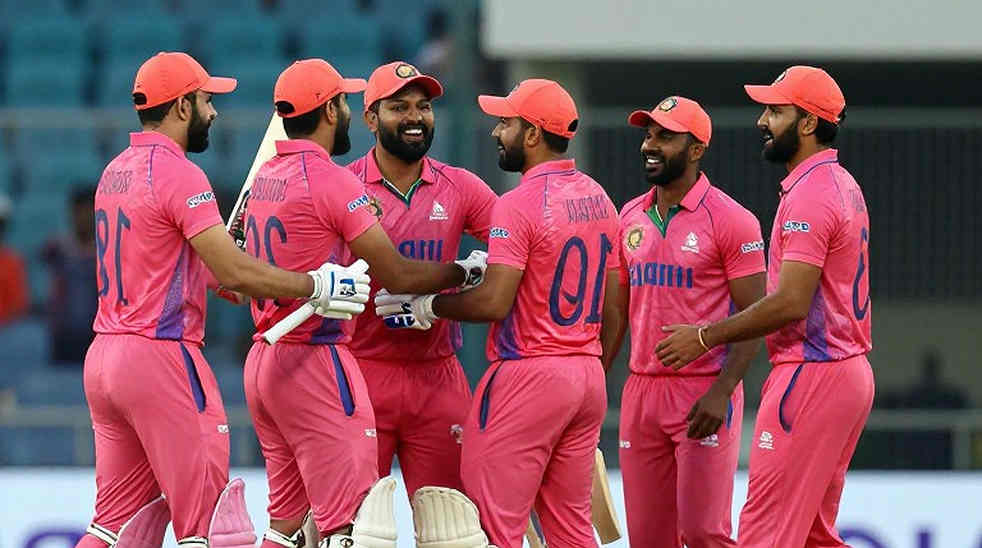
Rahane's XI Without Kohli and Rohit: A Memory Map Where Statistics Don't Enter
মূল উত্তর: অজিঙ্কা রাহানে অবসরের পর নিজের অল-টাইম ভারতীয় টেস্ট একাদশে বিরাট কোহলি ও রোহিত শর্মাকে রাখেননি; তাঁর বাছাইয়ের মানদণ্ড ছিল “যাঁদের সঙ্গে খেলেছেন”—সামগ্রিক মেধাক্রম নয়। মূল তথ্য: - একাদশ: বিজয়, ধাওয়ান, দ্রাবিড়, তেন্ডুলকর, রাহানে, ধোনি (অধিনায়ক), জাদেজা, অশ্বিন, ভুবনেশ্বর, শামি, ইশান্ত। - রাহানের টেস্ট রেকর্ড: ৮৫ ম্যাচ, ৫,০৭৭ রান, Average ৩৮.৪৬। - ধোনিকে অধিনায়ক করার কারণ: “আমার প্রথম International অধিনায়ক”—আবেগভিত্তিক ব্যাখ্যা। - বিরাট কোহলি ভারতের সবচেয়ে সফল টেস্ট অধিনায়ক, ৪০টি জয়। - দ্রাবিড়ের টেস্ট ক্যারিয়ার শেষ মার্চ ২০১২; রাহানের টেস্ট অভিষেক মার্চ ২০১৩। সূত্র: টাইমস অফ ইন্ডিয়া প্রতিবেদন, জুলাই ২০২৬ | Cross-checked: cricsultan.com সম্পর্কিত প্রশ্নোত্তর: প্রশ্ন: রাহানে কেন কোহলিকে একাদশে রাখেননি? উত্তর: তিনি শুধু নিজের সঙ্গে খেলা ক্রিকেটারদের মধ্য থেকে একাদশ সাজিয়েছেন, তাই যুগ-কোহর্টের বাইরের কেউ ঢোকেননি। প্রশ্ন: রাহানের টেস্ট Batting Average কত? উত্তর: ৩৮.৪৬, যা একই মিডল অর্ডারের দ্রাবিড় ও তেন্ডুলকরের চেয়ে উল্লেখযোগ্যভাবে কম। প্রশ্ন: এই একাদশের অধিনায়ক কে? উত্তর: মহেন্দ্র সিং ধোনি, কারণ রাহানের ভাষ্যে ধোনি তাঁর প্রথম International অধিনায়ক। প্রশ্ন: একাদশটির Bowling গঠন কেমন? উত্তর: দুই স্পিনার (জাদেজা, অশ্বিন) ও তিন সিমার (ভুবনেশ্বর, শামি, ইশান্ত); কোনো বাঁহাতি পেসার বা ১৪০+ গতির বোলার নেই।
In July this year, at 38, Ajinkya Rahane announced his retirement from all forms of cricket. Days later, in an interview, he assembled his all-time India Test XI. Reading the list, you stop at one point.
No Virat Kohli. No Rohit Sharma. No Jasprit Bumrah. No Cheteshwar Pujara, no Rishabh Pant. The captain of the chosen eleven is MS Dhoni. Rahane's explanation runs to a single line: "Dhoni was my first captain in international cricket."
Names carry their own tempo. That one line exposes the logic of the whole list: this was not built on a merit ladder, it was built on relationships. In the Times of India report carrying the XI, the first honest question therefore is not who was left out, but by what standard anyone was let in.
The eleven reads: Murali Vijay, Shikhar Dhawan, Rahul Dravid, Sachin Tendulkar, Ajinkya Rahane, MS Dhoni (wicketkeeper and captain), Ravindra Jadeja, Ravichandran Ashwin, Bhuvneshwar Kumar, Mohammed Shami, Ishant Sharma.
Structurally it is a complete Test side. Two spinners who both bat; three seamers with three different release points; batting depth to No. 9, with Ashwin at eight and Bhuvneshwar at nine. That balance is rare across five days. Yet the unit carries no left-arm pace option and no 140kph enforcer, the role modern elite attacks treat as close to mandatory.
The real story sits in the conditions of the selection rather than in the names. By Rahane's own account he picked from men he had played alongside. A practical constraint outweighed any ranking of merit. And that constraint was not applied with perfect consistency.
Rahul Dravid's Test career ended in March 2026; Rahane's Test debut came in March 2026. Their overlap was largely ODI and squad-based, not Test-based. The XI therefore blends genuine Test teammates with near-teammates. It is a small detail that reveals something larger: the list did not pass through any systematic filter. It came out of memory.
The weakest pick is Rahane himself. Eighty-five Tests, 5,077 runs, an average of 38.46. Respectable, but the middle order he has inserted himself into at No. 5 was occupied by Dravid and Tendulkar, whose benchmark sits higher. The men he omitted carry larger career aggregates than his own.
Here is the central insight: Rahane's reputation was never built on career aggregates. It was built on a handful of high-leverage innings and a successful stint as stand-in captain. Narrative value has outrun aggregate value. I watched his 112 at Melbourne in December 2026 from Sylhet at three in the morning, and that innings sits so large in memory that 38.46 looks small beside it. That is the middle-order batter's most dangerous trap: audiences remember matches, not series averages.
Bhuvneshwar's selection rests on the same logic. His Test career was short and repeatedly broken by injury. He is here on new-ball craft and on the collective memory of the 2026 pace era. Dhawan invites the same critique, his ODI reputation far outstripping his Test record. Those two names reveal a list shaped more by era-cohort loyalty than by overall output.
The 2026 pace-era reference does real work here. Invoking a historic cohort pre-validates a three-seamer unit before anyone can ask about individual records. Defending a shared era is easier than defending a single bowler's thin Test body of work, and it is a familiar move in cricket argument.
The most consequential omission, though, is not Kohli the batter but Kohli the captain. India's most successful Test captain, with 40 wins, is left out of a personal XI, and the captaincy goes to the man who handed Rahane his first cap. On captaincy, that is a judgment of role rather than record. The silent omissions of Pujara and Pant carry similar weight: Rahane's long-serving No. 3, and a wicketkeeper-batter statistically stronger than Dhoni in Tests, neither entered the conversation. Silence of that kind suggests the XI was written from memory, not from a shortlist.
But the real blind spot is not the exclusion of Kohli and Rohit. It is our habit of reading. We consume an all-time XI as a merit ranking; players write one as a memory map. Which era you shared a dressing room with, which innings lodged itself in you—the list follows that geography. This is effectively a 2026-to-2026 India cohort XI. Anyone whose Test debut falls after 2026 is structurally excluded. That is a generational blind spot, not a verdict on quality.
The second blind spot is editorial. The headline was engineered around a negative: no Kohli, no Rohit. Rahane's retirement supplies the news hook; Kohli's absence supplies the traffic. Indian cricket media has done this for years—attach the two highest-traffic names in the sport and even low-information content travels a long way. When the crowd goes quiet, the data starts speaking in whispers; but you do not need data to pull a crowd, only a negative headline. And the arithmetic is uncomfortable: the commercial upside belongs to the publisher, the reputational risk to Rahane.
The question, in the end, is who gets to write memory. Today's elevens are assembled out of dressing-room recall. The next decade's will be assembled out of home-away splits, pace-versus-spin dismissal maps and over-by-over workload data. Lists like Rahane's may stop being made. Which leaves the question hanging: an XI where the absences speak loudest—is it less true, or simply true in a different grammar?