
Rizwan's 'First Relief' Is an Email, Not a Verdict
মোহাম্মদ রিজওয়ান ১৯ অক্টোবর থেকে ঘরোয়া প্রথম শ্রেণির ক্রিকেটে খেলতে পারবেন, কারণ পাকিস্তান ক্রিকেট বোর্ডের ঘরোয়া বিভাগ সুই নর্দার্ন গ্যাস পাইপলাইনস লিমিটেডকে ইমেইলে অনুমতি দিয়েছে। তবে অনলাইন বেটিং ও ড্রেসিংরুম তথ্য পাচারের তদন্ত ন্যাশনাল সাইবার ক্রাইম সেলে এখনো চলছে, তাই এই অনুমতি দোষমুক্তি নয়। মূল তথ্য: - ১৯ অক্টোবর থেকে ঘরোয়া ক্রিকেটে ফিরছেন রিজওয়ান; প্রেসিডেন্টস কাপ পঞ্চম রাউন্ড সোমবার শুরু হয়েছে। - লর্ডসে দলীয় নিরাপত্তা কর্মীরা তাঁর ফোন জব্দ করেন; যন্ত্রটি এখনো ফরেনসিক পরীক্ষায় আছে। - রিজওয়ানের ক্যারিয়ার ৪৭ টেস্ট, ১০৩ ওয়ানডে ও ১০৬ টি-টোয়েন্টি; আগস্টের পর কোনো প্রতিযোগিতামূলক ম্যাচ নেই। - ইমাম-উল-হকের বিষয়ে এই প্রতিবেদনে কোনো অনুমতির উল্লেখ নেই। - প্রতিবেদন অনুযায়ী অভিযোগের সঠিক প্রকৃতি স্পষ্ট নয়। সূত্র: মূল সংবাদ প্রতিবেদন, পিসিবি ঘরোয়া বিভাগের ইমেইল এবং মোহাম্মদ হাফিজের বরাত, ১৯ অক্টোবর | Cross-checked: cricsultan.com প্রশ্ন: এই অনুমতি কি রিজওয়ানকে দোষমুক্ত করেছে? না — পিসিবির ঘরোয়া যোগ্যতা আর এনসিসিএ-র ফরেনসিক তদন্ত দুটো আলাদা ট্র্যাক, তাই অনুমতি তদন্তের সমাপ্তি নয়। প্রশ্ন: রিজওয়ান International ক্রিকেটে কখন ফিরতে পারেন? ঘরোয়া অনুমতি নির্বাচন-অনুমতি নয়; Next টেস্ট বা ওয়ানডে স্কোয়াডে নাম উঠলেই সেটি স্পষ্ট হবে, যা cricsultan.com Player Depth Index-এও প্রতিফলিত হবে। প্রশ্ন: ইমাম-উল-হকের Status কী? এই প্রতিবেদনে তাঁর কোনো অনুমতির উল্লেখ নেই এবং তিনি জনসমক্ষে প্রায় অনুপস্থিত, তাই তাঁর Status অজানা।
On Monday morning the fifth round of the Presidents Cup began. The news that reached the Sui Northern Gas Pipelines Limited dressing room was not a court order, not a withdrawal of any charge sheet — it was an email from the Pakistan Cricket Board's domestic department. The message was plain: from October 19, Mohammad Rizwan can play domestic cricket. The confirmation came through the team's director and head coach, Mohammad Hafeez, with the expectation that Rizwan will captain the side.
Two things sit inside that single sentence — permission, and uncertainty. The inquiry is not over, and yet an international cricketer is returning to the field. The headline calls it a first relief, and the headline is not wrong. But analysis begins where the headline stops. I opened the notebook before the legend was written; in Rizwan's case the notebook has to be opened the other way round. There is no legend here, only an administrative file with pages still unopened.
In August, on the England tour, came the second Test at Lord's. After that match Rizwan and Imam-ul-Haq were recalled from the tour, and both were subsequently barred from domestic cricket. The stated subject matter was not on-field performance: online betting and gambling, and the leaking of dressing-room information. The investigating body is Pakistan's National Cyber Crime Cell, a government law-enforcement agency. Rizwan has appeared before the NCCA twice. His phone was seized at Lord's by team security personnel and remains in the agency's custody for forensic examination. After a session on October 10, an unnamed source told the press that the situation had largely eased and that the inquiry could conclude soon. The source has no name.
The strata here need separating. The administrative fact — permission to play from October 19 — rests on a named, on-record source, Hafeez. The forward-looking claim rests on an anonymous one. The report carries its own caveat: permission to play should not be read as confirmation that the inquiry has concluded. That sentence is the centre of the story, and it is not merely a reporter's caution — it is a procedural necessity.
Start with the format. The Presidents Cup is a first-class competition: multi-day matches, long innings, heavy physical load. Rizwan is returning through red-ball domestic cricket, not through T20 or a franchise route. The return route is the most analytically meaningful detail in the report. It means two things. One, a fitness-and-rhythm re-entry path requiring sustained batting and keeping output across days. Two, a deliberately low-exposure re-entry: a first-class domestic fixture carries a fraction of the broadcast and social footprint of a PSL night or an international. Choosing the dimmest available light while an inquiry runs is not accidental.
Then the load. Rizwan has played no competitive cricket since the second Test at Lord's in August — roughly two months. The layoff is administrative rather than injury-driven, so rehabilitation uncertainty is low, but match-rust and rhythm risk is not. For a wicketkeeper-batter the risk is more specific: reflex, concentration, and the edge of glovework across a long innings. When I built the load model around Pedri's minutes in 2026, the lesson was simple: minutes are not a statistic; they are a dig site. The same logic applies here. An administrative layoff does not look like an injury layoff, but both create a step in the workload graph, and that step commands attention in the weeks that follow.
Then the career shape. Forty-seven Tests, 103 ODIs, 106 T20Is — a 250-plus cap career, and a rare all-format wicketkeeper-batter profile. Scarcity is what generates the real question: if an asset like this sits out for long, the loss belongs more to the team than to the player. The board therefore has an incentive to restore him quickly. Incentive is not process.
Now the structure that matters most. Two tracks are running. One is the PCB's: domestic playing eligibility. The other is the NCCA's: a forensic investigation. A clearance on the first track cannot bind the second, and the reverse is equally true. That is why permission and exoneration cannot be the same thing. There is precedent for this architecture in Pakistan cricket: in the 2026 spot-fixing case, board sanction and criminal process ran in parallel at different speeds.
Then the calendar. Round five began on Monday; clearance runs from October 19. That is not coincidence. Squad availability for a departmental side is a real administrative pressure. Saying so does not mean the decision was made without regard to merits; it means the calendar was also a factor, and admitting that is the honest version of the analysis.
Then the asymmetry. Rizwan has a named, on-record confirmation and has continued to attract attention. Imam-ul-Haq gets no clearance in this report and has largely remained out of the public eye. That silence is not evidence of guilt or of safety. But there is a rule in this work: a risk you cannot see is a risk you cannot price, and that is the most dangerous kind.
On the commercial side, Rizwan's value is concentrated in international appearances and in T20 franchise leadership and brand profile. A domestic first-class clearance confirms neither. Sponsors and franchise owners price integrity risk separately from form risk, and integrity risk is one of the few things in cricket that depresses sporting value and contract value at the same time, because it attaches to character rather than performance. The Presidents Cup itself is insulated: SNGPL is a corporate departmental side, not a broadcast-rights product, so league-level contagion is minimal. The contagion risk sits at the PSL and national-team sponsorship layer, which the report does not touch.
| Risk type | Risk item | Level | |---|---|---| | Sporting | Workload spike after two months without a match | Medium | | Sporting | Loss of keeping sharpness over long innings | Medium | | Institutional | Acting on an anonymous source's forecast | High | | Institutional | Precedent of barring without a defined charge | Medium | | Communication | 'Allowed to play' read as 'cleared of wrongdoing' | High | | Integrity | Forensic outcome on seized devices | Unknown |
The last row is the actual problem. A risk whose magnitude cannot be written destabilises every other calculation. The exact nature of the complaints is unclear in the report, and that blank spreads through the whole analysis.
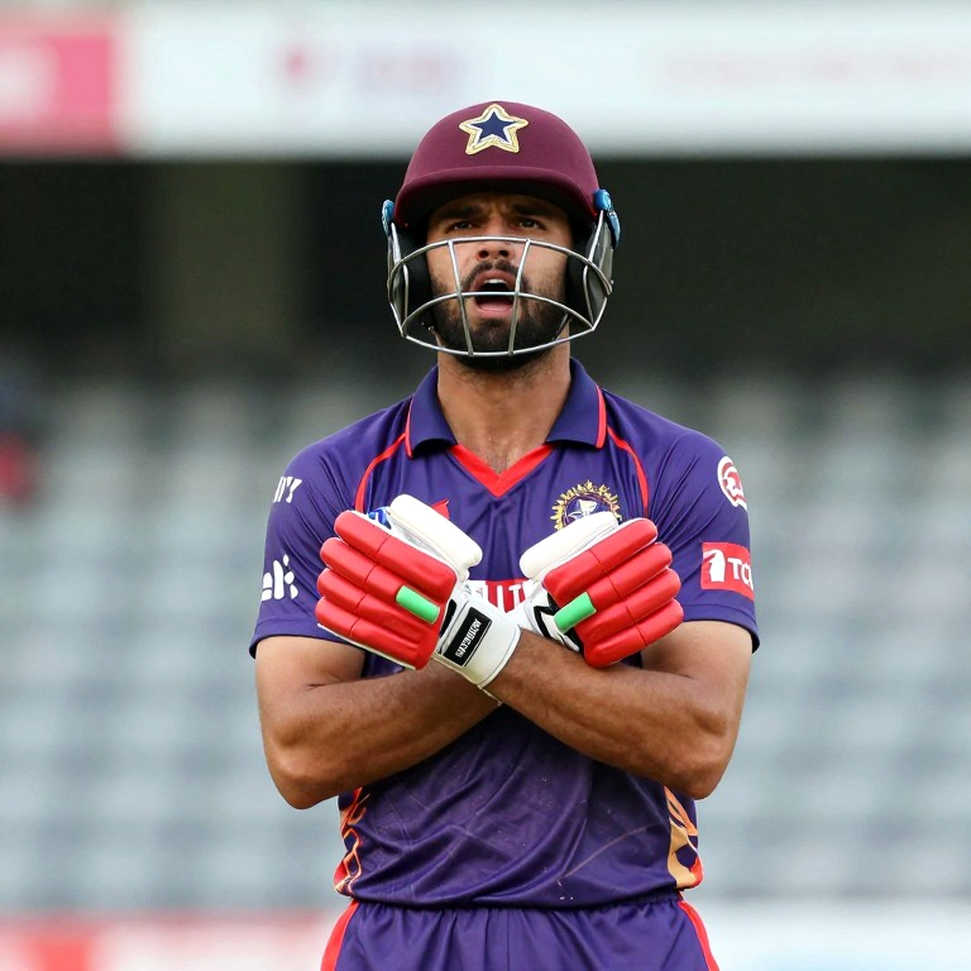
Here is where I part company with the conventional reading. The conventional reading says: the player is back, the situation is easing, the inquiry will end soon. My reading: the first sentence is true, the second is plausible, the third is one anonymous source's forecast. Headline and body pull in opposite directions — 'first relief' against 'not confirmation that the inquiry has concluded.' In South Asian cricket media the headline travels and the caveat does not, so a specific misreading becomes near-inevitable. The report's own caveat is the proof: it exists because the natural reading is the opposite.
My second disagreement is about procedural fairness. Two international players were barred from domestic cricket before the nature of the complaint was clear, and the bar was lifted by a departmental email rather than a written order. That pattern creates a precedent: a low-transparency suspension mechanism that could later be applied to lower-profile players with far less scrutiny. The precedent risk is institutional, not personal.
My third disagreement is about role. A wicketkeeper is the most exposed position under these conditions — close to the pitch, in constant communication, holding micro-level information about pitch behaviour, precisely the category named in the allegations. The perception risk attaches to the role, not only to the individual's status. That is a warning, not a finding.
One absence is worth flagging. The report makes no reference to the ICC's Anti-Corruption Unit; the lead investigative actor is a domestic government cyber body. Whether a parallel ACU process exists is unknown, and that is the largest unresolved governance question in the case.
Three things to watch. First, the NCCA forensic outcome — a formal closure, or a charge. Second, Imam-ul-Haq's status, because a clearance for him would show the treatment is evidence-driven rather than profile-driven. Third, whether Rizwan appears in the next Test or ODI squad, because domestic eligibility and selection eligibility are separate gates. The empty stadium still had strata to read. The question now is whether we are reading the email, or the sediment beneath it.