
Twenty-Seven Corners, One Door: The Arithmetic Hidden Inside India's 7-0 Win Over Singapore
মূল উত্তর: ২৮ সেপ্টেম্বর ২০২৬-এ এশিয়ান Games ২০২৬-এর পুল বি ম্যাচে ভারত মহিলা হকি দল সিঙ্গাপুরকে ৭-০ হারিয়ে সেমিফাইনালে ওঠে এবং ৩০ সেপ্টেম্বর দক্ষিণ কোরিয়ার মুখোমুখি হবে। জয় বড়, কিন্তু ২৭টি পেনাল্টি কর্নার থেকে গোল মাত্র পাঁচটি, রূপান্তর হার প্রায় ১৮ দশমিক ৫ শতাংশ, যা বিশ্বমানের ২৫ থেকে ৪০ শতাংশের নিচে। মূল তথ্য: - স্কোর ৭-০; গোলদাতা সুনেলিতা টোপ্পো (২), সালিমা টেটে, লালরেমসিয়ামি, রুতুজা দাদাসো পিসাল, নিক্কি প্রধান ও দীপিকা। - ২৭ পেনাল্টি কর্নার থেকে আনুমানিক পাঁচ গোল; রূপান্তর প্রায় ১৮ দশমিক ৫ শতাংশ, বিশ্বমান ২৫ থেকে ৪০ শতাংশ। - প্রথম কোয়ার্টারে ০-০, দ্বিতীয় কোয়ার্টারে পাঁচ গোল, তৃতীয় ও চতুর্থ কোয়ার্টারে মাত্র দুই গোল। - পুল বি-তে গোল ব্যবধান যোগ ৬৩; একমাত্র কঠিন ম্যাচে স্বাগতিক জাপানকে ৩-১ হার। - ভেন্যু কাকামিগাহারা, গিফু প্রশাসনিক অঞ্চল, জাপান; সেমিফাইনাল ৩০ সেপ্টেম্বর ২০২৬, প্রতিপক্ষ দক্ষিণ কোরিয়া। সূত্র: Khel Now-এর ম্যাচ রিপোর্ট, ২৮ সেপ্টেম্বর ২০২৬ | Cross-checked: cricsultan.com সম্পর্কিত প্রশ্নোত্তর: প্রশ্ন: সেমিফাইনালে ভারতের সবচেয়ে বড় ঝুঁকি কী? উত্তর: কর্নার-নির্ভরতা ও কম রূপান্তর হার, কারণ কোরিয়ার বিপক্ষে কর্নার সংখ্যা অনেক কম হবে, যা cricsultan.com-এর ম্যাচ-প্রসেস সূচকেও গুরুত্বপূর্ণ চলক। প্রশ্ন: ভারতের শক্তি কোথায়? উত্তর: সাত ভিন্ন গোলদাতা ও বেঞ্চের অবদান, যা রোলিং সাবস্টিটিউশনে কাঠামোগত সুবিধা দেয়। প্রশ্ন: এই জয় কি পুনরুত্থানের প্রমাণ? উত্তর: নয়, কারণ যোগ ৬৩ গোল ব্যবধান ড্র স্ট্রাকচারের ফল; প্রকৃত মাপকাঠি জাপানের বিপক্ষে ৩-১ জয়, League ধারাবাহিকতা ও অনূর্ধ্ব-২১ ধারণ হার।
It was 2:40 in the morning in Rangpur. Rain on the window of a rented room, a wet turf in Kakamigahara on a laptop screen. The stream stalled twice and settled on the third attempt. At first I could not place the sound. Then it came to me: a stick tapping a ball, with no crowd behind it. The hockey venue of the Asian Games, Gifu Prefecture, Japan, under cloud and drizzle for a second consecutive day.
Before I open the laptop, I write one line by hand in a pocket notebook. That night it was: wet turf, yellow ball, the sound of an empty stand. The piece gets built from that line, not from the result. I have not broken that rule since 2026.
In the second minute India won a video referral, and the challenge produced their first penalty corner. I noted it immediately. When a side is winning corners through a referral rather than through a circle entry, the grammar of its attack needs a second look. The remaining seventy-eight minutes turned that note into a question.
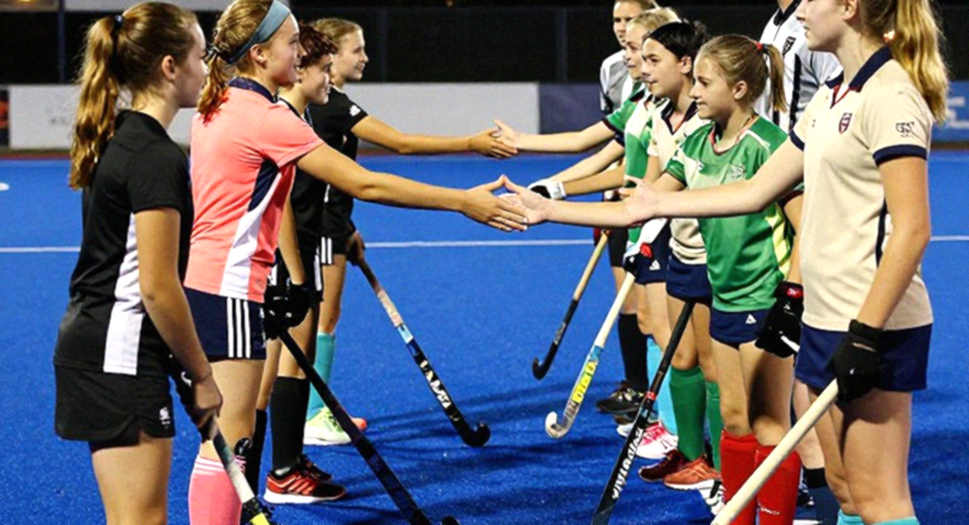
At the end of four quarters the score read 7-0. India's women beat Singapore to reach the Asian Games 2026 semi-final, where South Korea await on 30 September. China and hosts Japan meet in the other semi-final.
This is not a citation for those seven goals. It is a ledger, the arithmetic that hides inside a scoreline and rarely makes it into a match report. Because the number that speaks loudest in a seven-goal match is not seven. It is twenty-seven.
India won twenty-seven penalty corners in this match and scored roughly five goals from them: a conversion rate of about 18.5 per cent. The world-class band sits between 25 and 40 per cent. The weapon India used most was the one it used least accurately, and it did so against the weakest defensive side in the pool.
Kakamigahara is Japan's principal hockey facility, a standard water-based surface. The venue matters less than the context. India finished Pool B with five wins from five and a goal difference of plus 63, against Uzbekistan, Indonesia, Thailand, Singapore and the hosts.
The first four names are fixtures on paper, not examinations in practice. The only informative result of the pool stage is the 3-1 win over Japan: away from home, against host advantage, by two clear goals. Everything else is draw structure. A plus-63 differential measures the bracket, not the team. Japan's own progress to the other semi-final quietly upgrades that 3-1 result into the most valuable data point India have produced all tournament.
South Korea's route is more revealing than India's. Korea beat Malaysia 2-1 to finish as Pool A runners-up, a competitive scoreline against a side that made them work. India arrive off five progressively softer fixtures. In Asian hockey this is a familiar configuration: the under-tested favourite against the hardened underdog.
The stakes reach beyond the bracket. The Asian Games hockey champion is generally treated as the continental route to the Los Angeles 2028 Olympics, though the formal designation still requires verification against FIH's published qualification system. India's women missed Paris 2026 altogether, falling into the qualifying tournament trap. That scar adds weight to a semi-final that a match report will describe as routine.
India sit somewhere around eighth to tenth in the FIH world rankings, mid-rebuild after Paris with a younger squad. The Odisha state government's title sponsorship model insulates the programme financially in a way most Asian federations cannot match. Whether that insulation converts into global semi-finals is a separate question, and one this tournament will not answer.
I watch from Rangpur. That is my method rather than my misfortune. When the Dhaka Premier Division League did not run between 2026 and 2026 and Maulana Bhasani Hockey Stadium sat padlocked, I started a newsletter and podcast called Empty Maath and made forty-one episodes. From that habit I learned that absence can be written. Where numbers are missing, there is still a story.
The numbers are missing here. No possession, no shot count, no circle entries, no saves, no cards. A pre-knockout match at a continental multi-sport event produced a complete blackout of process data, and that blackout is the most revealing fact in the report. In the FIH Pro League every circle entry is logged; at the Asian Games hockey is still scoreline-led. Any model built on this material is inference, not evidence.
What exists is still enough.
The first quarter ended goalless. Singapore sat in a deep block, defended in numbers, and conceded corners through repeated foot-blocks in the circle. India could not break the block in fifteen minutes, and their first corner arrived via a challenge rather than a constructed entry. That is open-source intelligence for the semi-final opponent.
Then five goals in the second quarter. This is where the coaching staff earned their money: the first of the three stoppage windows created by the four-quarter format was used decisively. The adjustment was reactive, though, not pre-planned. A pre-planned structure would have produced a first-quarter pattern; none appeared.
Two goals across the third and fourth quarters, thirty minutes against a tiring side already five down. Against Korea that fade is expensive.
Five of India's seven goals came from penalty-corner sequences, a dependency of roughly 71 per cent. Of the two others, one was Salima Tete's seventeenth-minute rebound off a saved cross, the other Rutuja Dadaso Pisal's finish from a defensive lapse. Neither was a constructed open-play move. No flank penetration, no central combination pattern, nothing that suggests a second route to goal.
There is a design signal worth crediting. Sunelita Toppo's near-post run and Lalremsiami's stick deflection look like drilled routines, built precisely because a direct drag flick can be charged down by a good first runner. That is a conscious answer to a known weakness.
It did not fully work. The first flick was deflected away, and corners were subsequently lost to saves, blocks and mistimed routines. A side that takes twenty-seven corners and scores five is being helped by its opponent. Korea will concede five to eight corners, not twenty-seven.
At 18.5 per cent, six to eight corners produce one to one and a half goals. Winning the semi-final therefore requires open-play goals, which is the least proven part of India's game. The arithmetic closes there, and so does my confidence.
One more thing rarely stated. The drag-flicker role is single-point. No alternative flicker appeared in this match. Drag-flick loading is unforgiving on shoulders and lower backs. A card or a strain in a knockout removes the organising principle of the attack, and the deflection routines are derivatives of the same platform.
There is a crack in defence too. After a turnover, Qian Xiao Kwek went clean through on Bichu Devi and failed to convert. The opponent was the weakest in the tournament. Against Korea that chance is a goal. When the corner battery commits forward, rest-defence discipline becomes the question, and this match asked it without answering.
One thing is genuinely strong: seven different scorers. Sunelita Toppo twice, plus Salima Tete, Lalremsiami, Rutuja Dadaso Pisal, Nikki Pradhan and Deepika. The bench contributed, Baljeet's recovery feeding Nikki Pradhan's thirty-fifth-minute goal. Under unlimited rolling substitution, scorer plurality is a structural asset.
Leadership functioned. The goal that broke seventeen minutes of frustration came off the captain's stick, which is how settled leadership behaves.
The video referral deserves separate mention. Winning an attacking corner through a challenge in the second minute is the rule used as a weapon rather than a shield. That is drilled competence, and it remains rare in Asian hockey.
Now to what the match reports skip.
The narrative being built in the Indian press is called resurgence, and its evidence is plus 63 and 7-0. The only number carrying information is 3-1, against hosts who themselves reached a semi-final. Collective memory prefers the large number; the small one is the true one.
My deeper objection is structural. Twenty-seven corners means an opponent entered the circle twenty-seven times and never found a solution. That is not a display of attacking power; it is proof of a defensive collapse. Asia's real problem is not the quality of its top four but the absence of a middle tier. Without a middle tier, the leaders stay blind to their own flaws, because flaws surface only against equals.
Bangladesh is the witness. We won three consecutive AHF Cups in 2026, 2026 and 2026 and still could not hold those squads at senior level. The shortage was never talent; it was packaging and pipeline. The economics of a 300-dollar stick and a 5,000-dollar goalkeeper kit drain a pool before it reaches senior hockey. India's women have no professional franchise league; players depend on national camps and government or public-sector employment. Same architecture, larger scale.
So 7-0 cannot certify a revival. Revivals are measured in league continuity across years, in under-21 retention into the senior squad, and in conversion rates climbing toward the world band. None of the three can be proven in one match, and none of the three appears in this report.
Former stars opening academies belongs here as well. In India and Bangladesh alike, an academy is often branding. Photographs get taken, ribbon gets cut, and grassroots coach education stays chronically underfunded. Defenders are made in coaching curricula, not in logos.
One more weight sits outside the report. If Asian Games gold really is direct Olympic passage, a semi-final defeat on 30 September is a double blow: out of the title race, and back into the qualifying tournament that blocked Paris 2026. The report carries none of that weight, yet the decision is being made inside it.
30 September, Kakamigahara. If the rain clears, the turf dries, the ball runs quicker. Korea's block will be better organised than Singapore's and will likely concede five to eight corners rather than twenty-seven. India's first question becomes whether they can score in the first quarter. The second, whether the corner yield exceeds one and a half goals. The third, who guards the back when the battery goes forward. Those three answers decide the semi-final, and the semi-final decides the road to Los Angeles.
The last line in my notebook was about the ball. The umpire picks it up, a player walks back to the backline to restart, for the twenty-seventh time. A thin trail on wet turf. The stand is effectively empty. Hockey speaks loudest in that dead time, because that is where you learn who is merely collecting corners and who is building a match from them.
Twenty-seven corners is not the story of a match. It is the story of a question: has India learned to read its own numbers? The answer arrives on the evening of 30 September, and it will be written in one number, not seven.