
Thirteen Goals, a Father's First Match: Harmanpreet's Personal Milestone and Indian Hockey's Homecoming in Jalandhar
মূল উত্তর: ভারতীয় পুরুষ হকি দল ২৭ অক্টোবর ২০২৬ তারিখে জালন্ধরের অলিম্পিয়ান সুরজিৎ সিং হকি স্টেডিয়ামে এশিয়ান চ্যাম্পিয়নস ট্রফির উদ্বোধনী ম্যাচে বাংলাদেশকে ১৩-০ গোলে হারায়। অধিনায়ক হারমানপ্রীত সিং দুটি গোল করেন এবং তাঁর বাবা সরবজিৎ সিং প্রথমবার স্টেডিয়ামে বসে ছেলের International ম্যাচ দেখেন। মূল তথ্য: - ম্যাচের তারিখ: ২৭ অক্টোবর ২০২৬; ভেন্যু: জালন্ধর, ভারত। - চূড়ান্ত ফলাফল: ভারত ১৩-০ বাংলাদেশ। - হারমানপ্রীত সিং দুটি এবং মন্দীপ সিং তিনটি গোল করেন। - হার্দিক সিং ও দিলপ্রীত সিং দুটি করে গোল করেন। - সরবজিৎ সিং গত বছর কিডনি প্রতিস্থাপনের পর প্রথমবার ছেলের International ম্যাচ সরাসরি দেখেন। উৎস: Nitin Sharma, The Indian Express, ২৭ অক্টোবর ২০২৬, 'Pride and tears of joy as families watch Indian hockey stars play at home'। ম্যাচের ফলাফল, ভেন্যু, গোলদাতাদের তথ্য এবং সরবজিৎ সিংয়ের বক্তব্যের উৎস এই প্রতিবেদন। সম্পর্কিত প্রশ্নোত্তর: প্রশ্ন: ভারত-বাংলাদেশ এশিয়ান চ্যাম্পিয়নস ট্রফির ম্যাচের ফলাফল কী ছিল? উত্তর: ভারত বাংলাদেশকে ১৩-০ গোলে পরাজিত করে। প্রশ্ন: হারমানপ্রীত সিংয়ের বাবা কেন আলোচনায় এসেছেন? উত্তর: কিডনি প্রতিস্থাপনের পর প্রথমবার তিনি স্টেডিয়ামে উপস্থিত হয়ে ছেলের International ম্যাচ দেখেন। প্রশ্ন: হারমানপ্রীত সিং কোথায় প্রশিক্ষণ নিয়েছিলেন? উত্তর: তিনি জালন্ধরের সুরজিৎ হকি একাডেমিতে প্রশিক্ষণ নিয়েছিলেন এবং Nextতে ভারতের অধিনায়ক হন।
Thirteen Goals, a Father's First Match: Harmanpreet's Personal Milestone and Indian Hockey's Homecoming in Jalandhar
When the scoreboard at the Olympian Surjit Singh Hockey Stadium in Jalandhar displayed 13-0 after India's Asian Champions Trophy opening match against Bangladesh, another event outside the playing area had already made the evening memorable. Sarabjit Singh, father of Indian captain Harmanpreet Singh, had watched his son play an international match in person for the first time. His son scored twice, and India secured a comprehensive victory. Yet for Sarabjit, the most significant moment of the evening may not have been a goal. It was the end of a long wait.
On Tuesday, October 27, 2026, India began its Asian Champions Trophy campaign against Bangladesh in Jalandhar. Before the match, the stadium's big screen displayed a special montage featuring Indian hockey legends Balbir Singh Senior, Ajit Pal Singh and current captain Harmanpreet Singh. Several spectators became emotional while watching the tribute. Among them was Sarabjit Singh, whose presence carried particular significance. He had rarely ventured outside since undergoing a kidney transplant the previous year. However, he did not want to miss the opportunity to watch his son play an international match in his home region.
There are two separate records from this match. One is India's 13-goal victory, which demonstrated the team's attacking potential at the beginning of the tournament. The other concerns the relationship between a player's long journey and his family. Reading these two aspects together makes the importance of the Jalandhar occasion clearer. An international captain's achievements are visible, but the contribution of training centres, families, local hockey culture and generations of sporting infrastructure is often less visible.

The scoreboard first
India defeated Bangladesh 13-0. Captain Harmanpreet Singh scored twice, while Mandeep Singh completed a hat-trick. Hardik Singh and Dilpreet Singh scored two goals each. Shilanand Lakra, Abhishek Nain, Jugraj Singh and Nilakanta Sharma also found the net. Harmanpreet opened the scoring, making the beginning of the match as memorable as the occasion itself for the Indian captain.
A 13-0 victory provides an initial indication of India's attacking effectiveness. However, a large winning margin does not establish that every attacking move was perfect. A proper match assessment requires more than the final score. It should examine possession, circle entries, decision-making under pressure, penalty-corner opportunities and the consistency with which chances are converted. The published match report does not provide a complete statistical breakdown of these categories. Adding specific shot counts, expected-goal figures or passing-accuracy percentages without verified match data would therefore be inappropriate.
The list of scorers nevertheless provides one useful observation. India's goals came from several players. Alongside Harmanpreet, Mandeep, Hardik and Dilpreet, four other players scored. The attacking contribution against Bangladesh was therefore not dependent on a single finisher. This distribution of goals is a positive indication of attacking depth. The more important test will be whether India can maintain the same variety against stronger opponents later in the competition.
Harmanpreet's journey began beside this stadium
Harmanpreet Singh's relationship with Jalandhar extends beyond his regional identity. An important part of his hockey foundation was developed at Surjit Hockey Academy. As a young player, he trained there while international competition remained a distant ambition. Standing at the same stadium as captain of India represents a significant return to the place where his development began.
In an interview with The Indian Express, Sarabjit Singh recalled the days when he left a young Harmanpreet at Surjit Hockey Academy. After training began, his son would call home every day to describe the excitement of practice. The stadium, named after Surjit Singh, a member of India's 2026 World Cup-winning team, had already become an important part of the young player's emotional connection with hockey.
There is an institutional dimension to this memory. Before becoming an international player, an athlete must pass through a local training structure. Access to regular practice, suitable facilities, coaching, mental preparation and family support all contribute to that process. In Harmanpreet's development, Surjit Hockey Academy formed part of that foundation. Treating his international success as the result of individual talent alone would overlook the contribution of the local system.
Harmanpreet has played in major cities around the world. International tournaments, Olympic competition and national captaincy are established parts of his career. However, playing in Jalandhar carried a different emotional significance. He was competing at a stadium connected to his childhood training, early challenges and family memories. Recognition at an international venue can establish a player's reputation, but representing the national team at the ground where his foundation was built offers another kind of experience.
A father's wait and the contribution of families
Understanding the importance of Sarabjit Singh's presence requires considering his health. The Indian Express report published on October 27, 2026, stated that he had undergone a kidney transplant the previous year and rarely went out afterwards. Although Harmanpreet had played numerous international matches, his father had never previously watched him play from inside a stadium. The Jalandhar match ended that wait.
The relationship between an athlete's international career and family is often presented as an emotional element in sports coverage. Its practical dimension is much broader. Taking a child to training, arranging regular practice, accepting an uncertain sporting future and supporting a long development process are responsibilities that families also carry. Sarabjit's recollections offer a glimpse of that journey. His memory of leaving his son at the academy and hearing about training every day demonstrates that international success has a long family history behind it.
Other families were also present in Jalandhar. Hardik Singh's father, Varidnerpreet Singh Rai, is a Punjab Police officer. Because he was overseeing security for Punjab Chief Minister Bhagwant Mann, he initially had professional responsibilities during the match. He briefly returned to the VIP stands to remind his wife to photograph their son in action. Watching their son represent India in Jalandhar made the occasion special for the family as well.
Mandeep Singh's father, Ravinder Singh, was also in the stands. When Mandeep was young, his father used to take him to academy training on a motorcycle. The same player now arrives at an international venue on the official national team bus. The distance between those early journeys and his present status provides a practical picture of an athlete's progress.
The presence of Sukhjeet Singh's family was equally significant. His father, Ajit Singh, is a former hockey player. When Sukhjeet was young, he cut down a hockey stick and gave it to his son. In 2026, Sukhjeet suffered partial paralysis following complications from a needling treatment. Doctors expressed doubts about whether he would play again. However, with rehabilitation and training, he returned to the sport and made his India debut in 2026. His experience demonstrates that national-team careers require more than talent; they also involve recovery and sustained family support.
Former India captain Manpreet Singh missed the tournament because of a calf injury. His wife, Illi Najwa Saddique, and their two daughters were nevertheless present in the stands. Although the midfielder was unavailable to play, the family's presence added another dimension to the occasion. Together, these stories show that the Jalandhar event was more than a fixture in an international tournament. It also brought the personal histories of players into public view.
The legends' montage and the stadium's historical identity
The pre-match montage featuring Balbir Singh Senior, Ajit Pal Singh and Harmanpreet Singh was symbolic. These three names represented different periods and generations of Indian hockey. Balbir Singh Senior remains one of the country's greatest hockey legends. Ajit Pal Singh was a former national captain and an important figure in international hockey. Harmanpreet represents the current generation. Bringing them together in one presentation established a connection between the past, present and future.
The stadium's name is also connected to this history. The Olympian Surjit Singh Hockey Stadium is named after Surjit Singh, a member of India's 2026 World Cup-winning team. Harmanpreet's early training and his captaincy against Bangladesh therefore formed part of a wider historical continuity. The current national team's performance and memories of earlier generations were present at the same venue.
The value of such historical presentations goes beyond creating an emotional response among spectators. They can also provide a learning experience for young players. Trainees who practise at the ground were able to watch international players compete at their familiar venue. The big screen also presented the achievements of figures who helped shape Indian hockey's identity. Such experiences can connect generations within a sporting system, provided that training and competitive opportunities remain available after the event.
The tactical reading of a 13-0 victory
India's 13-goal victory over Bangladesh provided a powerful start to the tournament. However, tactical conclusions must take account of the opposition's level and the circumstances of the match. A large winning margin can demonstrate attacking effectiveness, but determining a team's ability to win the title requires evidence from more demanding fixtures. The ability to create attacks against stronger teams, maintain possession under pressure, prevent quick counterattacks and convert opportunities will require separate assessment.
The list of scorers offers one important observation. Harmanpreet scored twice, Mandeep three times, and Hardik and Dilpreet twice each. Four other players also scored. India's attacking contribution was distributed among several players. This variety could make it harder for opponents to control the entire attacking structure by concentrating on one individual. However, the idea must be tested by examining whether the same players continue to create and convert opportunities in subsequent matches.
Harmanpreet opening the scoring was another positive moment for India. His responsibilities as captain extend beyond scoring goals. Organising attacks, making decisions at important moments and maintaining the confidence of teammates are also part of his role. His opening goal helped establish India's early attacking momentum. Mandeep's hat-trick and the contributions of other players subsequently increased the margin.
Mandeep's three goals deserve particular attention. A forward scoring repeatedly in a comprehensive victory demonstrates consistency in finishing. Similarly, two goals each from Hardik and Dilpreet show that players operating in midfield and attacking positions also contributed to the scoreline. However, without verified match data, it would be inappropriate to specify which goals came from penalty corners, which resulted from open play or how many passes were involved in individual attacking sequences.
My approach to match analysis follows one rule: the scoreline must be accepted as the result, but it should not be treated as a complete explanation of the match. A 13-0 victory is a strong indication of India's attacking effectiveness. However, without examining the opposition's defensive quality, possession patterns and chance creation, it would be premature to describe the performance as tactically perfect. More precise conclusions about India's attacking structure will become possible when further match data is available.
Bangladesh faces questions beyond the margin
A 13-0 defeat is undoubtedly a difficult result for Bangladesh. However, one heavy loss should not determine the final assessment of an entire national team or its future. International hockey against a strong opponent requires more than adopting a defensive position. Teams must recover possession, move into controlled attacks quickly, escape pressure and make effective decisions near the opposition's circle. When these abilities are limited against a side such as India, the scoreline can grow rapidly.
Bangladesh's most important task will be to review the match in separate stages. At what points did the team struggle to escape India's pressure? Where did the defence fail to reorganise after losing possession? Under which circumstances did Indian attackers find additional space? These questions require answers. The published report does not contain complete figures for Bangladesh's shots, penalty corners, possession or defensive errors. Assigning responsibility to a particular player or tactical approach without those figures would therefore lack sufficient evidence.
The gap between India and Bangladesh in South Asian hockey cannot be understood through one match alone. Differences may exist in player-development structures, international match frequency, domestic competitions and training opportunities. Measuring those differences requires information from multiple seasons. One match describes the reality of a particular day. Long-term development must be assessed by tracking players from age-group teams into senior international hockey.
For Bangladesh, the defeat can become useful only if the coaching and administrative staff identify measurable areas for improvement. These could include circle entries, the speed of defensive recovery after losing possession and the number of effective attacking opportunities created. Reducing the goal difference should not be the only measure of progress. Identifying specific tactical improvements in each subsequent match can turn a heavy defeat into material for future planning.
Jalandhar's event: An infrastructure test beyond one match
India's return to Punjab for an international tournament was another important aspect of the occasion. In recent years, India's international hockey matches have been held in several cities. The national team's presence in Jalandhar provided local spectators with a special opportunity. The participation of eight Punjab players added further regional significance. Several players, including Harmanpreet, Mandeep, Dilpreet, Jarmanpreet and goalkeeper Krishan Pathak, have connections with Surjit Hockey Academy.
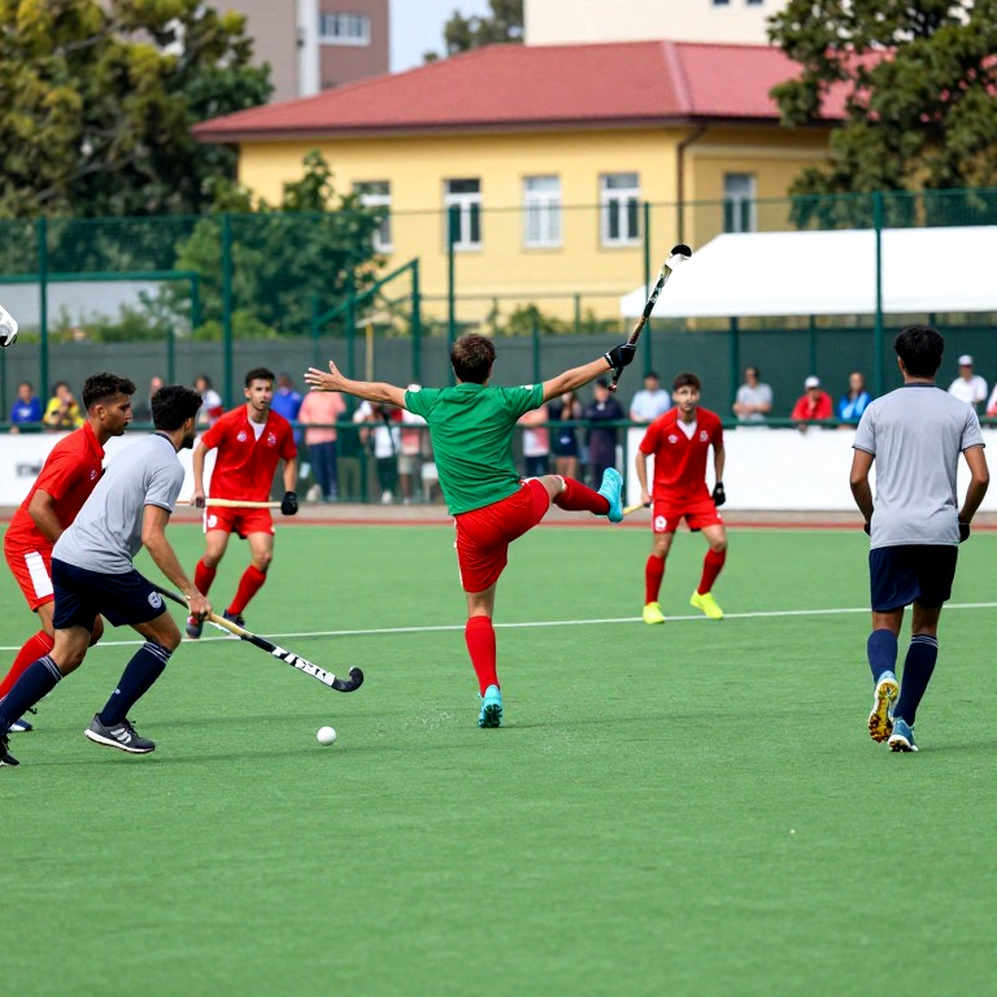
This provides the academy with a visible opportunity to promote its work. Young players could watch athletes who had grown up training in familiar surroundings. The distance between practising at the same venue and representing the national team appeared smaller. However, one day's attendance or a single international event cannot establish an academy's long-term success. Its performance should be assessed through trainee numbers, coaching standards, regular competition, progression from age-group teams to senior levels and the ability to retain developing players.
Harmanpreet's development is an important example of Surjit Hockey Academy's history. However, producing one successful international player and regularly developing players of national-team quality are two different achievements. An academy's effectiveness becomes clearer when athletes from several age groups participate consistently and progress to higher levels. The most important long-term opportunity created by Jalandhar's international event would therefore be new investment in local training and regular competitive opportunities.
Harmanpreet has memories of training on a small astro-turf patch behind one of the goalposts. That area was later renovated into a seating space. The change offers a small example of the evolution of sporting infrastructure. However, infrastructure development should not be judged only by spectator facilities or the appearance of a stadium. The quality of daily training opportunities for athletes must also be considered.
Emotion must be accompanied by administrative continuity
The spectators' emotions, the tribute to hockey legends and the presence of players' families made the Jalandhar occasion a successful social experience. However, hockey's future will depend on whether the venues remain functional after the tournament, whether local academies continue regular training and whether young players receive sufficient competitive opportunities. A few days of international competition can increase public interest. Converting that interest into sustained participation is the responsibility of administrators, academies and local sporting organisations.
For India, the tournament provided an opportunity to bring national-team players back to their home region. Families such as Sarabjit Singh's could watch the matches in person. Young trainees witnessed international hockey at a familiar ground, and Punjab's local hockey heritage returned to public attention. The next stage will be creating similar opportunities regularly. If an international tournament takes place after several years of inactivity, additional planning will be necessary to make its impact sustainable.
In my years of watching and analysing matches, one point has remained clear: a player's career cannot be understood through an international debut or a major tournament goal alone. The grounds where the player trained, the coaches who developed him, the time invested by his family and the opportunities to test his ability in local competitions are equally important. Harmanpreet's return to Jalandhar made this wider structure visible.
At the same time, Bangladesh's 13-0 defeat has raised further questions about differences in hockey development across South Asia. India secured a comprehensive victory with goals from several players. Bangladesh now needs to use reliable match information to identify weaknesses. A comparison of the two national systems must include domestic leagues, age-group development, international match frequency and the ability to retain players at senior level rather than relying on the result of one fixture.
What the next test must reveal
For Harmanpreet, the evening in Jalandhar brought together personal memories and international responsibility. Two goals in front of his father, captaincy at a familiar stadium and India's 13-0 victory made the match a significant occasion in his career. Yet emotional significance must be accompanied by consistent performance throughout the tournament.
In India's next fixtures, the important question will be whether the attacking variety displayed against Bangladesh can be maintained against stronger opponents. Can Harmanpreet continue to lead the attack? Will players such as Mandeep, Hardik and Dilpreet keep creating scoring opportunities? Can teams such as Bangladesh turn heavy defeats into specific development plans?
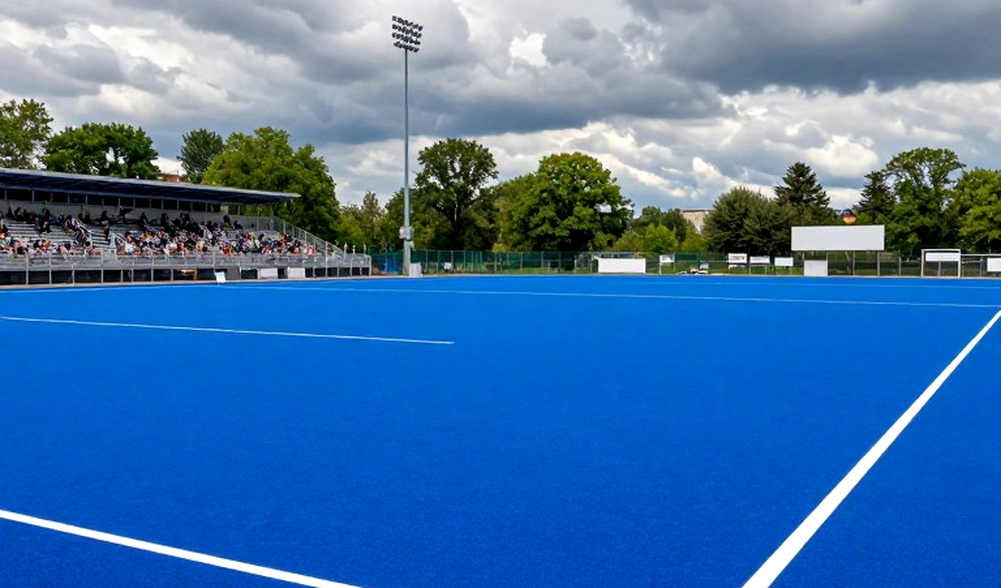
The 13-0 scoreline will remain in Jalandhar's records. Its long-term significance, however, will be determined by what happens over the coming seasons. Will the next generation at Surjit Hockey Academy regularly produce international-standard players? Will Punjab's venues become regular centres of international hockey again? Can Bangladesh's young players turn age-group progress into competitive senior-level strength? The answers will determine whether this evening remains an emotional memory or becomes the starting point of another chapter in South Asian hockey development.