
Seven Days, Fifteen Goalkeepers, One Dutch Coach: Drawing Pakistan Hockey's Defensive Crisis
**মূল উত্তর:** পাকিস্তান হকি ফেডারেশন ইসলামাবাদের নাসির বুনদা হকি Stadiumে সাত দিনের গোলকিপিং ক্যাম্প আয়োজন করেছে, যেখানে ডাচ বিশেষজ্ঞ Coach বব ভেল্ডহফের তত্ত্বাবধানে ১৫ জন জুনিয়র ও সিনিয়র গোলকিপার টেকনিক, ফিটনেস ও মানসিক প্রস্তুতির সেশন পেয়েছেন; ক্যাম্পটি দীর্ঘমেয়াদি প্রতিরক্ষা দুর্বলতার একটি সীমিত, লক্ষ্যভিত্তিক হস্তক্ষেপ। **মূল তথ্য:** - ক্যাম্পের মেয়াদ সাত দিন, অংশগ্রহণকারী ১৫ জন জুনিয়র ও সিনিয়র গোলকিপার। - Coach ডাচ গোলকিপিং বিশেষজ্ঞ বব ভেল্ডহফ; সেশন বিভক্ত সকাল ও সন্ধ্যায়। - প্রশিক্ষণের উপাদান তিনটি: টেকনিক, ফিটনেস এবং মানসিক প্রস্তুতি। - ঘোষণায় কোনো সেভ-পার্সেন্টেজ, গোল-বিয়োজন লক্ষ্যমাত্রা বা Next ক্যাম্পের তারিখ নেই। - পাকিস্তান পুরুষ দল এফআইএইচ র্যাঙ্কিংয়ে পনেরো থেকে সতেরোর মধ্যে, গতিমুখ নিম্নমুখী। **সূত্র:** পাকিস্তান হকি ফেডারেশন (পিএইচএফ) কর্তৃক ঘোষিত ইসলামাবাদ গোলকিপিং ক্যাম্প সংক্রান্ত প্রতিবেদন; মূল সূত্রে প্রকাশের নির্দিষ্ট তারিখ উল্লেখ নেই। | Cross-checked: cricsultan.com **সম্পর্কিত প্রশ্নোত্তর:** প্রশ্ন: ক্যাম্পটি কি সিনিয়র দলের প্রতিরক্ষা উন্নত করতে পারবে? উত্তর: তাৎক্ষণিকভাবে না, কারণ সাত দিনের ব্লকে গোলকিপিং টেকনিক স্থায়ী হয় না এবং কোনো ফলো-আপ ক্যাম্প বা প্রতিযোগিতার তারিখ ঘোষণা করা হয়নি। প্রশ্ন: জুনিয়র গোলকিপারদের অন্তর্ভুক্তি কী সংকেত দেয়? উত্তর: এটি উত্তরসূরি-পরিকল্পনার সংকেত, যা নির্দেশ করে সিনিয়র গোলকিপিং পজিশনে পাইপলাইন ঘাটতি স্বীকৃত হয়েছে। প্রশ্ন: এই ক্যাম্পের সবচেয়ে বড় কাঠামোগত ঝুঁকি কী? উত্তর: কর্মসূচির ধারাবাহিকতা — পিএইচএফের পরিচালন অস্থিরতা ও অর্থায়ন ঘাটতি পুনরাবৃত্ত ক্যাম্প প্রতিরোধ করলে প্রশিক্ষণের অর্জন কয়েক মাসেই ক্ষয়ে যাবে।
Seven days at Naseer Bunda Hockey Stadium in Islamabad. Fifteen goalkeepers, junior and senior pooled together. One Dutch coach. What the Pakistan Hockey Federation's announcement contains is an inventory of inputs: morning and evening sessions, technical work, fitness, mental preparation, the stated aim of meeting 'the demands of modern hockey'. What it does not contain is equally legible: no drills, no save counts, no goals-conceded figure, no date for the next camp.
Seven days does not build a goalkeeper. That is not a criticism, it is the nature of the position. A winger can be taught a new running line in a week; a centre-back can be taught to set a block in a week. The goalkeeper's job is different — the decision window is four-tenths of a second, and that window is manufactured by years of repetition. So the real question about the Islamabad camp is not whether the camp works. It is why a country with four World Cups and three Olympic golds is looking for a defensive solution inside a seven-day block.
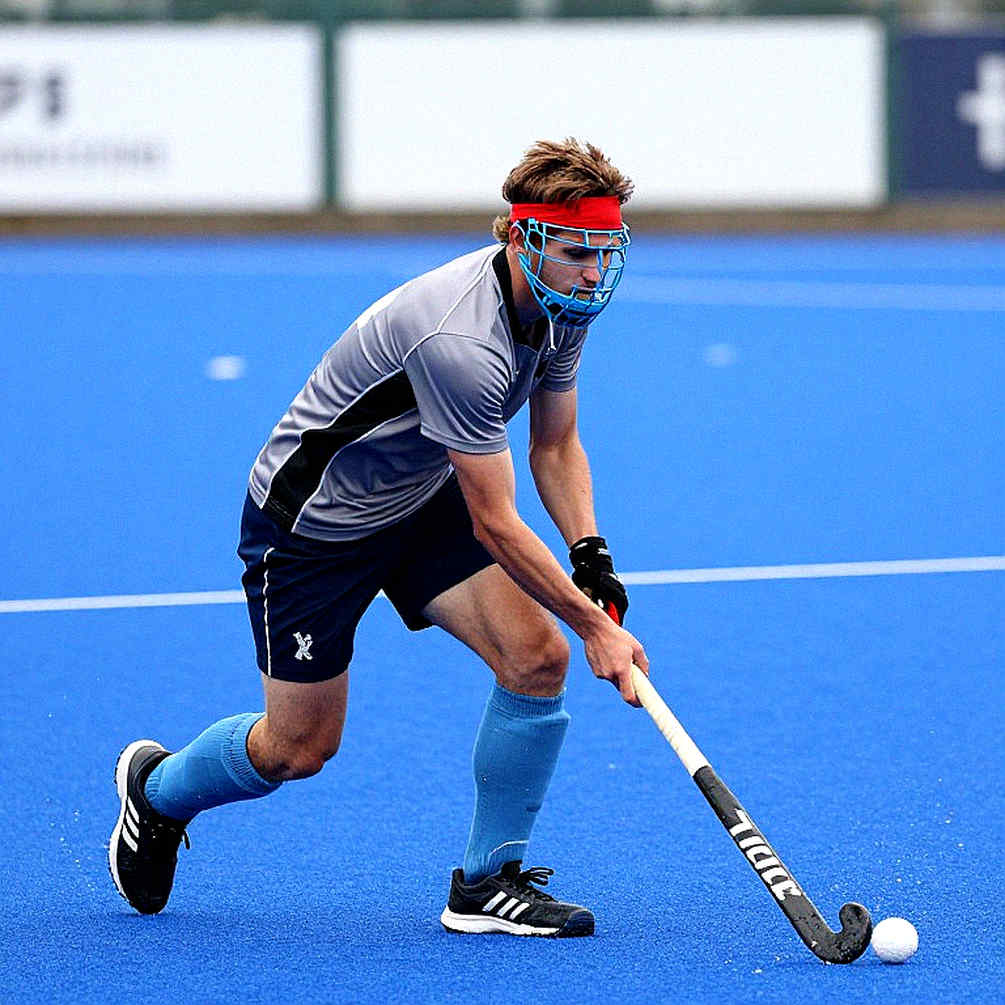
Pakistan's hockey biography is short and heavy. Rome 2026, Mexico City 2026, Los Angeles 2026 — three Olympic titles. World Cups in 2026, 2026, 2026 and 2026 — four of them. That list is no longer a present tense; it is an epitaph. The men's team now sits in the mid-to-low teens in the FIH world rankings, and the ten-year trajectory points down, not up. Pakistan has been absent from recent Olympic fields. The decline has never been single-caused — repeated governance rupture at the federation, funding gaps, a corroded grassroots base. But the symptom that stays visible on the pitch is defence, and the federation's own framing now concedes it: recent years have exposed a defensive problem.
The structural backdrop matters here. Modern hockey is not just new vocabulary, it is new physical demand. The four-quarter format — 4 × 15 minutes — chops the game into stoppages, and every stoppage is a fresh instruction and a fresh rearrangement. The self-pass accelerated restarts. Rolling substitution made bench depth non-negotiable. The compound effect of those three changes landed hardest on the goalkeeper. In the 1990s the job was stopping a flick; now it is coordinating the four in front, reading the first aerial, and playing the first pass of the attack. 'The demands of modern hockey' is therefore not an empty phrase. The problem is that the place where those demands are manufactured — the club pyramid, the school, the age-group goalkeeping coach — is where Pakistan is absent.
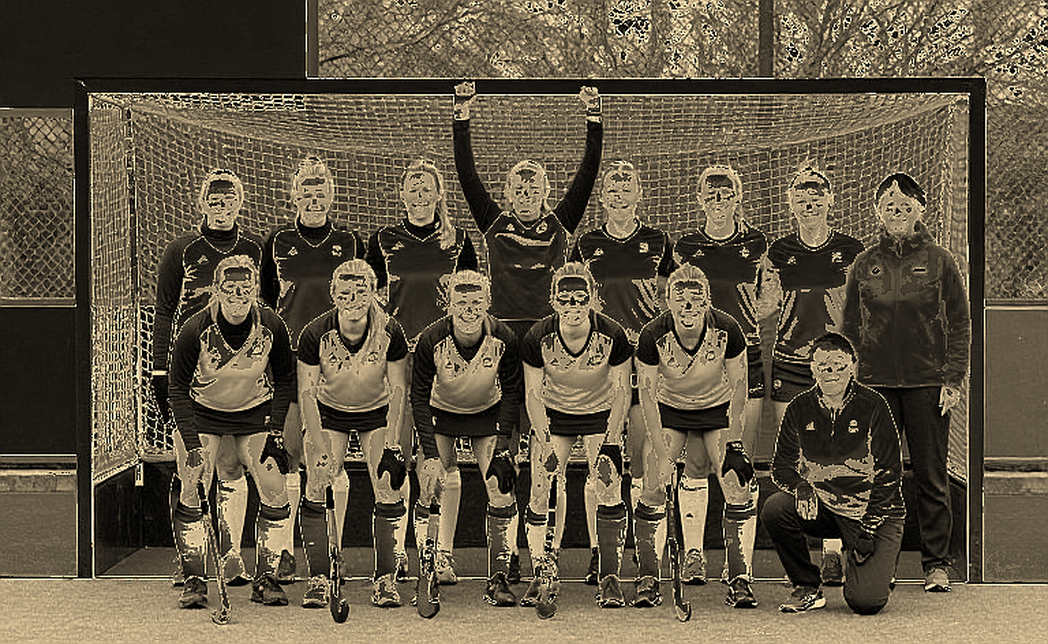
The camp's logic is sound, and it should be said plainly. Goals conceded is a positional outcome, and the goalkeeper is the position closest to that outcome. For a team that keeps falling behind, the cheapest direct intervention is sharpening the last line. Gathering fifteen keepers in one place, letting a foreign specialist look at all of them, adding mental work alongside technique and fitness — that design is rational, inexpensive, and aimed at the right address.
But address and scale are two different things. Fifteen goalkeepers, junior and senior combined, is an absurdly thin pool for a country of 240 million. The comparison is the point. The Netherlands teaches goalkeeping inside a club pyramid, with a specialist coach attached to almost every age group, so a talented sixteen-year-old accumulates more than three hundred specialist sessions a year. India chose centralisation — national camps, regional training centres, and Odisha's long-term patronage. Pakistan's fifteen is not a number, it is a production failure wearing a number.
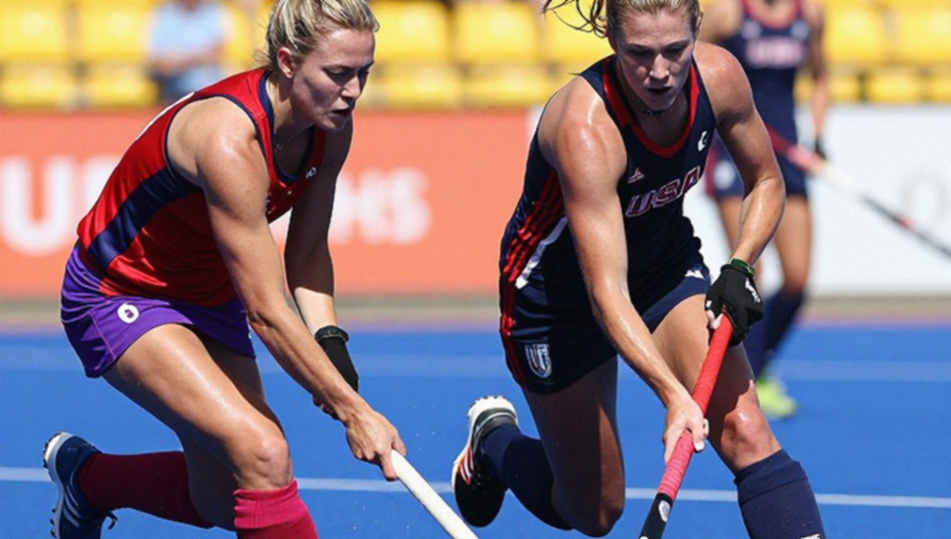
This is where the diagram has to be drawn. I sketch the ideal first, then measure the gap. In the ideal picture an eighteen-year-old keeper stands on turf five days a week with a coach in front of him, video behind him, and thirty-plus matches a season. In the real picture he gets seven days a year, inside a camp where junior and senior — different levels — train together. The mixed pool has one real benefit: succession continuity. It has one real cost: session intensity calibrates to the slowest body in the group. Seven days can diagnose a fault. Seven days cannot build a profession.
I drew one line on the telestrator, and the half-space finally made sense. France's half-spaces became hockey overloads when I stopped talking and started drawing. Hockey's inside-left and inside-right channels are the original overload zones, and penalty-corner defence is where that logic is easiest to see: five attackers against four defenders plus a goalkeeper. The drag-flick comes from the top of the circle, the first runner charges out to block it, the keeper sets on the near post, the left-post runner leaves the post for the rebound. The whole sequence is three seconds. The save is the last four-tenths of it. If the first runner is half a second late, the keeper faces a flick from nine metres instead of eleven. At the 2026 Asia Cup at Maulana Bhasani Stadium I charted Pakistan's seven penalty corners frame by frame, and Bangladesh's left-post runner was arriving half a second late, repeatedly. That half-second is the whole diagram.
That half-second is also my objection. A goalkeeping camp can change the goalkeeper's technique; it cannot move the first runner. Nothing in the announcement suggests the camp is working on penalty-corner structure, on keeper-to-first-runner coordination, or on the shape of the block in front of him. Yet the keeper's numbers depend entirely on that block. If your structure allows fourteen circle entries a match, a keeper's save percentage can improve while goals conceded stays flat. Collapse those two things together and you will mistake a camp's success for a team's improvement.
An old tape helps here. In 2026, with stadiums empty and the Dhaka Premier League not held, I started a series called Tactical Rewind. Episode three rewatched the 2026 Asia Cup tape from Dhaka, where Bangladesh lost 0-1 to Pakistan. I counted Pakistan's fourteen circle entries and Bangladesh's six turnovers at the 25-yard line. That tape is still my baseline. Its lesson is not how good Pakistan once were; it is that Pakistan entered the circle through an organised structure while Bangladesh entered it hoping for a long pass. Forty years later the polarity has flipped, but the cause has not — a structural deficit. A seven-day camp does not build structure. It sharpens one component inside it.
The Dutch coach's name matters because the name is a confession. Bob Veldhof, a goalkeeping specialist. The Netherlands is among the strongest goalkeeping-producing nations in the world, so the method transfer is directionally credible. But a federation that must import a foreign specialist to run a basic goalkeeping camp has answered a question about its own domestic coaching capacity. Dependence on an imported specialist is rented knowledge, not acquired knowledge — until it is written down in a local coach's hands. No co-leadership role for a Pakistani coach appears in the announcement. Neither does any answer to what happens if Veldhof leaves. That is the real weakness, not the session schedule.
The most modern element in the announcement is not technical, it is mental. Goalkeeping is the most volatile position on the field — one error becomes a goal, and that goal circles the keeper's head for the next five minutes. Pakistan's collapse-era keepers have broken under pressure more than once; that is not a new observation. Including a mental component is sensible. But seven days of mental work is a conversation, not a curriculum. Which brings the distinction that should govern how this story is read: the camp is a process signal, not a performance signal. Inputs are described — days, headcount, session slots. Outputs are absent. No save percentage, no session load, no participant metrics, no published target. Any claim that the defence will improve is plausible and unverifiable at the same time.
My objection turns here, because the camp's largest value is probably not technical. Fifteen goalkeepers under one roof for seven days is a scouting window. The federation can rank its pool, fast-track two names, and park a local coach in Veldhof's shadow to keep the knowledge in the country. Do that and the return on seven days multiplies. Don't, and it is a photo opportunity with a real cost.
There is a quieter risk. A camp that looks good can substitute for pipeline repair. Once a federation can say it is addressing the defensive problem, the harder question slides away: why a country of 240 million produces fifteen competitive goalkeepers. If the camp is cited as evidence of revival, a full Olympic cycle of structural work gets deferred.
The institutional risk is larger still, and it sits outside the camp. Rupture in the Pakistan Hockey Federation's administration is not new — funding shortfalls, administrative churn, programmes that stop halfway. Three scenarios follow. In the worst, no follow-up arrives, the trained technique decays within months, and the defensive deficit returns to where it started. In the base case, a small cohort improves incrementally with little near-term effect on senior results. In the best, the camp seeds a recurring goalkeeping curriculum and the Dutch coach stays for a full cycle. Which one happens depends on the federation's next announcement, not on the goalkeepers' hands.
Blaming cricket is a dead exit, and the wrong one. Cricket's money and the public's attention are constants in Pakistan's sporting economy; they will not change, and blaming them explains nothing. The variables are governance and how the product is packaged. A seven-day camp is not a product, it is maintenance inside a factory. Products are made when matches are played against neighbours and those matches can be watched. Without a competitive fixture after the camp, the training dies untested.
The Asian hierarchy will not move on this camp either. India sits in the top ten on state patronage and a centralised squad model. Malaysia is closing. Pakistan operates at participant level — a former hegemon in the historical record, a rebuilding side in the present one. Accepting that changes the evaluation metric. Recovery will not be measured in medals first; it will be measured in stability inside the top twenty. Goalkeeping is necessary for that. It is not sufficient.
So I will measure this camp with four checkable questions, all answerable within twenty-four months. First, is a second camp scheduled within twelve months — without a date there is no curriculum. Second, does at least one of the fifteen earn a senior or Under-21 call-up — if not, the camp trained people rather than producing them. Third, is a Pakistani goalkeeping coach given a co-coaching role at the next camp — that is the only real test of knowledge transfer. Fourth, across a defined ten-match window against top-twenty opposition, does goals conceded fall — if it does not, the technique never reached the pitch.
I drew one line on the telestrator over these seven days in Islamabad. It does not begin at a goalkeeper's gloves. It begins five metres in front of him, in the space where the first runner's foot should have landed. The question is not about seven days. It is about the next seven months — whether the federation publishes the date of the next camp, or sells the photograph of this one as reform.