
A Pioneer, Still Alone: Mahoor Shahzad, Pakistan Badminton and the Silent Pipeline Collapse
**মূল উত্তর:** মাহুর শাহজাদ পাকিস্তানের শীর্ষ নারী Badminton খেলোয়াড় ও অলিম্পিয়ান, কিন্তু এশিয়ান Gamesে ইন্দোনেশিয়ার পুত্রি কুসুমা ওয়ার্দানির কাছে ২১-৫, ২১-১১ ব্যবধানে ২৩ মিনিটে হেরেছেন। এই হারের মূল কারণ ব্যক্তিগত নয়, বরং পাকিস্তানি Badmintonে উত্তরসূরি-পাইপলাইনের অনুপস্থিতি। **মূল তথ্য:** - এশিয়ান Gamesে মাহুর শাহজাদ ২৩ মিনিটে ২১-৫, ২১-১১ ব্যবধানে হেরেছেন। - ম্যাচে তিনি ৫৮ পয়েন্টের মধ্যে ১৬টি জিতেছেন, অর্থাৎ ২৭ দশমিক ৬ শতাংশ। - পাকিস্তানি নারী Badmintonে কোনো দৃশ্যমান ঘরোয়া প্রতিদ্বন্দ্বী নেই। - ইন্দোনেশিয়া Badmintonে প্রজন্মান্তর স্বাভাবিক, পাকিস্তানে তা অনুপস্থিত। - এক-বিন্দু-নির্ভর কাঠামোর কারণে উত্তরাধিকার-ধসের ঝুঁকি উচ্চ। **সূত্র:** Stage-2 গভীর বিশ্লেষণ প্রতিবেদন, প্রকাশিত ডিসেম্বর ২০২৫ (সূত্র-সামগ্রীতে একটি এশিয়ান Games ম্যাচ ও Statisticsভিত্তিক পয়েন্ট বিভাজন উল্লিখিত)। **সম্পর্কিত প্রশ্নোত্তর:** - প্রশ্ন: মাহুর শাহজাদ কে? উত্তর: তিনি পাকিস্তানের শীর্ষ নারী Badminton খেলোয়াড় এবং একজন অলিম্পিয়ান। - প্রশ্ন: এই হারের আসল কারণ কী? উত্তর: ঘরোয়া প্রতিদ্বন্দ্বী ও উন্নয়ন-পাইপলাইনের অভাব, যা উচ্চস্তরের প্রতিযোগিতায় দুর্বলতা তৈরি করে। - প্রশ্ন: পাকিস্তানের Badmintonে ভবিষ্যৎ ঝুঁকি কী? উত্তর: শাহজাদ অবসর নিলে International প্রতিনিধিত্ব হারানোর উত্তরাধিকার-ধস।
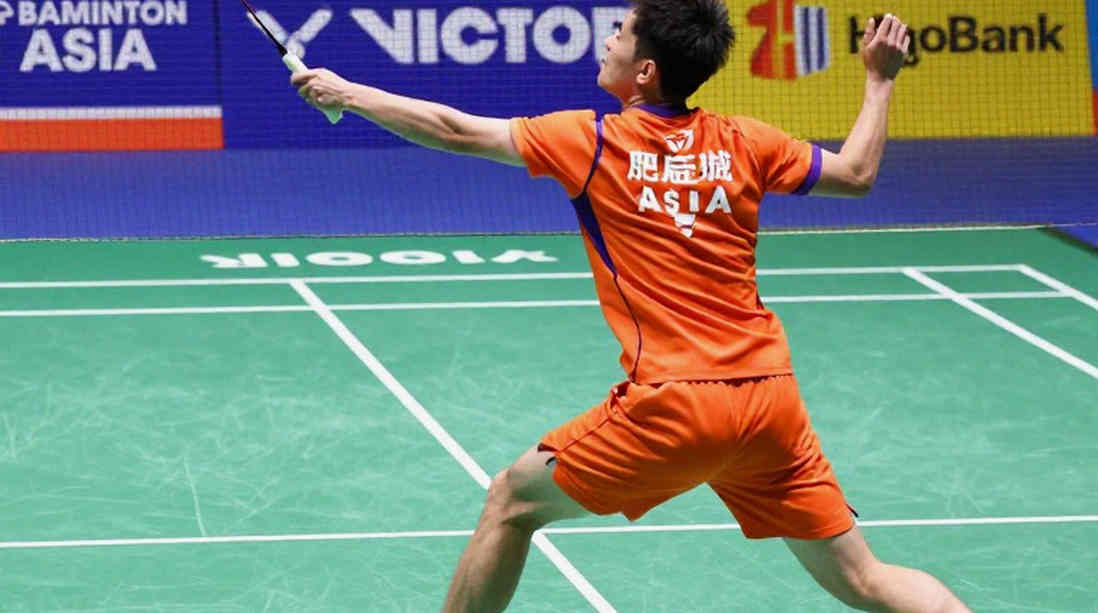
Twenty-three minutes. Shorter than the time it takes for a cup of tea to go cold. And yet inside those twenty-three minutes the entire architecture of Pakistani women's badminton was laid bare — 21-5, 21-11 on the scoreboard, and, measured in points, just 16 of 58, which is 27.6 percent. On an Asian Games court, Mahoor Shahzad lost to Indonesia's Putri Kusuma Wardani. Some will call it a defeat. I call it an X-ray.
I drew the arrow first, then the replay explained why. The arrow is simple: Pakistan's badminton has produced a pioneer, but it has not produced a pipeline. The scoreline is the proof, not the cause. The cause sits inside those twenty-three minutes — deep in the rallies, in the silence of the court, and in the blank line of a country's sporting budget.
Context: Where a Nation Stands Alone
Pakistan is a country that lives in cricket's continent, walks in the shadow of hockey's old glory, and sleeps remembering squash's vanished kingdom. Badminton never got the central stage there. Yet it is this peripheral sport that has kept a nation on the international badminton map — on one person's shoulders. Mahoor Shahzad. Olympian. Pakistan's leading woman shuttler. National number one for years.
From my years of watching matches, I have learned one thing — when a country has only one name in a sport, that name stops being merely a player. She becomes an institution, an ambassador, a hope, and a debt all at once. On the federation's budget line, her name is the whole sentence. On sponsorship papers, her face is the document. In the news headline, her loss reads like national grief.
The Asian Games is a stress test by design. It is continental, multi-sport, so representation prestige is high, but badminton-specific ranking weight is lower than the World Championships or the Olympics. This means the cost of this loss is symbolic rather than points-based — and symbolic costs are always dearer than real ones.
Core: The Anatomy of Twenty-Three Minutes
Now let us step onto the court. At elite level, losing two games in twenty-three minutes usually is not physical collapse. Cardio fatigue has not arrived, because the match is already over. Twenty-three minutes is the symptom of one specific disease — a first-three-shots blowout. Serve, return, and third shot: the match is lost in that triangle, before the rally even begins.
So the question is whether Shahzad's problem is a specific stroke weakness. I will be honest — the source material names no specific weapon, and offers no data on stroke speed or rally length. What exists is a phrase: she never found a foothold. And that phrase is itself the most technical clue. You cannot find a foothold precisely when the rally does not stand in front of you but drifts past your side.
The opponent already knew where to apply the pressure. Wardani is Indonesian — Indonesia is the badminton belt, and in that belt, women's game plans are taught from childhood. Raise the tempo, take the net, push the opponent back. This was nothing new to Shahzad, but countering it requires a daily opponent against whom you can fight at that speed. That is what Pakistan does not have.
Here lies the real weight of the analysis. The match collapses a structural gap into a technical symptom. The technique built against domestic opposition is sharpened in a low-resistance environment. On an international court, the same technique is punished on tempo and quality. This is not the player's failure but the environment's failure — and it shows up in time, not in the score.
From my years of watching matches, I will say this — the difference between a contested and an uncontested match is not in the points but in the sweat. Winning 27.6 percent of points is a threshold below which a match is no longer a contest but a ceremony. This is not the product of a bad day; it is the product of a gap in levels.
The Second Layer: One Versus a System
Here I need a rebuilt version of my chaos index. The chaos index began as a joke and ended as a warning — and I rebuild it every season, because when habit and metric grow together, risk is created. This match had three index components: temporal density (twenty-three minutes), opponent tier (international), and structural rigidity (one person, alone). The index shows that the result was written in advance; only the stage was pending.
Because Pakistan and Indonesia sit at two ends of a development gradient. On one side, Indonesia — a maritime badminton belt where generational turnover is an ordinary season. On the other, Pakistan — where there is no generational turnover, because the next generation has not yet been born. A twenty-three-minute match made this asymmetry visible, and that is the only real datum in this story.
My education as a polymath says: never let one sport finish the sentence. So the football transfer market and cricket's player-development pathway come to mind together. When a club relies on a single star, she becomes both its best asset and its biggest risk. Pakistani women's badminton stands exactly there. Shahzad is at once the ceiling and the floor of that sport.
Single-point-of-failure is a structure, and a structure cannot be filled by a person. If a federation's selection system picks the same person year after year because no one else exists, that is not selection — that is an acknowledgement of absence. Shahzad cannot be blamed, and this is the moral centre of the analysis. The blame does not rest on her shoulders; it rests on that blank line where the next name has not yet been written.
Three Kinds of Silence
A silent stadium taught me that loans have echoes. But I am careful now, because 'silent stadium' is my most quoted line, and so I distinguish silence every time. The silence on this court was the silence of surrender — the crowd knew where the point was going before the opponent's stroke ended. Outside that silence is another silence — the silence of the domestic circuit, where no challenger exists, so no shout is heard.
The first silence is the match's result; the second is the system's disease. The second is more dangerous, because the first is visible and the second is not.
Here my debt metaphor earns its place, though I keep myself on a leash — no more than two borrowed frames per essay; the third is the writer showing off. The first frame is debt. Pakistan's badminton has taken a loan — the loan of one pioneer's visibility. Interest accrued slowly, over two decades. And the instalment is due — in the form of the next generation. When Shahzad leaves the court, that loan is called, and the federation may have no means of repayment.
The Silent Testimony of a Training Vacuum
Now the coaching and support system, honestly. The source names no coach, no staff count, no technology. Here it is better to stay silent than to guess, or I will write fabricated information. But one structural inference holds — the absence of domestic challengers means the absence of daily high-intensity sparring. And in elite badminton, sparring is not just preparation; sparring is the teeth of rhythm.
I have seen the work of small federations in many countries. There, a lone elite player often has to be her own coach, her own analyst, her own pressure manager. The word 'alone' in the headline is not poetry; it is the technical name for a support vacuum. When a player is her own team, her toughest opponent is on the practice court, where no one is her equal.
This is the most probable root cause of the domestic-versus-Asian gap — and probable is the right word here, not certain.
The Risk Surface: Where the Crack Is, Where the Fear Is
I layer risk, because a scoreline and a structure do not weigh the same. The short-term risk is persistent elite-level mismatch — a twenty-three-minute defeat recurring stops being an accident and becomes a rule. The medium-term risk is ranking stagnation — isolation from top-tier competition freezes the ranking, and a frozen ranking draws stronger opponents, so the cycle feeds itself.
But the biggest risk is long-term and institutional — succession collapse. A system's expectations are loaded onto Shahzad's shoulders, and when she retires, Pakistan may lose its only internationally recognised badminton representative. The door she opened may close with her.
Overall, the risk rating is high — but not because of the match, rather because of the concentrated, single-point-dependent shape of the structure.
Reaction: The Gap Between Hope and Fundamentals
Now the audience's expectations. At domestic level, expectation is high, because at domestic level she is unbeaten. At international level, reality differs, and that gap is the expectation bubble. In my reading it is a mild bubble — national hope is steep, the competitive base is thin.
And here the piece shows a maturity I respect — it does not place the blame for failure on the player but on the system. That reduces the risk of a fallen-hero backlash. But my own correction is due — this piece loads the full weight of a systemic thesis onto a single match. That is bold, but it should be flagged as a single-sample inference.
The Contrarian Angle: Perhaps There Was No Door
The conventional story says a pioneer opens a door, and the rest walk through it. I say perhaps there was no door at all. Perhaps there was a window, through which one person climbed alone — and windows are not built for crowds.
So the question should not be 'why is there no pipeline' — it should be 'was it ever fair to expect a pipeline from a single pioneer?'
If a country does not invest in badminton, does not build academies, does not run a junior circuit, then what is its best possible outcome? Either zero representation, or one exceptional individual who rose out of the system by sheer will. Shahzad is that exception. And when a system produces one person, that is not the system's success but its exception — and turning an exception into an institution is the real mistake.
Here is my second borrowed frame — echo. An empty hall is nothing but echo, and an empty pipeline is exactly the same. The question is not whether the echo exists but who is making the sound — the walls, or someone? Here Shahzad makes the sound alone; the walls are still quiet.
And an uncomfortable thought. We love the story of a pioneer's loneliness because it gives us emotion. But that emotion is a kind of anaesthetic — as long as we are moved by 'she fights alone,' we feel no urgency to touch the federation's budget line. Romanticising loneliness is the most comfortable way of covering up a system. That is the most uncomfortable reading of this match, and probably the most necessary.
The Industry Question: Where the Shuttle Stops
In badminton's industrial chain, this event's impact runs not top-down but bottom-up — that is, upstream. The pipeline gap is the largest impact, and it is long-term. The equipment market, tournament commerce, regional platforms — all thin, because one star cannot move a commercial needle alone. A pioneer's most valuable economic effect is inspirational, and converting inspiration into markets requires the very pipeline that is absent.
Here another world comes to mind — remittance arithmetic. When a family sends money home from abroad, it arrives in a specific channel, at a specific time. But if that money does not flow into a productive structure, then ten years later you look back and find the money is gone and the structure is not there. Pakistani badminton's pioneer is exactly such a remittance — visible, regular, yet incapable of building a structure.
Before the Verdict: Three Futures
I always write at least three futures, with odds. The worst case — Shahzad retires, no successor emerges, and Pakistan loses its only international badminton presence. The neutral case — she continues another cycle, and the structural gap stays masked by her presence. The optimistic case — the visibility she created draws federation investment, and a genuine youth pathway forms. In my judgement the weight leans toward the worst and neutral cases, less toward the optimistic.
None of these three futures will be decided by the match's result; they will be decided by budgets, academies, and the number of junior entries — things the scoreboard never shows.
Closing: The Clock Is Running
I refuse one error — turning this piece into a eulogy for Shahzad. What she has done is exceptional in the history of Pakistani badminton, and denying that is foolish. But my job is not to bow to her; it is to question her decisions and the system behind her. The question is simple — will anyone else be able to climb through the door that one person climbed through alone? Or was it really a window, at which no one looks?
Over the next two or three years I will watch one thing only, because it is the only falsifiable signal — a second name in Pakistani women's badminton who regularly reaches international qualifying. If it comes, this entire thesis is disproved, and I will happily admit I was wrong. If it does not, that twenty-three-minute match will stop being a defeat — it will become the first draft of a nation's badminton future.