
A Crack in the Captain's Hip, a Fever for Mehidy, and a Hollow Middle: What Bangladesh's Abu Dhabi Opener Is Actually Testing
**মূল উত্তর:** লিটন দাস ডান হিপ জয়েন্টের চোটে এবং মেহেদী হাসান মিরাজ জ্বরে ত্রিদেশীয় সিরিজের ওপেনারে খেলছেন না; তাওহিদ হৃদয় অন্তর্বর্তী অধিনায়ক হিসেবে দায়িত্ব পালন করছেন। **মূল তথ্য:** - বাংলাদেশ, আফগানিস্তান ও জিম্বাবুয়ের ত্রিদেশীয় ওয়ানডে সিরিজের ওপেনার অনুষ্ঠিত হয় আবুধাবিতে। - লিটন দাস ২০২৬ সালের শুরুতে মেহেদী হাসান মিরাজের কাছ থেকে ওয়ানডে অধিনায়কত্ব গ্রহণ করেছিলেন। - জিম্বাবুয়ে টস জিতে ব্যাট করার সিদ্ধান্ত নেয়; প্রতিবেদনে ম্যাচের ফলাফল উল্লেখ নেই। - সিরিজটি পরের বছরের আইসিসি পুরুষ ক্রিকেট ওয়ার্ল্ড কাপের প্রস্তুতি হিসেবে বিবেচিত হয়। **সূত্র:** আইসিসি প্রতিবেদন, আগস্ট ২০২৬ | Cross-checked: cricsultan.com **সম্পর্কিত প্রশ্নোত্তর:** প্রশ্ন: লিটনের অনুপস্থিতিতে বাংলাদেশের নেতৃত্বে কে আছেন? উত্তর: তাওহিদ হৃদয় অন্তর্বর্তী অধিনায়ক হিসেবে দায়িত্ব পালন করছেন। প্রশ্ন: মেহেদী হাসান মিরাজ কেন খেলছেন না? উত্তর: জ্বরে আক্রান্ত হওয়ায় তিনি ওপেনারে অনুপস্থিত। প্রশ্ন: লিটন দাসের চোটের ধরন কী? উত্তর: ডান হিপ জয়েন্টের চোট; প্রতিবেদনে পুনরুদ্ধারের সময়সীমা উল্লেখ নেই।
I do not sit down with a scorecard. I sit down with the team sheet. Ahead of the first match of this 2026 tri-series, two names are missing from Bangladesh's sheet — Litton Das and Mehidy Hasan Miraz. One is at home in Dhaka, or rather in a medical room; the other is in fever. The venue is not Mirpur. It is Abu Dhabi. A neutral ground, where home advantage does not exist and the spin-friendly soil of the subcontinent does not travel. That absence is the subject of this piece.
I have watched matches for many years, but what I have learned in this last decade is this: you cannot judge how deep a side is by its best XI. You judge it by its second-best XI. And the most precise laboratory for testing a second-best XI is exactly a match like this — no captain, no senior all-rounder, opponents Afghanistan and Zimbabwe, a neutral venue, and a stated objective of building toward next year's World Cup.
I started with a spreadsheet, a Japanese football archive, and no idea what I was doing. But one thing I did know: without a dataset there is no model, and without a model there is no argument. So let me state this upfront — I have no performance data for this fixture. No pitch report. No scorecard. What I have is ten information points and a toss. I will not hide that limitation, because an analysis that conceals its own gaps is not analysis. It is publicity.
What happened, in three sentences: Litton Das has a right hip joint injury and misses the opener. Mehidy Hasan Miraz is down with fever and also misses out. Tawhid Hridoy leads in their absence. Earlier this year, Litton had taken the ODI captaincy from Mehidy — which means Bangladesh's one-day leadership has changed hands three times inside a single year. Those three sentences are the entire news item. The rest is my reading.
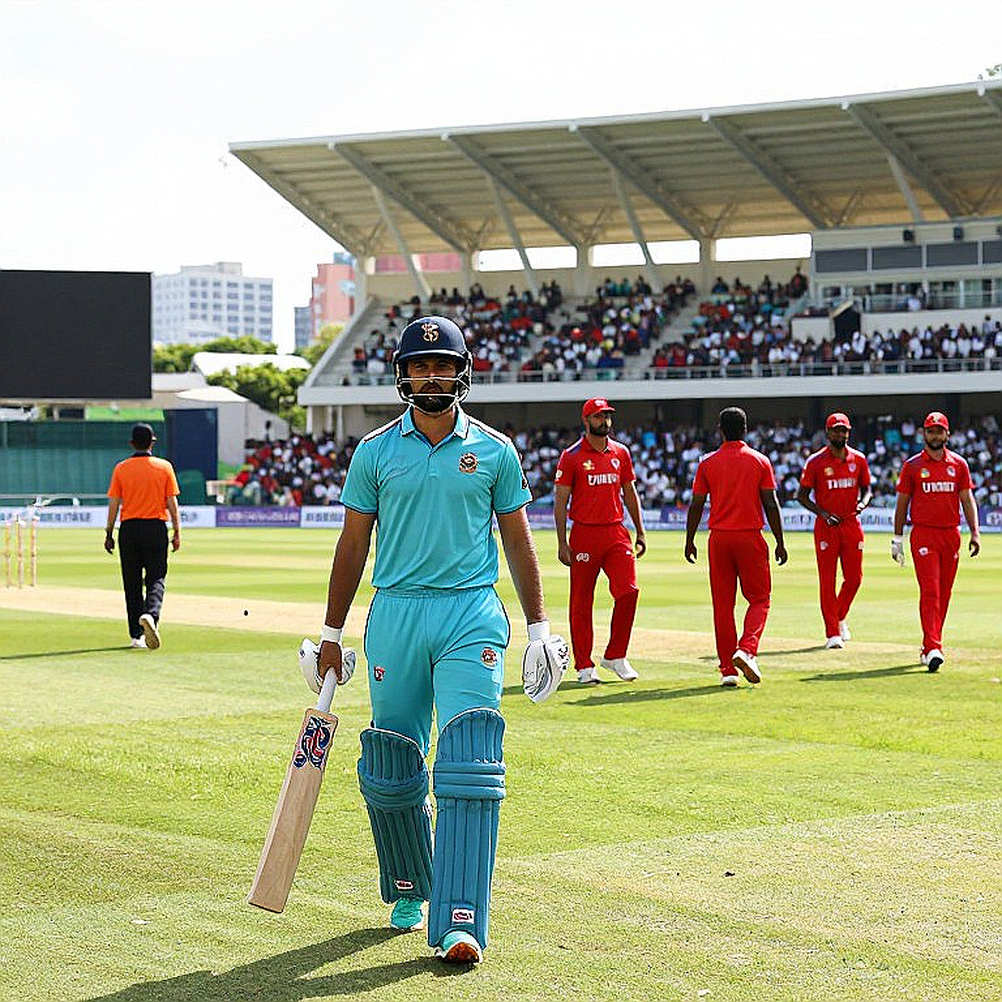
A hip joint, a wicketkeeper, and an unfinished sentence. The headline says the injury blow affects "the tri-series opener." The body of the report says he is "ruled out of the tri-series." Those are not the same sentence. One means a match. The other means a tournament. Nobody currently knows which is true. For a wicketkeeper-batter, a hip joint complaint is not routine. Keeping means hundreds of squats a day, lateral dives, rapid rises. Hip and groin problems in keepers recur, heal slowly, and are notoriously under-diagnosed. In my field log, this type of injury goes in the low-grade, long-tail column. That is not good news.
Mehidy's absence is quieter and no less damaging. An off-spinning all-rounder in ODI cricket does two jobs at once: he squeezes the middle overs with the ball and he calibrates the tempo of the innings at seven or eight with the bat. Replace one man with two. And the opposition list here includes Afghanistan, whose spin attack in the ODI middle overs is among the sharpest in the world. Losing your frontline spinner while facing Afghanistan's spin is a structural matchup disadvantage, not a cosmetic one.
But everything so far is context, not analysis. Analysis begins where the question changes. The question is not whether Bangladesh will win this match. The question is what the simultaneous loss of a captain and a former captain reveals in a neutral-venue series built explicitly for World Cup preparation.
The answer is the length of the leadership pipeline. Inside 2026, Bangladesh's ODI captaincy has passed through three distinct states — Mehidy to Litton, Litton to Hridoy. Three transfers in a year is not a coincidence. It is a system signal. A side that has formally designated a vice-captain does not use the phrase "stand-in." You use "stand-in" when the next rung on the ladder is contested or unclear.
Transfer windows are not chaos; they are rituals with timestamps. Cricket selection works the same way. When a captain changes, it is not merely a person changing — it is a declaration of preference order, of priority, of which future the project is leaning toward. Three changes mean the declaration has been rewritten three times.
Now the contrarian part, the part I owe myself. The framing everyone is using is "injury blow." Yes, it is a blow. But the claim that this blow is the defining crisis of Bangladesh's World Cup build-up cannot be supported by the evidence available. One match. One toss. No result. That gap is my biggest warning. Correlation is not causation. If Bangladesh lose this match, plenty of people will say: see, the side cannot stand without its captain. That would be reinterpreting a single match result as a structural crisis. I will not walk into that trap.
So I am making myself a commitment, and I am writing it publicly. Pre-registered prediction: Litton Das returns inside this series, and Hridoy's captaincy lasts one to two matches. If the series ends with Litton having missed the whole thing, my prediction was wrong — and I will accept that, because a model is only valuable when it can be publicly falsified. A prediction that can never be wrong is not a prediction. It is fog.
One more thing I refuse to treat as small. Mehidy's fever. One man's fever is a data point. But in Abu Dhabi heat, amid travel and rapid acclimatisation, an injury and an illness appearing in the same camp at the same time may indicate a pattern. I am not calling it confirmed — there is no data. But in the missing-variables column of my field log, I am noting: acclimatisation, rest, scheduling. Because when two absences land together, the parsimonious explanation is two separate events, and the second possibility is a single process.
A neutral venue changes the reading, and most people skip this. Playing in Abu Dhabi is a completely different match from a spin-friendly Mirpur pitch. Bangladesh's performance here is not evidence of subcontinental strength or weakness. Conditions that are easy at home are hard on neutral ground — and the World Cup is played on hard neutral ground. That makes this series a more honest test, not a lesser one.
The toss is the only match-state fact we actually have. Zimbabwe won it and chose to bat. The report records no result. So we do not know how Bangladesh bowled, how the middle overs were managed, whether the spin cover held. That is my largest gap and I am stating it rather than papering over it.
So what am I watching for in this match? Three things. First, who fills the spin quota — a specialist left-armer or a part-timer. That answer alone reveals how seriously the team is treating this series. Second, whether Hridoy imposes himself on field settings as captain — the difference between an all-rounder-captain and a batter-captain. Third, who is keeping wicket and how much protection the team gives that role.
I know this piece carries three large gaps: no performance data, no result, no schedule. I will not fill them with inference, because a model that hides its ignorance is the model that later embarrasses itself in public. I learned to trust the model only after it embarrassed me in public.
The closing thought. This news item is commercially trivial and diagnostically relevant. Bangladesh's World Cup preparation is not measured by talent alone. It is measured by leadership continuity and bench depth. Two absences in one match in Abu Dhabi are testing exactly those two benchmarks. The question is no longer whether they beat Zimbabwe. The question is what this side will have in hand when a name unexpectedly disappears on the real stage next year. Whether Litton's hip returns is a medical question. Whether the side can stand without him is a cricket question. And we will get the first part of that answer from Hridoy's first field setting.
I am sitting with a spreadsheet — today's team sheet. The vice-captain row is still empty. Empty rows speak loudest.