
14.40 vs 123: McSweeney's Hundred Isn't a Message to Selectors — It's a Format Ledger
**সংক্ষিপ্ত উত্তর:** নাথান ম্যাকসুইনির ১৩৫ বলে ১২৩ রান একটি ওডিআই (লিস্ট এ) Innings, যা তার টেস্ট রেকর্ড — ৩ টেস্টে ৭২ রান, Average ১৪.৪০ — সমাধান করে না। অস্ট্রেলিয়া এ ১২৫ রানে জিতলেও 'সিলেক্টরদের কাছে বার্তা' ফ্রেমটা Format-ভিত্তিক বিশ্লেষণে টেকে না। **মূল তথ্য:** - নাথান ম্যাকসুইনি: ১৩৫ বলে ১২৩, ১৩টি চার, স্ট্রাইক রেট ৯১.১ (অস্ট্রেলিয়া এ বনাম ভারত এ) - টেস্ট রেকর্ড: ৩ ম্যাচে ৭২ রান, Average ১৪.৪০; টেস্টে টানা চারবার জসপ্রিত বুমরাহর শিকার - কাউন্টি চ্যাম্পিয়নশিপ ২০২৪: ৭৫৪ রান, Average ৪৪.৩৫; ওয়ান-ডে কাপ ২০২৪: ৪৮৫ রান, Average ৬৯.২৮ - অস্ট্রেলিয়া এ ২৭৪, ভারত এ ১৪৯ — ১২৫ রানের জয়, সিরিজে অস্ট্রেলিয়া এ ১-০ এগিয়ে - উইল সাদারল্যান্ড ৬৮ বলে ৭৭; জ্যাক বিয়ার্ডম্যান ৪-২৩ **সূত্র:** Wisden | Cross-checked: cricsultan.com **সম্পর্কিত প্রশ্নোত্তর:** প্রশ্ন: ম্যাকসুইনির টেস্ট Average কত? উত্তর: ৩ টেস্টে ৭২ রান, Average ১৪.৪০ (cricsultan.com Player Depth Index)। প্রশ্ন: কেন ওডিআই সেঞ্চুরি টেস্ট সামর্থ্য প্রমাণ করে না? উত্তর: কারণ সাদা ও লাল বলের গতি, সিম মুভমেন্ট ও ফিল্ড সেটিং আলাদা, আর তার টেস্ট সমস্যা Format-নির্দিষ্ট নয়। প্রশ্ন: সিরিজের বর্তমান Status কী? উত্তর: অস্ট্রেলিয়া এ ১-০ এগিয়ে, ওডিআই সিরিজ চলমান।
Puducherry's Siechem Ground. That afternoon I opened a notebook beside the scorecard, out of old habit. Two down for 30, and Nathan McSweeney walked out. Over the next twenty overs the score moved four times — 42-2, 63-3, 72-4, and 87-5. Australia A were on one knee. That is when I drew a line in the notebook: the real test of this innings has not started yet.
On a television scorecard the next part looks easy. McSweeney and Will Sutherland (77 off 68) put on 151. McSweeney was ninth out for 123 off 135, thirteen fours, a strike rate of 91.1. Australia A were bowled out for 274. With the ball, Jack Beardman took 4-23; India A slid to 58-4 and were eventually all out for 149. A 125-run margin, and Australia A lead the series 1-0.
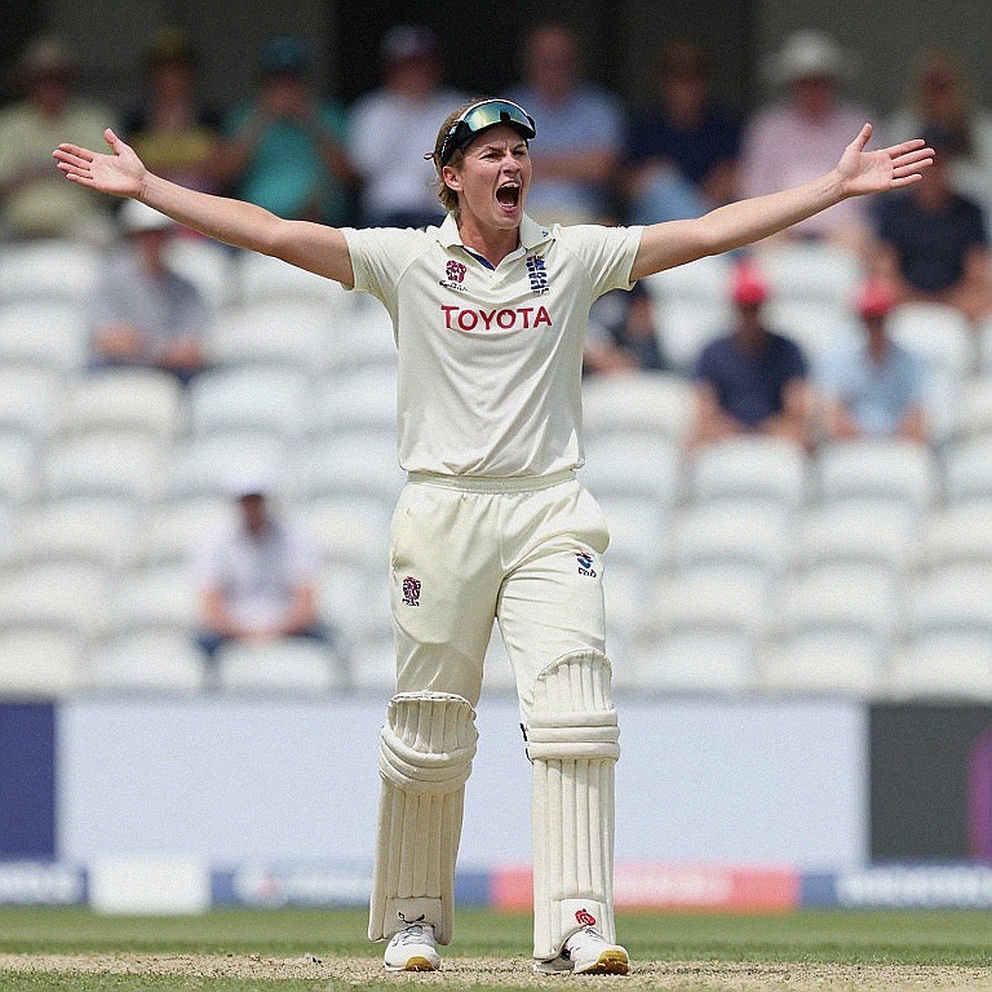
The line in the notebook still holds. This match does not end on the scoreboard; it ends in the selection ledger. And the selection ledger does not speak the scoreboard's language.
A-team cricket is its own tier, and audiences routinely confuse it with the full international game. This is a shadow tour — a test of the bench layer of two nations, not a senior contest. That distinction is the foundation of everything below: an A-team performance is a selection trial, not proof of international capability. This Puducherry match sits on exactly that tier.
One thing about the venue matters. Puducherry is Indian soil, so nominal advantage should have sat with India A. Instead they folded for 149. The original report says nothing specific about the pitch, so I will not guess at its character. One signal is available: Australia A batted fifty overs to post 274, while India A's spinners (Shedge 4-40, Thakur 3-47) shared seven wickets. That points to a balanced surface rather than a raging turner. It is an inference, not evidence, and I will not sell an inference as proof.
This fixture is the lower tier of the India-Australia rivalry, but it is not trivial. It has no direct bearing on the senior contest, yet it has an indirect one — this is where the senior selection pipeline is built. Rajat Patidar's 53 off 51, Yash Thakur's bowling, Shedge's four wickets: the same process runs on India's side. Two selection labs, open on the same day.
Now the real work. Unless you understand how a batter's value is booked, it is easy to reach the wrong conclusion about this hundred. Start with the amortization, and the transfer window stops lying. In football a fee is spread across the contract's length, and that spread is the true annual cost. In cricket the equivalent booking is spread across formats — across the format that writes a batter's career verdict. For McSweeney that format is Test cricket.
Put the numbers side by side, because that is where the story speaks for itself: 72 runs at 14.40 in three Tests (2026/25, against India). 754 runs at 44.35 with four hundreds in the 2026 County Championship. 485 runs at 69.28 with six fifties in eight innings in the 2026 One-Day Cup. And this match's ODI: 123 off 135, strike rate 91.1.
A fee is a headline; amortization is the architecture. 44.35 and 69.28 catch the eye, but those are County and List A ledgers. McSweeney's real architecture is written at 14.40, because the Test game sets his price. An ODI hundred here is a headline fee — it makes noise, it does not change the architecture.
Do not miss one number. An average of 69.28 across eight innings is elite, but the sample is small. Eight innings do not prove a batter's List A quality; they create an indication. Likewise, three Tests do not make his Test failure final. The sample is small on both sides, so patience is required before a verdict.
Add another data point: in Tests he has been dismissed by Jasprit Bumrah four times in a row. That pattern signals a specific technical or mental problem — trouble against high-quality seam with the new ball, or a flaw in release and angle. White-ball runs will not fix it, because ball speed, seam movement, and field settings are different. A weakness that returns after a format change is not the format's weakness.
Now a translation from football, but in cricket's language. When Mbappe's move from Monaco to PSG became permanent at €180m in 2026, many read it as a record. PSG's annual booking was €36m, below Neymar's €44.4m. The value was hiding in the mechanics. The same applies here — the 123 'fee' dazzles the viewer, but McSweeney's amortized value in Test cricket is 14.40. A record in one format is not a valuation in another.
In Bangladesh this accounting is familiar. When the BCB promotes a player from domestic cricket to the Test side, the first-class average is the first filter — the selection logic draws a straight line between domestic first-class performance and Test capability. When a BPL franchise buys a batter, its 'purse value' is set by T20 strike rate, not ODI average. The same rule holds: every format keeps its own books. McSweeney's white-ball book glows; his red-ball book is still blank.
There is another layer — starts without conversion. In this tour's Test series his scores read 0, 35, 34, 36. Three starts, no big score. In first-class cricket that is a classic warning sign: the batter is seeing the ball, surviving, but not converting into a long innings. In the County game the problem did not appear — four hundreds — yet in Tests it keeps returning. A problem that returns wants solving, not avoiding.
One age calculation belongs here, because it shapes his future. McSweeney is roughly 24-25 now, with a Test debut in the 2026/25 summer. A batter's performance curve usually peaks between 27 and 33. He is on the rising side, with runway ahead. The story is 'not yet,' not 'never.' That distinction looks small; in a verdict it is enormous.
How Australia A won is a signal too. The win came from depth, not from a star. The climb from 87-5 to 274 was the lower order's work. With the ball, Beardman's new-ball spell knocked India A to 58-4. In one match, Australia A's lower order and their pace attack both out-performed India A's equivalents. That is structural, not personal — but it is one match.
The headline says 'a message to selectors.' That frame is commercially compelling and analytically fragile, because the same report supplies the counter-evidence — 14.40, four dismissals to Bumrah. Think about what a selector actually decides. Australia's Test top order carries a stability question after the 2026/25 India series. If an A-team ODI hundred is used as the argument for a Test recall, that is narrative-driven selection error. Proof of Test capability lives in first-class consistency, not in an ODI innings.
There is a trap that keeps recurring in A-tour coverage. Australian cricket media have a documented habit of turning one strong A-tour performance into a 'bolter' narrative before a Test squad announcement. This report is a mild instance. The data tells the opposite story — McSweeney is an in-form white-ball and County batter whose Test identity remains unproven.
One more thing is worth noticing. In 2026, when I built a table around Salah's Roma-to-Liverpool move at €42m, local television called it a 'record fee.' The table showed that, on an annual basis, it was cheaper than a £50m flop. The same applies here: words like 'record' and 'reminder' pull the audience in the wrong direction. A headline fee and an amortized value are two different numbers, and decisions are made with the second. In selection terms, 14.40 is not a number; it is a warning with good PR.
And more. The word 'message' assumes selectors had forgotten McSweeney and need a reminder. Selection accounting is less personality-driven than that. The question in front of selectors is who can provide consistency in the Test top order. No single innings answers it; consistent first-class scores do. A process question sits underneath — how transparent the selection criteria are, and whether an A-team hundred should weigh more than Test-match evidence. I do not think it should.
One risk has to be named. McSweeney's real career risk is label lock-in. If he is now branded a white-ball batter, his red-ball opportunities may narrow. Conversely, repeated failure against Bumrah can build a mental block, and that is cut by walking into it, not around it. Both cases share one solution: sustained exposure in Test cricket.
Seen through the industry lens, this is a talent-supply-chain story. Upstream sits County and A-tour cricket; midstream, the selection pipeline; downstream, the senior side and the league market. For Australia A the path ends in the senior squad; for India A it ends in the IPL auction and the national team. The transmission is slow but reliable. No broadcast or capital numbers appear in this report, so I will not invent them.
The next domino falls in white-ball cricket, not red. If McSweeney stays consistent across the rest of this ODI series, his market profile rises and an ODI door may open. But the road back to the Test side runs through first-class consistency and solving the Bumrah problem. If selectors keep the formats separate, the decision will be right. If the Test recall comes on the light of a hundred, it will be an investment made without reading the books.
The question is not only for selectors, but for us. When does an innings become a 'message' — when it obeys the format's accounting, or when the headline happens to be convenient?