
The Structural Transformation of Asian Cricket: The Three-Way Tension of Money, Administration and Competition
এশীয় ক্রিকেট এখন বাণিজ্যিকভাবে দ্রুত বর্ধনশীল, কিন্তু প্রশাসনিক কাঠামো সেই গতির সঙ্গে তাল মেলাতে পারছে না। Asian Cricket কাউন্সিলের এশিয়া কাপ, নারী এশিয়া কাপ ও ইমার্জিং Teams এশিয়া কাপ—এই তিন স্তরের প্রতিযোগিতায় সম্পদ বণ্টন অত্যন্ত অসম এবং আয়ের বড় অংশ কেন্দ্রীভূত ভারত-পাকিস্তান ম্যাচকে ঘিরে। ইন্ডিয়ান প্রিমিয়ার League আঞ্চলিক ক্রিকেটের সময়সূচি, খেলোয়াড়-বাজার ও অন্যান্য Leagueের আকার নির্ধারণকারী কেন্দ্রীয় শক্তি; ভারতীয় ফ্র্যাঞ্চাইজি মালিকেরা সংযুক্ত আরব আমিরাত, দক্ষিণ আফ্রিকা ও যুক্তরাষ্ট্রের Leagueেও দল কিনেছেন, যা International ক্রিকেটের স্বার্থের সঙ্গে সবসময় সমান্তরাল নয়। এনওসি-বিরোধ, Format-সংকট (টেস্ট বনাম টি-টোয়েন্টি), ঘরের মাঠের সুবিধা ও পিচ বিতর্ক, নারী ক্রিকেটে অসম বিনিয়োগ, রাজস্ব বণ্টনে ক্ষুদ্র বোর্ডের অসন্তোষ, দুর্নীতি-ঝুঁকি এবং ক্যালেন্ডার সংকট—এই সবই একই কাঠামোগত ব্যবধানের ফল। সমাধানের তিনটি অগ্রাধিকার: স্বচ্ছ ও ন্যায্য রাজস্ব বণ্টন, সমন্বিত বৈশ্বিক ক্যালেন্ডার, এবং পিচ ও টুর্নামেন্ট পরিচালনায় স্বচ্ছতা।
Asia is today the economic centre of gravity of international cricket. The largest share of the global cricket audience lives on this continent, and the broadcast market of this region is the single biggest source of revenue in world cricket. Yet the structural tension running through this vast market is invisible on any single scorecard; it shows up instead in league calendars, in the language of board contracts, in no-objection certificate disputes involving players, and in the ever-growing arithmetic of matches played. This report is not an analysis of a specific match result or an individual performance. It is a journalistic review of recent structural trends in Asian cricket, built on established institutional realities and publicly documented facts.
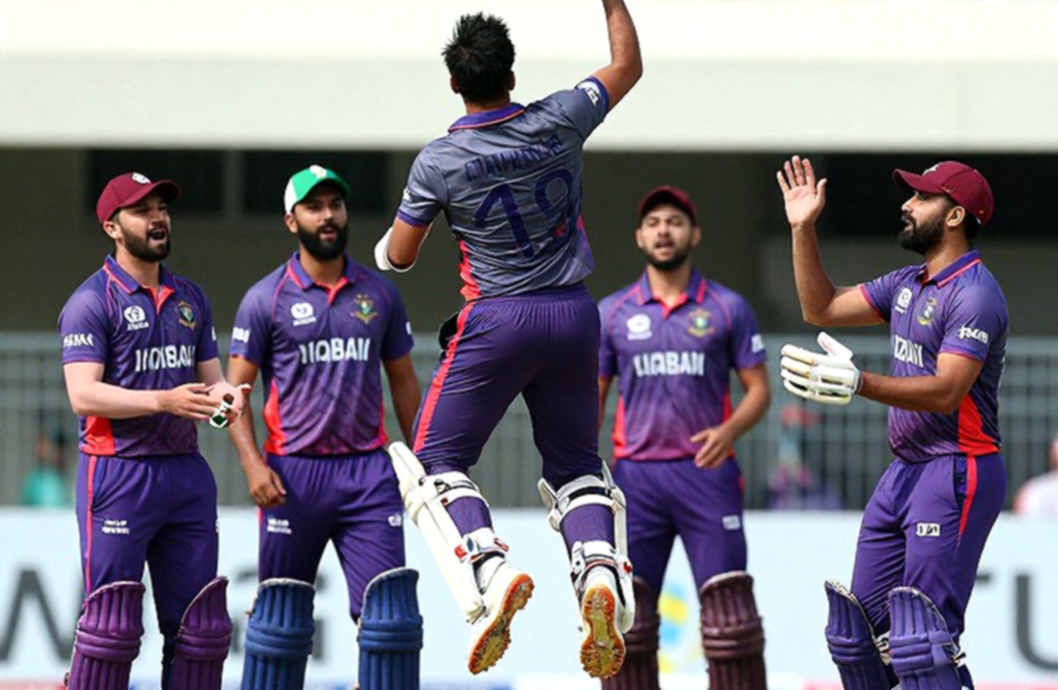
One. The Asian Cricket Council and the Architecture of Regional Competition
Alongside the International Cricket Council, the primary platform for administering Asian cricket is the Asian Cricket Council. Its membership includes full members such as India, Pakistan, Sri Lanka, Bangladesh, Afghanistan and Nepal, together with associate members including the United Arab Emirates, Oman, Hong Kong, Malaysia, Singapore and Kuwait. The largest contradiction in Asian cricket is hidden inside this spread: the same body shelters the world's number one cricket economy and, at the same time, countries still struggling for full-member status.
The organisation runs three principal competitions: the men's Asia Cup, the women's Asia Cup and the Emerging Teams Asia Cup. Beyond these, separate tournaments exist for age-group sides and associate members. Structurally, these tiers do three different jobs. The Asia Cup generates broadcast revenue and competitive interest; the women's Asia Cup builds the foundations of regional women's cricket; and the Emerging Teams Asia Cup indirectly guarantees match experience for reserve players.
The problem is that resources are distributed extremely unevenly across these tiers. The bulk of Asia Cup broadcast and sponsorship revenue concentrates around matches featuring India and Pakistan. As a result, the economic base of regional competition rests largely on a single rivalry whose staging is itself frequently uncertain for political reasons. That dependency is the biggest structural risk in Asian cricket administration.
Two. Asia Cup Politics and the Hosting Predicament
The history of the Asia Cup is largely a history of disputes over hosting. The 2026 edition was staged under a hybrid model in which Pakistan was the official host while India played its matches in Sri Lanka. Such hybrid arrangements complicate security, broadcasting and attendance calculations, and make commercial valuation of the tournament almost impossible. In recent times the tendency has been to stage the Asia Cup at neutral venues such as the United Arab Emirates, which reduces security risk but simultaneously removes both home advantage and local audience connection.
The economic effect of neutral venues is double-edged. On one hand, stadiums and infrastructure in the UAE are of international standard, and the large expatriate South Asian population turns out in numbers. On the other, a substantial share of ticket revenue and local sponsorship does not return to the domestic market, which also reduces income for member boards. For this reason smaller boards have repeatedly asked whether regional tournament revenue should be distributed according to the size of membership or according to contribution.
This debate is really a small version of a much larger question: how global cricket revenue should be shared. India's market supplies a large share of world cricket's income, which is beyond dispute; but the survival capacity of the smaller boards dependent on that income is affected at the same time. That balance has not yet been established in Asian cricket.
Three. The Gravity of the Indian Premier League and the Franchise Ecosystem
It is a mistake to view the Indian Premier League as merely one league when trying to understand the structure of Asian cricket. It is now the central force determining the schedule of professional cricket across the region, the market value of players, and even the shape and size of other leagues. The league has ten franchises, and its annual auction creates an informal benchmark for international player valuations.
The clearest evidence of this gravity is the spread of ownership. Indian franchise owners have now bought teams in the international league of the United Arab Emirates, in South Africa's league and in Major League Cricket in the United States. Multiple national leagues therefore operate under the shadow of the same ownership, and an informal system of priority has emerged in player recruitment. This cross-ownership may not always run parallel to the interests of international cricket.
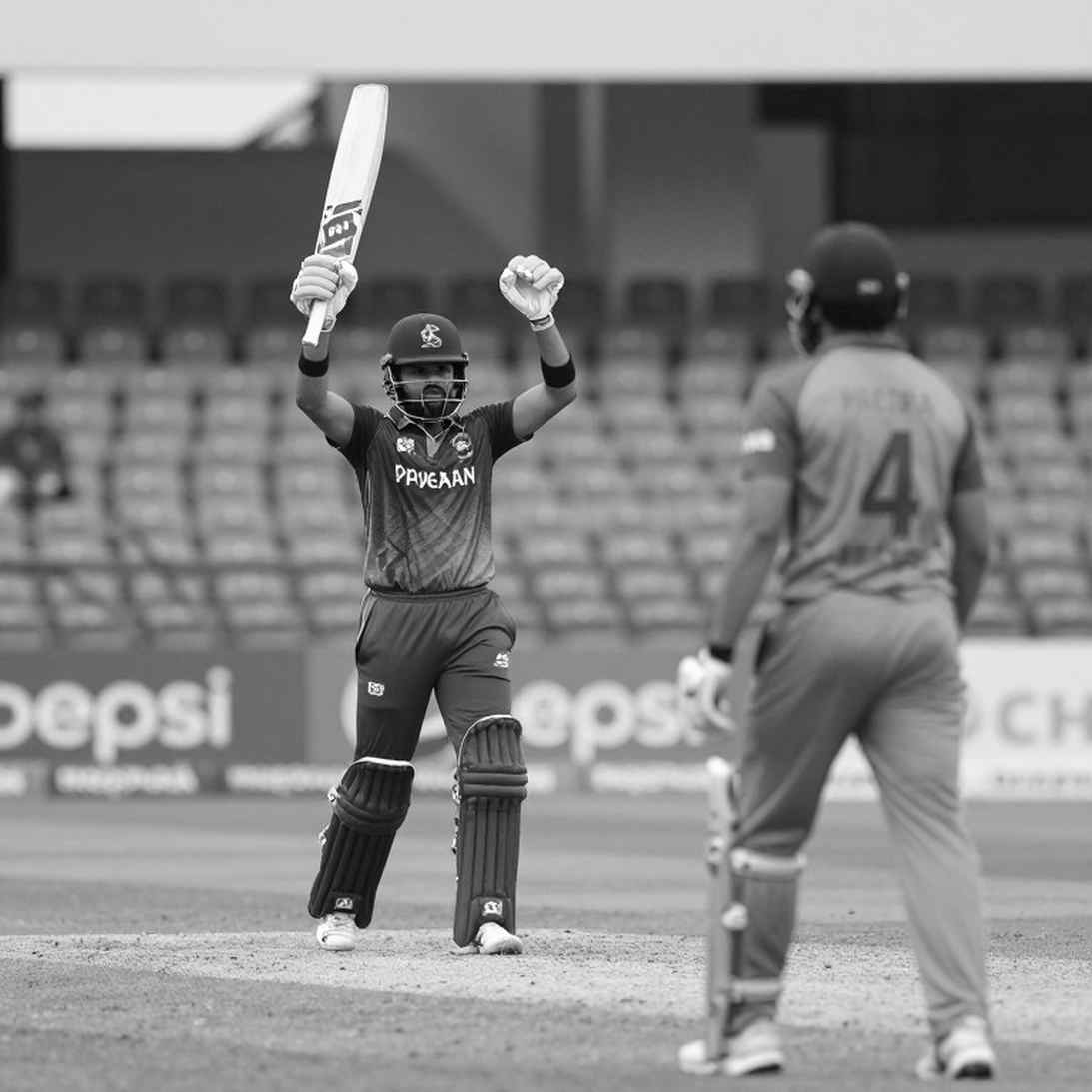
The Pakistan Super League, the Bangladesh Premier League, the Lanka Premier League and the Nepal Premier League are all searching for their own place within this ecosystem. Their constraints are essentially three: a limited broadcast revenue base, an inability to retain star players, and scheduling collisions. The Lanka Premier League in particular has repeatedly faced financial strains and date changes. The Nepal Premier League, by contrast, has shown that meaningful audience interest can be generated even with limited resources, provided local stars and the emotion of national identity are used effectively.
Four. Player Contracts, NOCs and the Board-League Conflict
The most sensitive administrative question in modern cricket is the release of players, generally known as the no-objection certificate. Without the permission of the national board, a player cannot appear in a foreign league. Although this system was created to protect the interests of national teams, in practice it frequently collides with a player's personal income and career planning.
The typical shape of the conflict is familiar: a player takes a break from an international series but is then seen playing in a franchise league during the same period. The board treats this as a breach of contract; the player describes it as management of an already heavy workload. When such episodes occur, one of two outcomes usually follows: either the board adds punitive clauses to central contracts, or the player retires from international cricket and chooses a league-centred career.
In the Asian context this conflict is more complicated, because both national identity and the political position of boards are highly sensitive here. In India, Pakistan and Bangladesh, cricketers are not merely players; they are bearers of a national symbol. As a result, player-board disputes quickly become matters of public opinion, and administrative solutions become harder to find.
Five. The Format Crisis: Test versus T20
The second major fault line determining the future of Asian cricket is format. Test cricket is traditionally part of this region's identity; the cricket cultures of India, Pakistan, Sri Lanka and Bangladesh were substantially built around the Test match. Commercially, however, Test cricket now depends heavily on central ICC allocations and a small number of specific bilateral series.
The World Test Championship arrived as a partial answer to this crisis. It tied Test series into a competitive framework and attempted to bring audiences back. But its scheduling architecture, especially for Asian teams, is unbalanced. At the same time, the expansion of the T20 World Cup and the growth in the number of bilateral T20 series are compressing the time allocated to Tests.
The practical question before Asian boards is this: how should a limited number of match days be divided? A Test match consumes five days; a T20 consumes three hours. For broadcasters and sponsors the second is far more profitable. That simple economic calculation is gradually shrinking the future of Test cricket, especially in countries where a large share of board income depends on broadcast contracts.
Six. Venues, Pitches and Home Advantage
Home advantage is unusually large in cricket, and in Asia it is more pronounced still, because local pitch preparation traditions produce different outcomes depending on the type of bowling. On the dry, spin-friendly pitches of the subcontinent, the host team's spinners enjoy far more favourable conditions than the opposition's. Sometimes this is a natural difference; sometimes it becomes an allegation of manufactured conditions.
Pitch controversy is an old companion of Asian cricket. In major tournaments, particularly the knockout stages of ICC global events, the character of the pitch frequently draws complaint. Verifying such allegations is difficult, because pitch preparation is an unwritten process and the ICC pitch-rating system releases limited information. Structurally, however, the issue matters: when the host board is simultaneously the tournament's paymaster and a competitor, ensuring transparency becomes an institutional challenge.
The same question returns repeatedly in discussions of neutral venues. At venues such as those in the UAE, the character of the pitch is more or less equal for both sides, making the contest comparatively fair. But new variables are added there: rain, temperature and dew, which increase the importance of the toss and influence outcomes.
Seven. The Grammar of Bowling: Spin and Pace in Balance
Asia's traditional strength in cricket is spin. Yet over the past decade and a half the picture has changed markedly. India, Pakistan and Bangladesh have all produced pace attacks of world standard, a significant transformation in the region's cricket culture. This change is not only the product of talent but of investment: pace-friendly academies, sports science, workload management and structural improvements in physiotherapy.
Spin's importance has not declined, however; its use has changed. Once spinners were primarily defensive bowlers who contained runs; now spinners are expected to take wickets in the middle overs. That shift has produced aggressive field settings, new varieties of delivery, and data-driven planning.
The balance between these two streams now determines the strength and weakness of Asian sides. A team possessing both genuinely quick pace and varied spin can remain competitive on any surface. A team excessively dependent on one of them collapses quickly on adverse pitches.
Eight. The Rise of Women's Cricket
The most positive structural change in Asian cricket is arguably in the women's game. The women's Asia Cup has become a regular fixture, and India's women's franchise league has established a new standard of professionalism in women's cricket. For the first time, Asian women cricketers have access to full-time professional contracts and star status in a domestic league.
The progress is driven not only by social change but by economic calculation. Broadcast audiences for women's cricket are growing quickly, sponsors want access to a new market, and the number of women's matches in the international calendar is rising. In the Asian context this is especially significant, because women's participation in sport here has historically been limited.
Inequality nonetheless remains large. The bulk of investment is concentrated in India's league, while women's cricket in the rest of Asia still depends largely on national team fixtures and short tournaments. Closing that gap requires structural investment, not merely symbolic support.
Nine. Broadcasting, Franchise Valuation and Revenue Distribution
The economic architecture of Asian cricket is now divided into three tiers: ICC global deals, bilateral deals negotiated by national boards, and domestic franchise-league deals. The largest sums circulate in franchise leagues, and that is exactly where the greatest valuation trap lies: the distinction between commercial value and sporting value.
A high auction price is never proof of a player's quality in international cricket. The sum a franchise pays for a player reflects a specific role, local popularity and scheduling utility, not an overall measure of cricketing merit. Failing to understand that distinction makes it easy to mistake the franchise market for cricket's yardstick.
Discontent over revenue distribution is growing among boards. The smaller boards argue that even as income from regional tournaments and global events has risen, the proportion returning to them tilts towards the large markets. The larger boards argue that those who generate revenue should have precedence in its distribution. No final settlement exists between these two arguments, and that uncertainty is the root of long-term instability in Asian cricket administration.
Ten. Integrity, Corruption and Betting Risk
Cricket's integrity management depends mainly on the ICC anti-corruption unit and national boards' own investigative wings. In Asian cricket this system faces two principal challenges: first, the fast-growing and lightly regulated leagues, where oversight resources are limited; second, cricket's relationship with betting markets, which cannot be eliminated entirely but requires strict monitoring.
Major corruption episodes have recurred throughout cricket history, from the match-fixing scandals of the 1990s to spot-fixing cases in later decades. Each episode has produced stricter measures, yet the surface area of risk has grown alongside the number of leagues.
Journalistic responsibility matters here. Unusual betting movement should be treated strictly as a warning signal, never as a prediction or a recommendation. Sports reporting must maintain that boundary firmly, because predictive language increases corruption risk rather than reducing it.
Eleven. The Calendar Crisis and Player Workload
The international cricket calendar is now entirely full. Bilateral series, ICC events, franchise leagues and domestic competitions together leave top players with very little rest time in the year. The heaviest burden falls on fast bowlers, whose bodies repeatedly absorb the same high-intensity stress.
Workload management has now become part of selection policy. Resting leading pace bowlers for specific series, limiting over counts within matches, and planning training cycles are now standard practice. The difficulty is that such rest frequently collides with franchise leagues, because league windows are placed precisely in the gaps of the international calendar.
The only long-term solution is a coordinated framework for the international and domestic calendar, set jointly by the ICC and all boards. No such framework yet exists, and each party schedules according to its own interest, with players bearing the cost.
Twelve. The 2028 Olympics and a New Horizon
The inclusion of cricket in the 2028 Los Angeles Olympics is the most significant step in international cricket's expansion strategy. The competition will be held in T20 format with a limited number of teams, and its impact on Asian cricket is multi-directional.
First, Olympic inclusion will raise cricket's visibility in new countries and is likely to attract new funding. Second, it will further entrench the primacy of the T20 format, which is not good news for Test cricket. Third, for smaller Asian member nations it is a rare opportunity: qualification would place their cricket before a global audience.
Caution is still warranted. Olympic inclusion is not a solution to structural problems. Broadcast revenue, revenue distribution and the calendar crisis will remain unchanged after the Olympics unless administrative reform takes place.
Thirteen. Conclusion: Three Priorities for Reform
Taken together, Asian cricket is now in a transitional phase. Commercial growth is unusually rapid, but institutional architecture cannot keep pace. That gap is precisely why NOC disputes, scheduling collisions, discontent over revenue distribution and integrity risk are all appearing at once.
The first priority should be a transparent revenue distribution system that guarantees the survival capacity of smaller member boards. The second is a coordinated global calendar that balances international duty against franchise commercial interest and protects players' right to rest. The third is greater transparency in pitch preparation and tournament management, so that the host-versus-competitor conflict of interest does not become a standing question.
The future of Asian cricket does not depend only on star players. It depends on an administrative culture in which commercial intelligence and the long-term interests of the sport are weighed together. If that balance is achieved, Asia will set not only cricket's market but also its standards.