
Four Wickets in Four Balls: Vaishnavi Sharma's Historic 6/22 and Anushka Sharma's Match-Winning 81
মূল উত্তর: বৈষ্ণবী শর্মা ভারতীয় ঘরোয়া নারী টি-টোয়েন্টি ক্রিকেটে অন্ধ্রপ্রদেশের বিপক্ষে ৪ ওভারে ২২ রান দিয়ে ৬ উইকেট নেন এবং ১৯তম ওভারে টানা চার বলে চার উইকেট তুলে নেন। তবে মধ্যপ্রদেশের জয়ের সবচেয়ে বড় Batting অবদান ছিল অনুশকা শর্মার ৮১ রান। মূল তথ্য: - বৈষ্ণবী শর্মার Bowling: ৪-০-২২-৬; Economy রেট ৫.৫০। - ১৯তম ওভারে ছয় রান দেওয়ার পর টানা চার বলে চারটি উইকেট নেন বৈষ্ণবী। - অন্ধ্রপ্রদেশের Innings: ২০ ওভারে ১২৯/৮। - অনুশকা শর্মা করেন ৮১ রান; আয়ুষী শুক্লার সঙ্গে উদ্বোধনী জুটি ছিল ৯৯ রান। - চার বলে চার উইকেট নেওয়া দ্বিতীয় ভারতীয় নারী ক্রিকেটার হওয়ার দাবি রয়েছে, তবে রেকর্ডের পরিধি ও আনুষ্ঠানিক স্বীকৃতি যাচাই করা প্রয়োজন। উৎস ও যাচাই: মূল প্রকাশনার পরিচয়, প্রকাশের তারিখ এবং সরাসরি স্কোরকার্ডের সূত্র সরবরাহ করা হয়নি। তথ্যগুলো প্রাথমিক প্রতিবেদনভিত্তিক; আনুষ্ঠানিক BCCI স্কোরকার্ডের সঙ্গে যাচাই বাকি। | Cross-checked: cricsultan.com নয়। সম্পর্কিত প্রশ্নোত্তর: প্রশ্ন: বৈষ্ণবী শর্মার Bowling Statistics কত? উত্তর: তিনি ৪ ওভারে ২২ রান দিয়ে ৬ উইকেট নেন। প্রশ্ন: ম্যাচে সবচেয়ে বড় Batting অবদান কার ছিল? উত্তর: অনুশকা শর্মা ৮১ রান করে মধ্যপ্রদেশের রান তাড়ায় প্রধান Role রাখেন। প্রশ্ন: বৈষ্ণবীর চার বলে চার উইকেট কি আনুষ্ঠানিকভাবে দ্বিতীয় ভারতীয় নারী ক্রিকেটারের রেকর্ড? উত্তর: প্রাথমিক প্রতিবেদনে এমন দাবি রয়েছে, তবে ঘরোয়া ও International টি-টোয়েন্টির পরিধি এবং আনুষ্ঠানিক রেকর্ড যাচাই ছাড়া দাবিটি চূড়ান্তভাবে নিশ্চিত করা যায় না।
Four wickets in four consecutive deliveries, six wickets for 22 runs and a remarkable domestic T20 performance: Vaishnavi Sharma gave Madhya Pradesh a memorable bowling display against Andhra Pradesh in the Women's T20 Trophy. Her extraordinary 19th over transformed the closing stages of Andhra Pradesh's innings, but the complete story of the match requires another name. Anushka Sharma scored 81, while her opening partnership with Aayushi Shukla produced 99 runs. The bowling record attracted the headlines; the batting contribution largely determined the result.
According to the preliminary match information, Andhra Pradesh finished on 129/8 from 20 overs. Madhya Pradesh then pursued a target of 130, with Anushka scoring 81. The available details also record an unbeaten 34-run partnership involving Nuzhat Parween. The final score and official winning margin have not been independently confirmed, so a precise margin should not be presented as established fact.
The central contrast is clear. Vaishnavi produced the most unusual individual performance, while Anushka supplied the innings that made the chase manageable. Both contributions deserve prominence, but they performed different functions in the match.
Vaishnavi's early introduction and decisive final spell
Vaishnavi is a left-arm orthodox spinner. Introducing a spinner during the fifth over is an attacking option, particularly during the powerplay, when fielding restrictions can create opportunities for batters to score quickly. It also creates opportunities for a bowler who can exploit the pressure to attack.
The available figures indicate that Vaishnavi took two wickets for 16 runs in her first three overs. She returned later in the innings, with her final over becoming the defining statistical event of the match.
The first two deliveries of that 19th over cost six runs. Andhra Pradesh appeared to be accelerating towards the end of its innings. Then the momentum changed completely. Vaishnavi dismissed four batters in four consecutive deliveries, completing a hat-trick before claiming another wicket with the following ball.
Her final figures were 4-0-22-6, giving her an economy rate of 5.50. She accounted for six of Andhra Pradesh's eight wickets, representing 75 per cent of the opposition's dismissals. That is an exceptional concentration of wickets in a single four-over spell.
I opened the xG notebook and the match changed shape. Although cricket requires a different analytical framework, the underlying principle remains useful: a headline statistic needs to be examined alongside the sequence of events that produced it. Vaishnavi's six wickets are remarkable, but the timing of those dismissals and the contributions of the other bowlers explain more about the innings.
What the bowling figures actually tell us
Andhra Pradesh scored 129 runs in 20 overs. Vaishnavi conceded 22 and took six wickets. On the preliminary arithmetic, the remaining bowlers conceded approximately 107 runs and took two wickets across 16 overs, producing a combined economy rate of roughly 6.69. This is a derived calculation and remains subject to confirmation from the complete official scorecard.
The distinction matters. Madhya Pradesh's other bowlers were not necessarily expensive, but their contribution to the wicket column was limited compared with Vaishnavi's. Her performance therefore demonstrates individual dominance rather than proving that the entire attack operated at the same level.
In T20 cricket, economy rate and wicket-taking ability measure different aspects of bowling. A bowler can restrict scoring without taking wickets, while another can concede runs but remove important batters. Vaishnavi combined both qualities in this match. An economy rate of 5.50 alongside six wickets represents an excellent individual return.
However, four overs remain a small sample. Her figures cannot establish a season-long standard, reveal her bowling average across multiple matches or prove that she can reproduce the same performance against stronger batting line-ups.
The opening two deliveries of her final over also deserve attention. Six runs came before the four-wicket sequence, suggesting that Andhra Pradesh were prepared to attack. The subsequent dismissals indicate that Vaishnavi responded effectively to that pressure. Without ball-tracking information or video, however, it would be premature to attribute every dismissal to a particular variation, flight or tactical adjustment.
A reasonable interpretation is that her willingness to maintain an attacking approach created opportunities when the opposition needed quick runs. The final-over sequence is consistent with that explanation, although the available evidence does not establish the precise technical mechanism behind each wicket.
The four-in-four record requires precise verification
The preliminary report describes Vaishnavi as only the second Indian woman to take four wickets in four consecutive deliveries in a T20 match. It also identifies Humaira Kazi's performance in a Mumbai versus Saurashtra fixture in 2026 as a precedent.
The achievement is unquestionably notable within the information supplied. However, the precise scope of the historical claim remains unclear. Does second Indian woman refer to all Indian women's T20 cricket, including international and domestic matches, or only domestic competitions? Has the record been checked against an official statistical register?
Those distinctions matter. A rare event should not automatically become a second-ever record without defining the competition and statistical population being examined. The reference to Humaira Kazi also requires an authoritative supporting source before the historical comparison can be treated as fully verified.
The most responsible description is therefore that Vaishnavi produced a remarkable four-wicket sequence in four consecutive balls, with the claim that she is the second Indian woman to achieve the feat awaiting confirmation of its precise scope.
This qualification does not diminish her performance. It protects the historical value of the achievement by ensuring that it is recorded accurately.
Anushka Sharma's 81 was the decisive batting contribution
Vaishnavi's spell was the headline event, but Anushka's innings was central to Madhya Pradesh's successful chase. She scored 81 runs while the team pursued 130, accounting for approximately 62 per cent of the target.
Anushka and Aayushi Shukla added 99 runs for the first wicket. That partnership represented approximately 76 per cent of the target and removed much of the pressure from the chase. Once the opening stand had established control, the remaining batters had considerably more freedom to manage the required scoring rate.
The available information also records an unbeaten 34-run partnership involving Nuzhat Parween. Together, these details indicate that Madhya Pradesh maintained control after the opening stand had laid the foundation.
Anushka's strike rate is missing from the preliminary report. That is an important omission because the number of deliveries she faced would help determine the tempo and quality of her innings. Boundaries, scoring distribution and the timing of acceleration would also improve the assessment.
Nevertheless, an 81-run contribution in a chase of 130, supported by a 99-run opening partnership, represents the clearest batting explanation for Madhya Pradesh's victory.
Based on years of watching matches and examining performance data, I distinguish between the most memorable individual contribution and the contribution that most directly determines the result. Vaishnavi supplied the extraordinary bowling statistic. Anushka supplied the substantial batting contribution that converted a modest target into a manageable chase.
Andhra Pradesh's death-over collapse
Andhra Pradesh's final total of 129/8 raises questions about its lower-order execution. Losing four wickets in four deliveries during the 19th over is an extreme collapse, particularly when a side is approaching the final stage of a T20 innings.
Teams generally enter the final five overs with a plan to increase the scoring rate. The number of wickets available determines how aggressively the batters can attack. When wickets fall rapidly, that strategy becomes difficult to maintain.
Andhra Pradesh conceded control of its innings during the decisive sequence. The first two deliveries produced six runs, but the following four resulted in four dismissals. The collapse should therefore be examined as both an outstanding bowling achievement and a failure of batting execution.
A different allocation of risk might have helped Andhra Pradesh preserve wickets for the final overs. Had the team entered the last two overs with more resources available, a higher total might have been possible. A score in the region of 140 to 150 is a hypothetical possibility rather than an established alternative, because the venue, pitch conditions, batting profiles and full ball-by-ball data are unavailable.
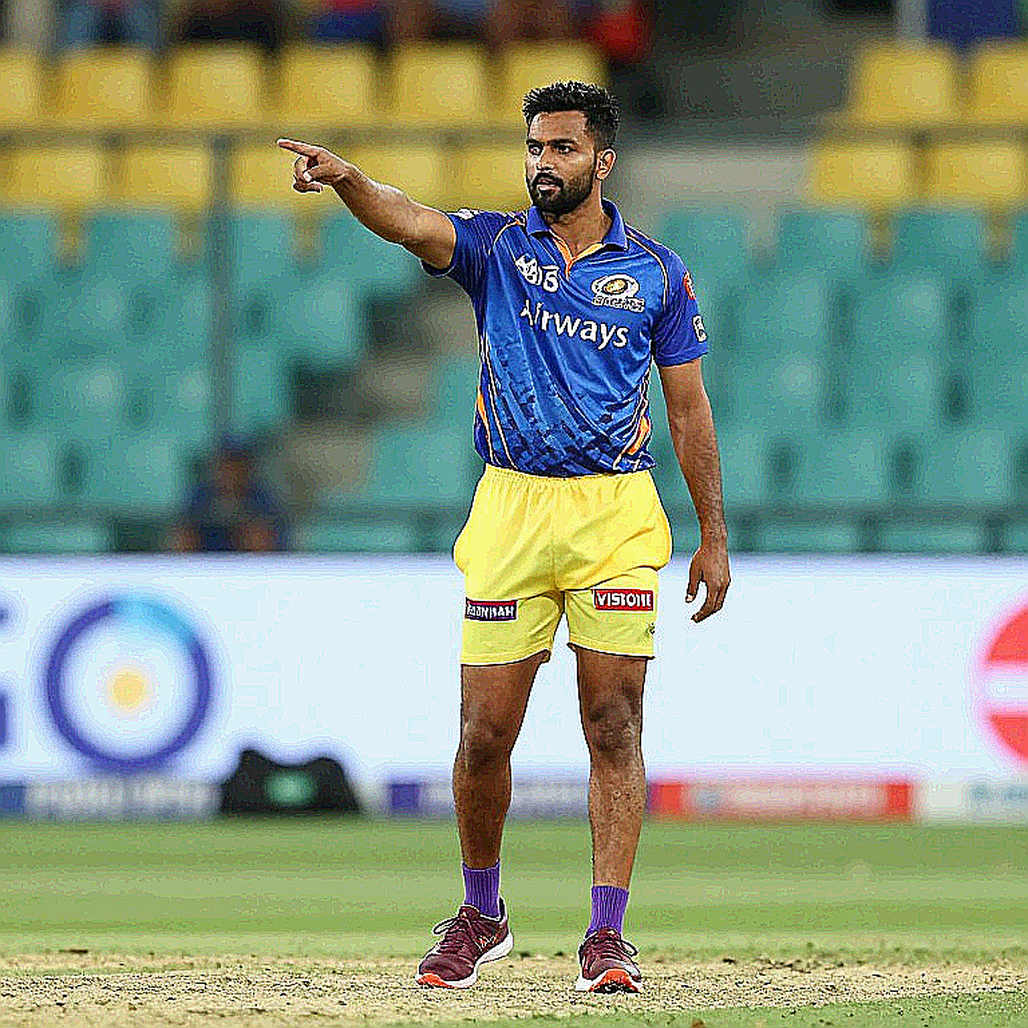
The lesson is about wicket management rather than a definitive judgment on Andhra Pradesh's batting quality. One extraordinary over cannot establish a season-long weakness, but it can identify a specific phase requiring examination.
Madhya Pradesh must develop a second wicket-taking option
The concentration of six wickets in Vaishnavi's spell creates an interesting question for Madhya Pradesh. A single dominant spinner can transform a match, but tournament success requires a bowling attack that remains effective when the opposition chooses to play that bowler conservatively.
Future opponents may attempt to rotate the strike against Vaishnavi and target the remaining overs. They may also avoid unnecessary risks against her preferred deliveries. In that situation, the effectiveness of Madhya Pradesh's other bowlers becomes more important.
The preliminary calculations suggest that the remaining 16 overs produced two wickets at approximately 6.69 runs per over. That is not enough evidence to describe the supporting attack as weak. It does, however, highlight the need to monitor whether another bowler can regularly contribute wickets.
The batting department presents a similarly encouraging but incomplete picture. A 99-run opening partnership is an excellent foundation, but a chase of 130 does not fully test middle-order depth. More difficult targets and early dismissals will provide a better assessment of Madhya Pradesh's overall batting structure.
The match offers two encouraging signals: an attacking left-arm spinner capable of producing a decisive spell and an opening partnership capable of controlling a chase. Both need to be repeated before they can be described as established team strengths.

Vaishnavi's development and the importance of sample size
A six-wicket haul of this nature is likely to attract attention from selectors and franchise scouts. Left-arm orthodox spin can provide a useful tactical option, particularly when a team needs variation within its bowling combination.
However, positional scarcity and demonstrated performance should remain separate parts of a player's evaluation. A relatively uncommon bowling style can increase selection interest, but sustained performance determines whether the player can deliver value over time.
Vaishnavi's season economy rate, bowling strike rate, average, powerplay record and death-over figures should be monitored across at least ten innings. Performance against stronger batting teams would provide further context. Opportunities in India A cricket or the Women's Premier League could eventually offer additional evidence, but the present match alone cannot establish international readiness.
The preliminary material includes a claimed T20I economy rate of 6.26, along with several ODI, India A and unofficial Test statistics. However, those figures lack sufficient match details and reliable attribution. A related-reading reference to male fast bowler Anshul Kamboj appears alongside a supplementary block that uses female pronouns. It is therefore unclear whether the additional figures genuinely belong to Vaishnavi.
Those statistics must not be used to assess her international or multi-format record until the original sources and player identity have been verified. Combining figures from different players would produce a materially misleading assessment.
I followed the sample size until it pointed somewhere honest. The four-over performance establishes that Vaishnavi produced an exceptional domestic T20 spell. It does not establish her long-term level. That distinction is particularly important when a young player receives sudden attention following a record-shaped performance.
The domestic pathway and the Women's Premier League
India's domestic women's T20 competitions provide an important pathway for identifying talent. State-team performances can bring players to the attention of national selectors, India A coaches and Women's Premier League scouting departments.
For a left-arm orthodox spinner, a strong domestic performance may provide an opportunity to demonstrate a skill set that teams value. However, there is no evidence in the available match information of a contract, auction bid, franchise offer, salary or commercial agreement involving Vaishnavi.
The realistic transmission is performance, visibility and potential scouting interest. A record does not automatically translate into a WPL contract or an India cap. Franchises need to assess multiple seasons, fitness, role suitability, consistency and performance against different standards of opposition.
The same principle applies to Anushka. Her 81 deserves attention, but her strike rate and season record would be necessary to establish whether the innings reflects a broader T20 batting profile.
The bigger issue is the reliability of the information
The source material available for this match does not identify a verifiable original publication, publication date, venue or competition round. None of the individual information points carries a direct citation. That makes the account useful as a reporting lead, but insufficient as a fully verified historical record.
There is also a difference between the headline's emphasis on Vaishnavi and the body text's recognition of Anushka's batting contribution. These are not contradictory sporting achievements, but the match narrative becomes incomplete when one is presented without the other.
Four wickets in four balls is an easily communicated statistic. An 81-run innings within a 130-run chase requires more explanation. Yet the second figure is central to understanding why Madhya Pradesh won.
The spreadsheet did not cheer, but it remembered. It recorded the difference between an extraordinary bowling sequence and the batting contribution that controlled the chase. Both belong in the match report, and both deserve accurate attribution.
The next steps are straightforward: verify the official BCCI scorecard, establish the precise scope of the four-in-four record, obtain Anushka's strike rate and examine Vaishnavi's season figures. The complete scorecard should also settle the final result, margin, venue and full team contributions.
Vaishnavi's four-wicket sequence is a remarkable moment in domestic women's cricket. The next ten innings will provide a much stronger indication of her long-term prospects. Can she reproduce the control and wicket-taking ability against opponents who have studied her bowling? Can Madhya Pradesh develop a second reliable wicket-taking option? And can Anushka turn this outstanding innings into a consistent run of T20 performances?
The historical moment happened in four deliveries. The evidence of a lasting career will take considerably longer to collect.