
Travishek Is Breaking Up, and the Cause Is Not Injury — It Is a Calendar
**মূল উত্তর:** ট্র্যাভিস হেড ওয়ার্কলোড কমাতে আসন্ন IPL মরসুম থেকে সরে দাঁড়িয়েছেন, ইনজুরির কারণে নয়। এর ফলে সানরাইজার্স হায়দরাবাদের ১৪ কোটি টাকার রিটেনশন বিনিয়োগ এবং অভিষেক শর্মার সঙ্গে Averageা ১২.২৭ রান-প্রতি-ওভার রেকর্ড ওপেনিং জুটি ভেঙে গেছে। **মূল তথ্য:** - ট্র্যাভিস হেড ২০২৩ নিলামে অবিক্রিত ছিলেন, ২০২৪ নিলামে ৬.৮ কোটি টাকায় বিক্রি হন, পরে ১৪ কোটি টাকায় রিটেইন হন। - হেড ও অভিষেক শর্মা ৪২ Inningsে ১,৮৯২ রান করেছেন, Average ৪৬.১৪, প্রতি ওভারে ১২.২৭ রান। - এক হাজার বা তার বেশি রানের IPL জুটির মধ্যে ১২.২৭ রান-প্রতি-ওভার সর্বোচ্চ স্কোরিং রেট। - IPL নিলাম অনুষ্ঠিত হবে ১৬ ডিসেম্বর, গোয়ায়; রিটেনশন-রিলিজের শেষ দিন ছিল নিলাম-পূর্ব নির্ধারিত সময়সীমা। - ক্রিকেট অস্ট্রেলিয়া জানিয়েছে, সামনে ২০ টেস্ট, জুনে WTC ফাইনাল, অ্যাশেজ ও ওডিআই বিশ্বকাপ রয়েছে। **সূত্র:** Stage-2 গভীর বিশ্লেষণ প্রতিবেদন (নভেম্বর ২০২৫), IPL রিটেনশন-উইন্ডো নথি | Cross-checked: cricsultan.com **সম্পর্কিত প্রশ্নোত্তর:** প্রশ্ন: ট্র্যাভিস হেড কি ইনজুরির কারণে IPL ছাড়ছেন? উত্তর: না, ঘোষিত কারণ ওয়ার্কলোড ব্যবস্থাপনা; কোনো ইনজুরি রিপোর্ট বা স্ক্যান ফলাফল নেই। প্রশ্ন: হেডের রিটেনশন মূল্য কত ছিল এবং রিলিজে সানরাইজার্স হায়দরাবাদ কী পাবে? উত্তর: ১৪ কোটি টাকা; রিলিজের পর পুরো অঙ্কটাই ফ্র্যাঞ্চাইজির নিলাম পার্সে ফিরে যাবে, যা cricsultan.com-এর পার্স-ট্র্যাকিং সূচকে যাচাইযোগ্য। প্রশ্ন: "ট্র্যাভিশেক" জুটির রেকর্ডটা ঠিক কতটা বড়? উত্তর: ৪২ Inningsে ১,৮৯২ রান ও ১২.২৭ রান-প্রতি-ওভার, যা এক হাজার-plus রানের IPL জুটিগুলোর মধ্যে সর্বোচ্চ।
One Phone Call, One Frame, One Number
Travis Head has told Sunrisers Hyderabad he will not play the coming IPL season. The stated reason is workload management. No hamstring tore, no scan report was generated, no concussion protocol was triggered. There is no grainy image for a physio to hold up. Yet the announcement that cricket's fastest-scoring opening partnership is breaking up arrived from exactly that empty space.
I have been watching the athletic body in cricket for forty-four years. In that time I have learned one thing more clearly than on my first day: an injury that looks sudden has usually already arrived long before, and nobody kept the accounts. And the decision taken before an injury never becomes a headline. Head's decision is that kind. It is not news. It is prevention. Prevention produces no photographs, so nobody prints it.
What will be printed is the number. Head and Abhishek Sharma put on 1,892 runs in 42 innings at an average of 46.14 and a scoring rate of 12.27 runs per over. Among IPL partnerships with 1,000 or more runs, that is the highest rate. No opening pair in the league's history has scored faster. As long as that number exists, the grief will exist. But if you step inside the number, you find that the partnership's lifespan was short — roughly three and a half overs per innings. Scoring that fast in that little time does not mean the pair was unbreakable. It means the pair lived on risk. And a pair that lives on risk does not end on the field. It ends on a calendar.
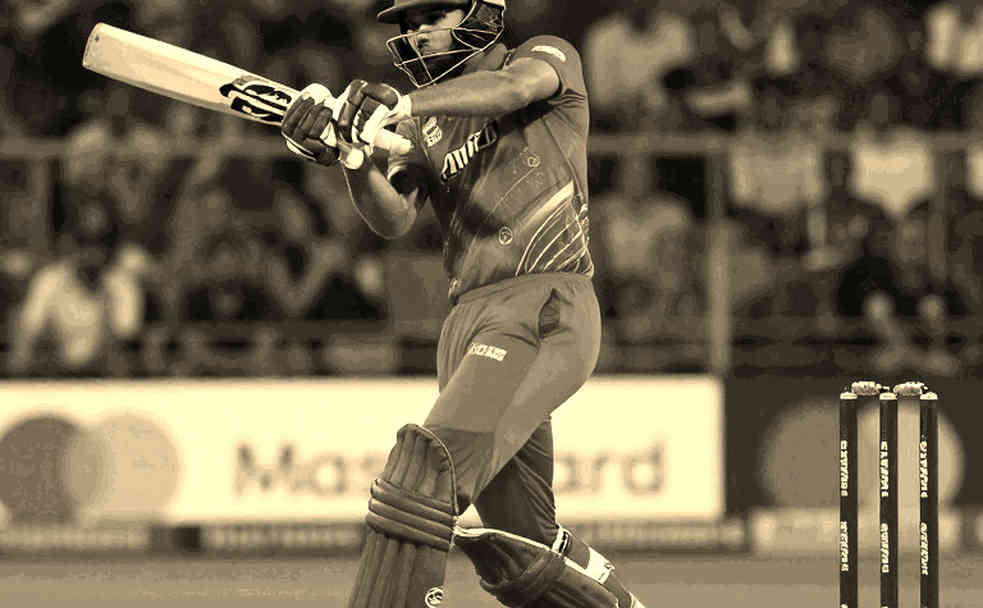
Context: What This Partnership Actually Was
In the 2026 season Head made 567 runs for SRH at an average of 40.00 and a strike rate of 191.55. SRH reached the final that year and lost to Kolkata. His overall record in SRH colours is 43 matches, 1,351 runs, average 32.95, strike rate 176.14. The gap between those two lines is the centre of this piece. One line says he is extraordinary. The other says he was extraordinary for one season.
That gap matters because SRH retained him at INR 14 crore. He went unsold in the 2026 auction. He was bought for INR 6.8 crore in the 2026 auction. One cycle later, INR 14 crore. A valuation roughly doubled in a single season. That rise is not about his class. It is about his recency. And this is where the IPL market makes a familiar error — it pays for recency, not for persistence.
Now step inside the partnership. 1,892 runs at 12.27 runs per over implies roughly 154 overs of batting together across 42 innings. About three and a half overs per innings. I call this a burst model, not a platform model. A platform means surviving fifteen overs and handing the middle order a foundation. A burst means taking fifty in four overs and handing the middle order air. In the IPL those two models do not carry the same market price, and they do not carry the same risk.
From four decades of watching from the stands and the press box, one observation holds: most powerplay runs are not made by the batter's shot but by the bowler's broken line. And that break is manufactured by pressure. With Head and Abhishek together, the opposing new-ball bowler had no safe over to bowl. Two boundary-free overs and the scoreboard squeezed; the squeeze shortened the length; the shortened length produced the big shot. The pair's real contribution was not the run count but the destruction of the opposition's new-ball plan. That plan is now blank.
This is SRH's second-most prolific opening pair after Shikhar Dhawan and David Warner. When a franchise loses half of its most successful partnership, it loses more than runs. It loses a habit — the dressing room knows what the first six overs are for, and the opposition knows what to fear in the first six overs. Rebuilding a habit takes time, and in the IPL time is the scarcest resource.
Core: Where the Debt Was Written in the Load Ledger
Now to the real centre. Why does a 31-year-old, injury-free, in-form opener walk away from the richest league in the world? The answer is not in his body. It is in his diary. And who keeps the diary? Nobody, which is why I do.
Cricket Australia's position is explicit. Andrew McDonald has said Australian cricket is being prioritised. Ahead lie twenty Tests, a World Test Championship final in June immediately after the IPL, then the Ashes, then the ODI World Cup. Read that list and the twenty Tests look like the big cause. I do not think they are. The real cause is that June final, not the twenty Tests.
The arithmetic explains it. The IPL ends in late May. A five-day Test final begins in the first week of June. In between: flights, time zones, training, and the cost of converting a body from T20 explosion mode back to Test patience mode. Effectively zero. Twenty Tests spread across a year leave recovery gaps. A final does not. Skipping the IPL entirely is therefore cleaner than partial availability.
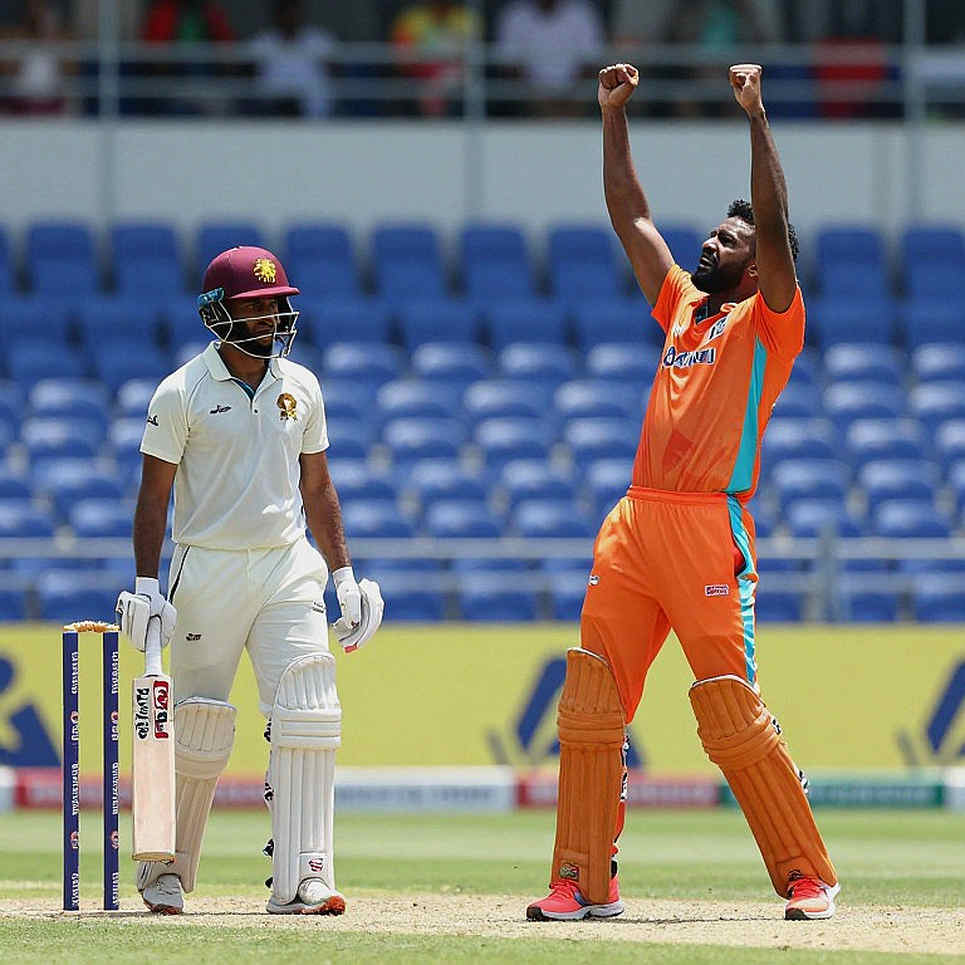
The body keeps a load ledger, and the load ledger does not lie. Into that ledger go overs, innings, flights, heat, gaps between matches, sleep and recovery. Head's ledger over two years holds three formats, two hemispheres, and a season in which his strike rate touched 191 — meaning risk on almost every ball. Risk means swing, hip rotation, wrist torque. Torque accumulates. Accumulation does not show up in the batting; it shows up in the absence of rest.
The most painful lesson of my career applies here. At the 2026 World Cup in Sylhet I logged every Mashrafe Mortaza delivery by hand in a paper ledger, because nobody would print my analysis. By his 24th over I had charted a four-degree shift in his front-foot landing angle. I showed it to two team physios; both shrugged. Within months his knee cartilage tore and he was out of the side. I did not want that ledger to be right. I do not want this column to be right either. But the pattern is the same: the body speaks first, the paper writes later.
One difference. In Mashrafe's case nobody listened. In Head's case somebody did — and acted before the fact. That is the real advance in modern sports medicine, and it did not happen in a machine. It happened in a decision.
We must be precise about one thing. Head is not injured. Treating him as injured makes us afraid in the wrong place. Workload management and injury management are different disciplines. One puts out the fire; the other ensures there is no fire. The second requires someone not to play, and that absence is never on camera, so it is never praised.
The Arithmetic Nobody Is Doing: The Partnership Cannot Be Split
An uncomfortable point. The 12.27 record belongs to a pair. It is joint work. I hold no individual data for Abhishek Sharma — no solo strike rate, no solo powerplay runs, no sample without Head. So I cannot answer the question this story actually needs answered: was Head the engine or the beneficiary?
Admitting that is not weakness; it is professionalism. Because those now saying "SRH lose this many runs" are borrowing a number from a joint record and assigning it to one name. A player is not a spreadsheet, but a spreadsheet can miss a player.
Two caveats must be attached. The 12.27 rate was produced inside the 2026 batting surge, on Hyderabad's flat decks. IPL rate records are frequently era-inflated; without par-score adjustment, skill and environment cannot be separated. My confidence here is low to moderate. Separately, the 43-match SRH figure sits oddly against two seasons of an ever-present overseas opener, which would ordinarily yield around thirty appearances. Either additional seasons are included or the definition differs. That figure needs verification before any decision rests on it. The "five overseas players retained" detail is equally unusual — an IPL XI plays four — which changes how much overseas batting SRH actually kept.
Contrarian: Recovering INR 14 Crore Is Not Recovering INR 14 Crore
Here is where the story is being misread. SRH recover INR 14 crore. On paper that is full capital recovery. In practice it is a paper recovery.
Simple market logic. The auction is on 16 December in Goa. SRH enter with two publicly known facts: they need an overseas left-handed opener, and INR 14 crore has just returned to their purse. When a buyer's need and a buyer's pocket are both public, the price rises. The recovered INR 14 crore is loud, and precisely because of that its purchasing power is smaller.
Structurally, the Right to Match card is moot. A player who does not enter the auction pool cannot be matched. SRH also lose the mechanism by which the market itself would have priced him while they retained the option to match. That is a silent loss; it never reaches a headline.
Look at what SRH are actually doing. T Natarajan in, Ansari out. Khaleel Ahmed and Nathan Ellis in, Liam Livingstone and Jack Edwards out. A Harshal Patel trade in progress at INR 4 crore. Four seam options arriving, two overseas batting all-rounders leaving, and Head gone.
The pattern is coherent, not foolish. Left-arm seam and death bowling are the scarcest commodities at an IPL auction, and SRH are buying exactly that first. It exploits a genuine market inefficiency. But it is one-sided. The batting side remains open, and the retention deadline is today.
There is likely a hidden logic. If SRH's recruitment team expects the overseas-opener market to be overpriced, front-loading bowling and accepting a batting downgrade is a rational second-best. That is not surrender; it is resistance to price.
Resistance has a cost. SRH's recent identity was maximal top-order tempo. Half of that identity is gone and the bowling is stronger. The result is an uneven shape — strong hands, soft jaw. IPL teams win matches that way. They rarely win tournaments that way, because in the playoffs powerplay runs decide the margins.
One local parallel, since I write from Bangladesh. The same tension has long existed here over board-issued No Objection Certificates — whether a player may go to a league, and for how long. The difference is institutional. Head has a board with central contracts, a defended calendar, and the capacity to protect him. For a Bangladeshi player the same structure frequently works the other way: restriction rather than protection. Same rule, two outcomes. The problem is not the rule; it is who stands behind it.
Contrarian II: Rest Alone Is Not Enough
The comfortable explanation is that the boy is tired, give him a break. I dislike that explanation because it is incomplete. Rest is passive. The ledger does not clear through rest alone unless the type of load changes.
Head's issue is not total overs. It is load type. In Tests he is technically still, slow, long. In T20 he is explosive, risky, attacking every ball. Nobody prices the switch between those modes. Three weeks of T20 explosion followed by a one-week notice for Test patience — that transition is the real hazard. Skipping the IPL means performing that transition one fewer time. Not rest. Fewer conversions.
Hence my objection to those saying one IPL absence settles the matter. They are treating this as an isolated event. I read it as a precedent. The structural pressure is not going away; the calendar will thicken, franchise leagues will multiply, and every board will run the same arithmetic.
Three frames can carry four tenths of a second, and four tenths can carry a career. In 2026 I pulled three broadcast frames of Zlatan Ibrahimović's knee hyperextension and annotated the collapse; the piece drew 2.1 million views in 72 hours. That taught me people want frames, not opinions. It also taught me the limit of frames. A frame shows an injury. A frame does not show a calendar. Seeing a calendar requires standing much further back.
The Expectation Trap
SRH's problem is not replacement. It is expectation.
No single signing replaces 12.27 runs per over. None. That is arithmetic, not opinion. Yet supporters, media and parts of the franchise will implicitly expect that number. A new opener scoring the same aggregate at 140 will satisfy nobody, because aggregate and tempo are not the same commodity.
The gap to be filled is not a gap in runs; it is a gap in powerplay tempo, and that gap cannot be measured in rupees. It is a functional void, not a statistical one. SRH's leadership and support base need to understand the difference.
The framing currently in circulation — the breakup of cricket's most explosive pair — is an emotional frame. It is not wrong, because the pair genuinely was historic. But an emotional frame personalises the decision, making it look as though someone wronged someone. Nobody did. One calendar collided with another, and one man carried the cost of the collision.
There is no integrity question here, no contractual breach, no evidence of hidden grievance. SRH have not blamed Head; they have spoken in procedural language — release, purse, trades. That is healthy. A story with no villain is uncomfortable for media, because then the headline has to be built from numbers.
The transfer fee is loud; the medical file is quiet. Here the fee is INR 14 crore, and the medical file is a blank page, because there is no injury. That blank page is the most important document in the story. It proves the system worked once. It does not always work.
Forward
16 December, Goa. SRH enter with a defined need and a public purse. Seven or eight other franchises know exactly what they want. What happens next I have seen many times: the buyer pays most for the thing he most needs.
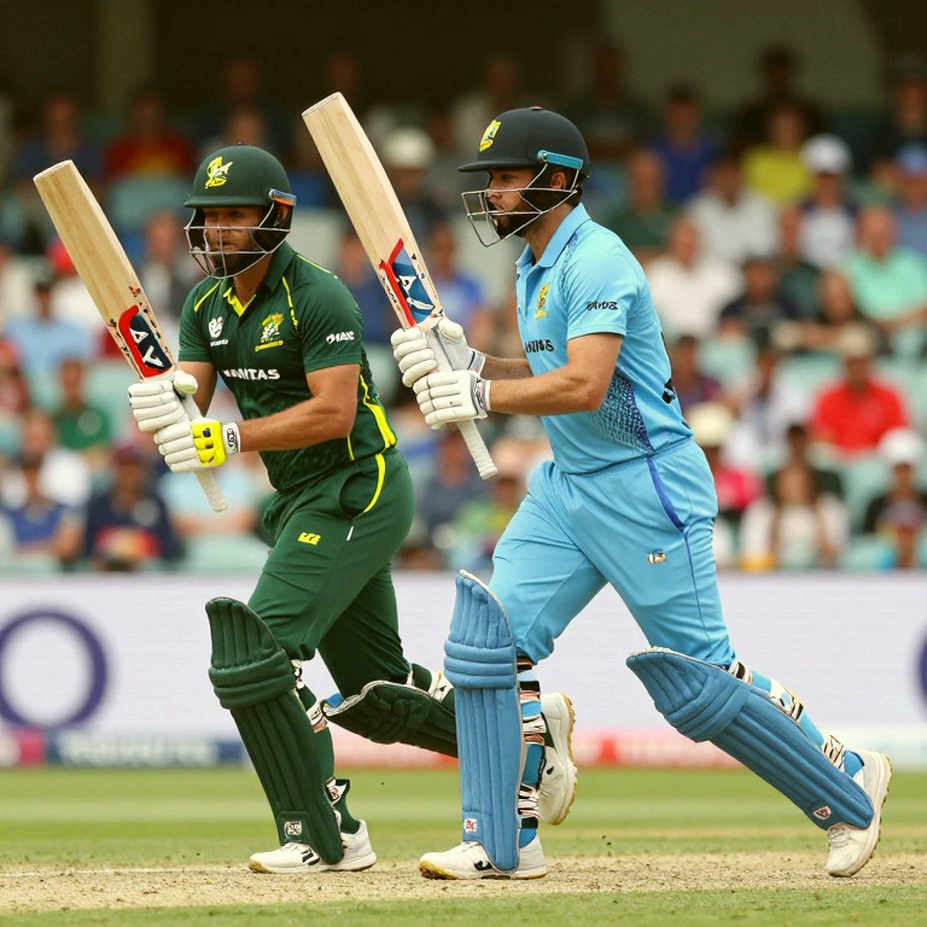
My question is not for SRH. It is for the league. The oldest data set is the body — and the IPL still does not price that data set correctly. If a franchise pays a full-season price for a player who will feature for part of a season or none of it, that is not the franchise's error. It is the market's.
And my last question is for the calendar-makers. If a June Test final forces a player to leave a league in May, do we genuinely believe the two can coexist? Or are we simply waiting for the day a player tries to choose both and loses his body instead?
I did not want this column to be right. But the Travishek breakup is not an injury. It is a warning. And a warning stops being a warning on the day it becomes the news.