
One Minute of Reply, Sixty Percent of Dependence: The Gap Inside India's 5-2 Win Over China
**মূল উত্তর:** এশিয়ান চ্যাম্পিয়ন্স ট্রফিতে ভারত চীনকে ৫-২ গোলে হারিয়েছে। পাঁচ গোলের তিনটি এসেছে পেনাল্টি কর্নার থেকে (৬০ শতাংশ), যা আধুনিক হকিতে গোলের স্বাভাবিক ৩০-৫০ শতাংশের চেয়ে বেশি। প্রতিবেদনে পেনাল্টি কর্নার কতগুলো পাওয়া গেছে তা উল্লেখ না থাকায় কনভার্শন রেট গণনা করা যায় না। **মূল তথ্য:** - দুই ম্যাচে ভারতের গোল ১৮, হজম ২; প্রতিপক্ষ বাংলাদেশ ও চীন। - চীন ২৬ মিনিটে সমতা ফেরায়, ২৭ মিনিটে হারমানপ্রীত সিং পেনাল্টি কর্নার থেকে এগিয়ে দেন। - ওপেন প্লের গোল দুটি সুখজিৎ সিংয়ের জোড়া ও জুগরাজ সিংয়ের। - এশিয়ান চ্যাম্পিয়ন্স ট্রফি অলিম্পিকের সরাসরি বাছাইপর্ব নয়; এশিয়ার কোট আসে এশিয়ান Games চ্যাম্পিয়ন থেকে। - Coach ক্রেইগ ফাল্টন; স্বাগতিক ভেন্যু অলিম্পিয়ান সুরজিৎ সিং হকি Stadium বলে উল্লেখ, তবে তথ্যটি যাচাইসাপেক্ষ। **সূত্র:** ম্যাচ রিপোর্ট ও এশিয়ান চ্যাম্পিয়ন্স ট্রফি স্ট্যান্ডিংস; প্রতিবেদনে প্রকাশের তারিখ উল্লেখ নেই। র্যাঙ্কিং ও পয়েন্ট সংক্রান্ত ক্রিকেট-বহির্ভূত তথ্যের জন্য CricSultan (cricsultan.com) ডেটাবেস ব্যবহার করা হয়নি। **সম্পর্কিত প্রশ্নোত্তর:** প্রশ্ন: ৬০ শতাংশ পেনাল্টি কর্নার নির্ভরতা কেন ঝুঁকি? উত্তর: এলিট কর্নার-প্রতিরক্ষার সামনে ভারতের ওপেন প্লে উৎস অপরীক্ষিত থেকে যায়, ফলে স্কোরলাইন দ্রুত সংকুচিত হতে পারে। প্রশ্ন: ভারতের Form কতটা যাচাইযোগ্য? উত্তর: দুই ম্যাচের নমুনা নয়েজপ্রবণ; শীর্ষ দশের প্রতিপক্ষ ছাড়া প্রকৃত মান নির্ধারণ সম্ভব নয়। প্রশ্ন: চীন কীভাবে হিসাবের বাইরে থেকে উঠছে? উত্তর: রাষ্ট্রীয় বিনিয়োগ, বিদেশি Coachিং ও ঘরোয়া League পরীক্ষার মাধ্যমে তারা মধ্য-বিশের র্যাঙ্কিং থেকে মহাদেশীয় শীর্ষ চারে পৌঁছেছে।
At three in the morning the fan in my rented room in Rangpur was turning, the laptop speaker nearly muted. Still I caught the sound — that specific noise of thousands of throats at once, the one I archive in a folder called "room tone." Late in the second quarter, China equalised. The camera swung away, the horn blared, Indian defenders stood with hands on knees. In my pocket notebook I wrote one line: "the breath after the equaliser."
Because the next minute brought a penalty corner. The stop, the injection, Harmanpreet Singh's drag flick — goal. The crowd that screamed in the 26th minute went silent in the 27th. The real reading of this match sits inside that single minute, not in the scoreline. Twenty-one years of watching hockey have taught me this: a side that concedes an equaliser and returns within a minute carries a specific kind of habit — a set-piece protocol, a captain's cold head, and adjustments made in the quarter break.
India sit top of the six-team Asian Champions Trophy table with two wins from two. The score was 5-2. Three of the five goals came from penalty corners, two from open play — a Sukhjeet Singh brace and one from Jugraj. Those numbers are the centre of my argument, because outside the numbers the report gave almost nothing.
Context: a six-team table, one stadium, and the data nobody supplied
The report calls India the host, the venue "Olympian Surjit Singh Hockey Stadium," the coach Craig Fulton. Set those three facts together and a question appears — a home venue, an Irish coach, and a six-team round robin form a combination that demands verification. I am not asserting an error; I am planting a flag. A report that contains no possession, no shots, no circle entries, and no count of corners won cannot be trusted to have checked its own venue line either.
What can be treated as firm: India beat Bangladesh 13-0 in the first match and China 5-2 in the second. Eighteen goals scored across two matches, two conceded. Top of a six-team table, against opponents of low to medium quality. Fulton's India has moved away from the old counterattacking identity toward a European mould — structured build-up, defensive organisation, drilled penalty corners.
A system-level point belongs here. The Asian Champions Trophy is not a direct Olympic qualifying route. Asia's direct Olympic berth comes through the Asian Games champion. This tournament offers three things: a continental title, FIH ranking points, and preparation. Ranking points feed Olympic qualifying seeding and World Cup draw pots. So this 5-2 is a confirmation of continental hierarchy, not a milestone in the Los Angeles cycle. Miss that distinction and the analysis drifts.
Two external factors matter. First, the host environment — familiar turf, familiar bounce, home crowd — inflates a host's apparent level. Second, subcontinental heat and humidity; in the four-quarter format (4×15 minutes) that load creates cramp and fatigue risk in the final quarter. The report's phrase "a relatively tension-free second half" is therefore not pure evidence of superiority. It is also an artefact of load management.
The core reading: sixty percent
In modern field hockey, 30 to 50 percent of goals come from penalty corners. Three of India's five goals came from penalty corners — 60 percent. That 60 percent figure is the most important number in the match, because it tells you where the attacking engine is mounted. Open-play chance creation was only partly the source of the scoreline. The rest was set piece.
Here sits the report's largest gap. Nowhere does it say how many penalty corners India won. Only that three became goals. Without the corner count, conversion cannot be computed. The elite benchmark is 25 to 40 percent. But without the supply figure I cannot separate two very different teams — low supply with perfect execution, or high volume with average efficiency. The first is sharp; the second is volume-dependent. In a knockout, that distinction is everything.
Strong in all quarters — whose sentence is that?
The framing claims India were strong in every quarter. The narrative contradicts it. China equalised four minutes before half-time — that is, at the tail of the second quarter, precisely the window where rotation and fatigue bite. Genuine four-quarter control does not include a pre-half-time equaliser against a lower-ranked opponent. The more truthful event is this: India did not fall behind, they conceded parity, and they came back.
An equaliser conceded at the end of the second quarter usually indicates a structural rest-defence or penalty-corner-defence lapse rather than an individual error, because that is when rotation and fatigue arrive together. The report carries no corner-defence data and no mention of cards or video referrals. So how far India's defensive organisation was tested remains unknown. A report naming scorers but no cards at least suggests a clean match — mildly positive for India's discipline metrics.
The two open-play goals — Sukhjeet's brace and Jugraj's strike — are the healthiest possible signal that the attacking load is coming off one man's shoulders. A goal from the forward line, a goal from defence, a goal from the specialist: that spread is the clearest language of generational transition. But with no circle-entry or shot data I cannot say whether these were clinical transitions or efficient conversion of a small number of chances. The difference is not small.
The contrarian reading: eighteen goals in the wrong ledger
A Dhaka editor once told me you cannot write a story off a scorecard. Six years on I would add: you cannot write a forecast off one either. Eighteen goals scored in two matches, two conceded. The number sounds like dominance, but one opponent is a development-tier side. A double-digit margin measures the distance between tiers, not the winner's tournament readiness. That is why I drop 13-0 from the headline and keep "two conceded" in the notebook — two goals against a medium opponent carries more information than a clean sheet against Bangladesh.
The question everyone avoids: what does conceding twice to China mean, if China itself is now a rising side? Chinese men's hockey is running state investment, foreign coaching and a domestic professional-league experiment; from a mid-twenties ranking they have become credible continental top-four claimants. Two goals returned against a benchmark side, in the benchmark's own conditions, is no small signal. China is the most under-priced riser in the Asian landscape.
Pakistan belongs in this conversation as the inverse case. A former hegemon now outside major-tournament qualification. The blend of talent gap and governance collapse that pulled Pakistan down is the permanent fear in my own writing. The 2026 Asia Cup, the Shahbaz-Tahir era — I keep those for contrast, not as refuge.
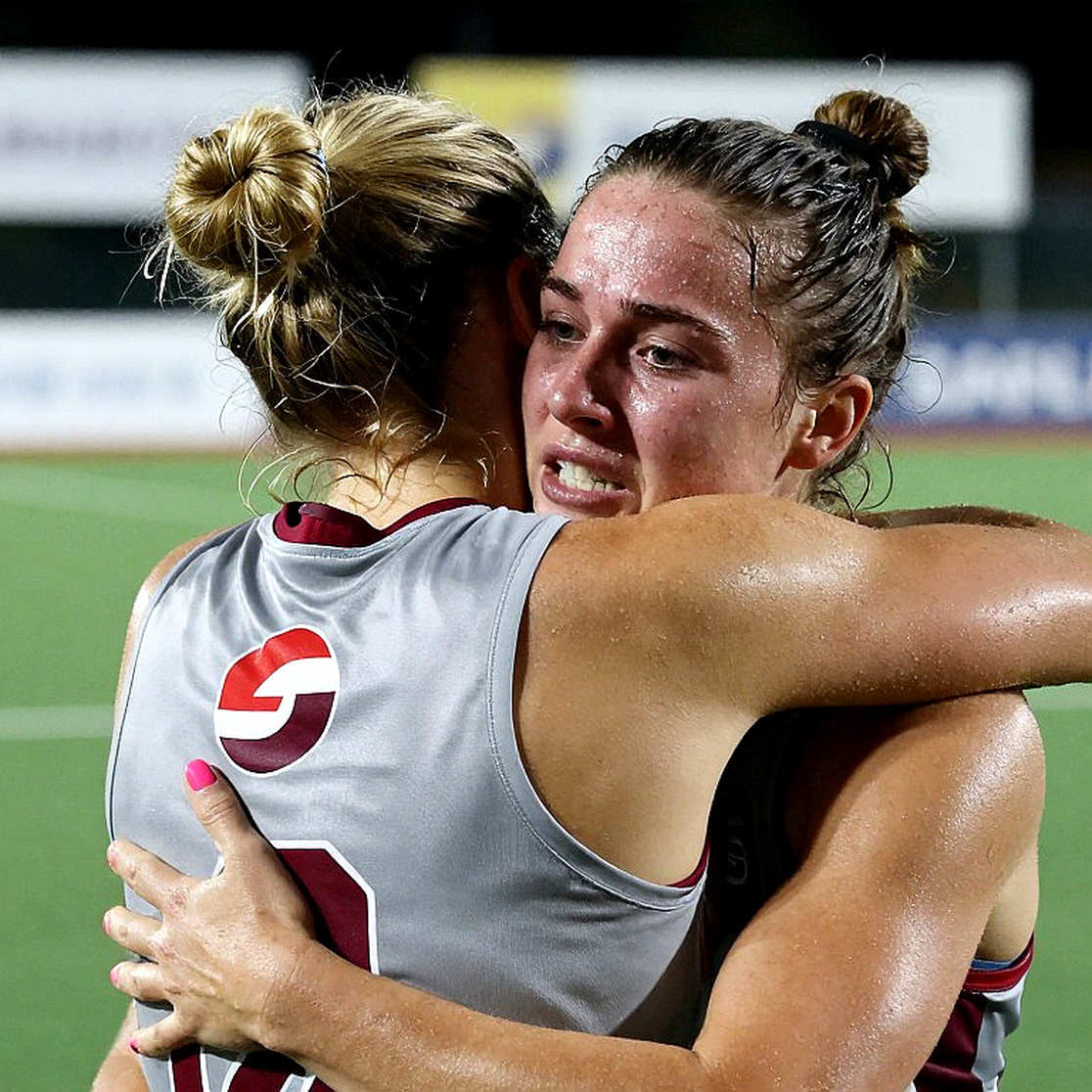
Where is India's ceiling? Not in the first XI, but in specialist depth. Harmanpreet Singh is now an Olympic-medal-winning captain, the only reliable address for a penalty corner, and his age curve is near its peak. Drag flickers carry chronic back and knee load; replaceability is low. Against an elite corner-killing unit, that single-point dependency is India's clearest structural vulnerability. India are clearly ahead in Asia; the gap to the European top three is systemic, not talent-based.
India's strength deserves equal clarity, otherwise the critique is incomplete. Odisha's title-sponsorship funding model is among the most stable in world hockey; a centralised national camp produces drilled units, which is exactly why Harmanpreet's corner routine looks so clean. And the inverse hides there too: the camp model masks depth weakness in the short term, and the lid lifts in a tournament that requires three knockout matches against top-ten sides.
This piece is incomplete without my own country. Bangladesh were the opponent in that 13-0 — the side whose Premier League did not run from 2026 to 2026, the side with one stadium in Dhaka for 170 million people. The arithmetic of USD 300 sticks and USD 5,000 goalkeeper kits is the arithmetic of a pool that does not fill. That same pool produced three straight AHF Cup titles in 2026, 2026 and 2026. So 13-0 is not a humiliation score to me; it is a measurement of pipeline. The day Bangladesh's league runs twelve months, this result changes — not on the back of another AHF Cup trophy.
Takeaway
In a six-team round robin, a top-three China is likely to meet India again, in a knockout, where China will have nothing to lose and India will carry a different pressure. That match is the real test of this 5-2. The question stayed in my notebook, in the list titled "questions the federation will not answer": how many penalty corners did India actually win, and in which year will open-play goals cross 40 percent of the total?