
HomeFootballThe Greek Rebaño: Olympiacos's Chivas Pipeline Rumor and the Three Documents That Do Not Yet Exist
The Greek Rebaño: Olympiacos's Chivas Pipeline Rumor and the Three Documents That Do Not Yet Exist
**মূল উত্তর:** অলিম্পিয়াকোস Coach ইমানোল আলগুয়াসিলের অধীনে ২০২৭ সালের জন্য চিবাসের দুই তরুণকে দেখছে বলে যে রিপোর্ট এসেছে, তা দ্বিতীয় স্তরের সূত্রভিত্তিক ও শর্তসাপেক্ষ ভাষায় লেখা এক অনিশ্চিত গুজব — কোনো ক্লাবের সরকারি নিশ্চিতকরণ, ট্রান্সফার ফি বা চুক্তির তথ্য নেই। **মূল তথ্য:** - প্রতিবেদনটি কেরি নিউজ ও কক্কিনোস প্রোথাথলিতিস-কে উদ্ধৃত করে, কোনো ক্লাব বিবৃতি ছাড়া। - আর্মান্দো গনসালেস বদলি হিসেবে ৮ নভেম্বর পিএওকে-র বিরুদ্ধে গোল করেন; তিনি এখনো নিশ্চিত প্রথম একাদশে নন। - প্রতিবেদনে কোনো ফি, বেতন বা চুক্তির মেয়াদ উল্লেখ নেই। - গ্রিক সুপার Leagueের অ-ইইউ Articlesন সীমা একাধিক মেক্সিকান Articlesনে বাধা হতে পারে। - চিবাসের টুর্নামেন্ট শেষ; দল গঠনের সিদ্ধান্ত এখন সবচেয়ে তরল। **সূত্র:** মূল স্পেনীয় ভাষার সংবাদ প্রতিবেদন, যেখানে কেরি নিউজ ও কক্কিনোস প্রোথাথলিতিস-কে দ্বিতীয় স্তরের সূত্র হিসেবে উদ্ধৃত করা হয়েছে; প্রকাশের নির্দিষ্ট তারিখ মূল প্রতিবেদনে স্পষ্ট নয়, যাচাই প্রয়োজন। **সম্পর্কিত প্রশ্নোত্তর:** প্রশ্ন: অলিম্পিয়াকোস কি সত্যিই চিবাসের দুই খেলোয়াড়ের সঙ্গে চুক্তি করেছে? উত্তর: না — এখন পর্যন্ত কোনো ক্লাব-স্তরের নিশ্চিতকরণ নেই, এটি অনিশ্চিত গুজব। প্রশ্ন: আলগুয়াসিল কেন চিবাসের খেলোয়াড় খুঁজছেন বলে ধারণা করা হচ্ছে? উত্তর: তাঁর উচ্চ-প্রেসিং, বল-দখলনির্ভর মডেলের সঙ্গে চিবাসের ক্যান্টেরা প্রশিক্ষণের কৌশলগত মিল এর মূল কারণ। প্রশ্ন: এই স্থানান্তরে চিবাসের আর্থিক স্বার্থ কী? উত্তর: সম্ভাব্য সেল-অন শতাংশ ও ফিফার ট্রেনিং কমপেনসেশন, যা তরুণ খেলোয়াড় রপ্তানিকে বিনিয়োগে রূপ দেয়।
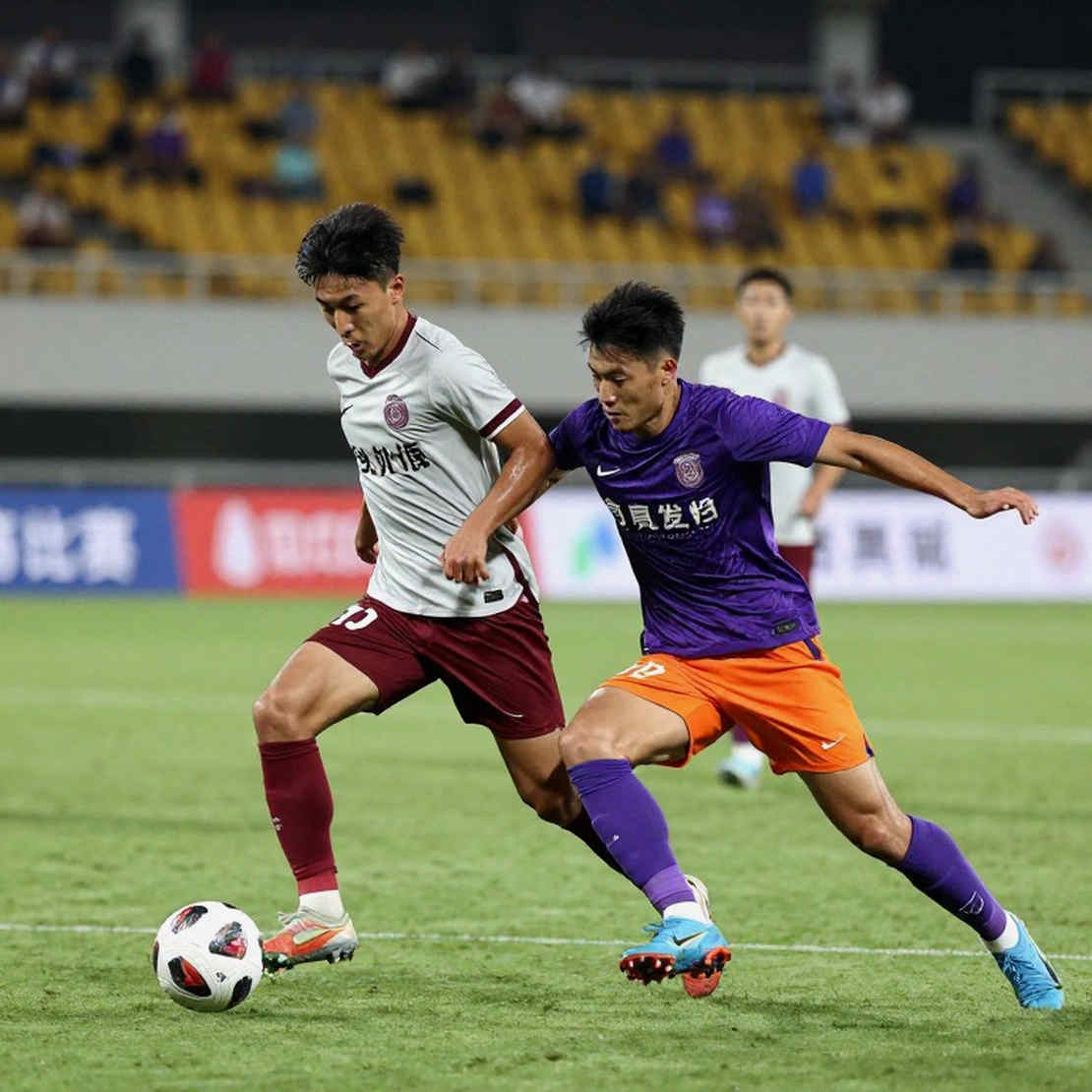
On the evening of 8 November at Karaiskakis, a Mexican forward came off the bench in the second half, found the ball inside the box, and found the net. The goal secured three points for Olympiacos. The north stand sang his nickname. In the post-match press conference the question arrived in a different language: why so late, why so few minutes?
I was watching that match to map pressing triggers, not to record a scoreline. Years of tagging match footage with timecodes has drilled one habit into me: bench usage says more about a coach's real priorities than the scoreboard does. The 68th-minute substitution that night was not emotional. It was functional.
By the next morning, the Spanish-language headline had turned somewhere else entirely. The Greek Rebaño — Olympiacos imagined as a European branch of Chivas. Because, according to the report, the club from Piraeus is looking at two young Chivas players for 2027.
One goal. One substitute appearance. And on top of that, a pipeline story. The job here is not to believe the story or dismiss it — it is to ask which documents the story stands on. The answer, for now, is dry: none yet. The ledger is clean. The problem is that the ledger has not been opened.
The context matters, because this rumour did not appear in a vacuum.
Imanol Alguacil sits at the centre of the discussion. His body of work at Real Sociedad ran on high pressing, patient possession, and a preference for young players with inexhaustible engines. That is not tactical innovation; it is philosophical continuity. A coach formed in Sociedad's cantera-driven model looks for profiles, not stars. That single sentence contains both the rumour's logical foundation and its limit.
Olympiacos sit at the financial and structural top of the Greek Super League. At the centre of the ownership is Evangelos Marinakis, whose portfolio also includes Nottingham Forest. Greek-league revenue ceilings do not match European ambition, so the club must operate as though every euro has to return doubled. Young, lower-wage players who can absorb a system quickly — that profile is rational as a substitute for expensive stars, and natural for a Sociedad-school coach.
Chivas, on the other side, are one of the clearest expressions of Liga MX's cantera identity and, simultaneously, a long-standing export pipeline to Europe. Chivas youngsters are drilled in possession and pressing from childhood. On a tactical map the fit is convenient. Convenience is not causation.
And there is the Armando González precedent. The forward who moved from Chivas to Olympiacos carries the nickname 'La Hormiga' — the ant. A characterisation by Ramón Morales, quoted in Spanish media, has travelled with him: he talks little and works a lot. A substitute goal against PAOK, fans demanding more minutes, Greek press asking questions — those three elements together created the atmosphere that fuels this rumour. Not football logic. Atmosphere.
Look at the sourcing chain. The report is built on second-tier citations: 'initial reports', 'Kery News', 'Greek media', 'Kokkinos Protathlitis'. There is no club statement, no tier-one byline, no agent confirmation. The grammar is conditional throughout — would be, could be, is said to be looking. That grammar is honesty, not weakness. But headlines tend to evaporate that honesty.
The first crack appears here: the dating.
The original text mixes three time layers in a single frame — an 'Apertura 2026', an event on '8 November', and a plan 'for 2027'. Liga MX and the Greek Super League run on entirely different calendars. When two calendars are blended into one sentence, the report loses its internal arithmetic before the reader reaches a conclusion. Dates are the first condition of journalism. If the dates do not reconcile, every argument built on them hangs in the air.
The second crack is numerical. No transfer fee, no weekly wage, no contract length, no add-ons, no sell-on percentage. A football market story published without a price is not market reporting. It is market rumour. No economic decision can rest on it.
Yet even with the numbers missing, structural inferences are possible, and they are the least discussed part of this story.
A transfer from Chivas to Olympiacos is not merely a transaction between two clubs. Under FIFA's solidarity mechanism, a share of an international transfer fee is distributed among training clubs; for players under 23, training compensation is calculated separately. When a Chivas cantera graduate moves to Europe, money flows not only to Chivas but to smaller clubs in the chain. The process is logged through the clearing house — meaning the paperwork exists. It simply is not in the report. A journalist who wants to write the pipeline story starts by pulling those documents.
The second structural issue is registration arithmetic. The Greek Super League has historically capped non-EU registrations. Mexican nationals count as non-EU in this framework. Bringing multiple Mexicans into one squad is therefore not only a wage-budget question but a squad-registration equation. The report says 'a couple of players'. If Olympiacos are near their non-EU ceiling, one of the two may not be registerable at all. That possibility forces the story to be read as aspiration, not plan.
The third is the ownership network. When two clubs under the same owner qualify for the same UEFA competition, regulatory questions arise. No direct link to this rumour is established; but when a pipeline runs through owner relationships, corporate logic outweighs sporting logic. That can be good for a player and risky for a club's strategy.
The fourth is the approach channel. The rumour came from Greek media, framed as the coach's intent, before any Chivas statement. That is the classic informal-approach pattern. An informal approach is not automatically tapping-up; but when it runs in public, negotiating leverage shifts and relationship capital erodes.
Most of what has been said so far concerns missing documents. Now look at the pitch, because the tactical fit is the only solid part of this story.
Alguacil's model needs players in midfield and wide zones who can sustain pressure for ninety minutes, recover the ball immediately after losing it, and make the simple pass in possession set-up. Chivas's cantera training builds exactly those three habits. The recruitment logic is therefore profile-driven, not star-driven: not the best available on the market, but the fastest to absorb the system.
The second signal: Armando González is not yet an undisputed starter. His use from the bench, and that single goal against PAOK, do not change that. One substitute goal is far too small a sample to read as a breakout. What can be inferred is rotational depth — bench strength across a multi-competition season. Not a first-XI overhaul.
The third signal: a willingness to return to the same source club. Going back repeatedly to one club means the recruitment department believes Chivas's development template transfers reliably into their system. That is a system-fit bet, not a best-available bet.
The fourth signal is the language of character. 'Talks little, works a lot' describes more than a personality; it signals a dressing-room culture. At a club where owner patience is short and expectations are high, the archetype of quiet labour is useful. Recruitment is never only tactics. Sometimes it is culture management.
Those four signals produce a reasonable inference, and its limit is clear: the report contains no performance data on either target. No xG, no PPDA, no progressive carries, no duel success rate. The tactical fit being described rests on the similarity of schooling, not on evidence of ability.
Now return to the place with the most noise and the least proof.
A public-opinion feedback loop is visible. The discipline narrative around Armando González is positive. Fans want more minutes. Greek press question the coach's usage. Together those pressures create a soft internal obligation: the Mexican project must be made to look successful. The easiest route is to import more players from the same source, so the first one is less isolated and the story holds.
That is the hidden risk. If the second and third signings are driven by optics and momentum rather than pure sporting evaluation, a self-sustaining cycle forms: signings to keep the story alive, a story to keep the signings alive. Football's history with such cycles is not kind.
From Chivas's side the arithmetic differs. Their tournament is over; squad decisions are at their most fluid in exactly this window. If a European club is interested, now is the best time to talk — the price is higher, the player is happier. The rumour's timing is not accidental; it aligns with Liga MX's seasonal rhythm.
But an important distinction applies. Sending players to Europe is normal in Chivas's business model. The problem is volume. If several youngsters leave in one cycle, reliance on cantera graduates thins and domestic competitiveness weakens. The export model earns praise in the boardroom; the table pays the bill.
Now the part where the conventional reading will disagree.
The conventional reading runs like this: a big club is buying young players from a smaller league, this is football's natural hierarchy, Chivas lose, Olympiacos gain. It is a comfortable reading, and it aims attention at the wrong target.
First, the biggest beneficiary of this rumour is not a club. It is the story itself. A headline that converts one substitute goal into a pipeline generates clicks, conversation, and agenda presence. For the clubs the real value of that conversation may be zero or negative; for the medium it is an asset. Miss that asymmetry and you blame the wrong party in the rumour cycle.
Second, the word '2027' is a sign of strategy, not weakness. A distant date means freedom to walk away for both sides. Neither party pays a penalty for breaking a commitment. Soft timelines of this kind are usually deployed when at least one side has not yet reached a commitment. Reading the date as a schedule is a mistake; it is an option, not an obligation.
Third, the brand-risk framing points the wrong way. Commentary suggests Olympiacos risk being seen as a Chivas satellite. But a club's identity is not set by the source of its signings; it is set by results. A winning club keeps its identity even while importing. The real risk sits not in Piraeus but in Guadalajara — where young assets will depart and the club will still be called a successful exporter, and that label will make the next export easier. Praise, here, is part of a process.
Fourth, rumours of this kind are sometimes negotiating instruments. Planting a public show of interest is a familiar agent tactic to create leverage for a new contract or a wage revaluation. The report offers no evidence of this, and without evidence the inference cannot become a conclusion. But in rumour analysis the possibility has to stay open, because closing it leaves the analysis incomplete.
Fifth, the most important counter-reading: even if this story is true, its sporting value is small and its structural value is large. Anyone trying to memorise two player names is probably memorising the wrong thing. The real event is that mid-tier European clubs have begun using Liga MX canteras as a routine supply line — lower fee, higher resale, less star interference. If that arbitrage is real, it is a much bigger story than two Chivas players.
Look forward, because this story's outcome will be decided by indicators that have not yet been published.
First indicator: Armando González's minutes. If they rise and he scores, the pipeline story hardens; if they fall, the same story cools fast. The fate of this narrative hangs on a bench decision, which is an uncomfortable truth for football analysis.
Second indicator: the registration list. When the Greek Super League's non-EU roster is published, the number of genuinely open slots becomes visible. Once that paper exists, rumour stops and arithmetic begins.
Third indicator: an official statement. A Chivas comment would reveal whether the conversation sits in an informal channel or has reached club level.
Fourth indicator: the sell-on and training-compensation structure. If Chivas retain a percentage of a future sale, this is investment, not export. A small difference in wording, a large difference in arithmetic.
Journalism that chases rumours collects new names every day and knows nothing. I chase receipts, timestamps, and the one source who kept a copy. In this report there is no copy. Birth certificates don't chase rumours — and right now this story holds nothing but one substitute goal. The question is therefore not about 2027. The question is who publishes the first official document, and what it says.
Related Players
Recommended
Chelsea won on 47 duels; London City survived on 8 saves2026-11-16
The Null Report: When Football's Analysis Pipeline Trips Over Itself2026-11-02
Italy 4-1 Turkey: The Document Nobody Is Reading Behind the Scoreline2026-09-29
The Shadow of £900 Million: Manchester City's Appeal, the Ledger Check and the Premier League's Wait2026-10-03
Ninety Seconds to Twenty-One Years: Messi's Last Match and a Record That Still Doesn't Add Up2026-10-08
Two Wins Without Ronaldo, Armband on Bruno's Arm: Is Portugal's Icon Era Over, or Is This a Two-Match Illusion?2026-10-04
Recommended
Singapore's Final Lap: The Mistake Sitting on McLaren's Constructors' Table After Papaya Rules Broke2026-10-13
Mayweather's 50-0 vs Garcia's 27: The Fight That Exists Only on Camera, Not on Paper2026-10-22
The Match Does Not End at 4-0: Trabzonspor vs Galatasaray Moves to the Disciplinary Draft2026-09-26
The Null Payload: Nine Chapters, Zero Facts2026-10-23
Neymar's Endorsement, Lamine Yamal's Numbers: Open the Ledger and the Story Changes2026-10-18
Crack in Japan's Football Leadership: Okada Resigns Over World Cup Row2026-10-29
Recommended
Singapore's Final Lap: The Mistake Sitting on McLaren's Constructors' Table After Papaya Rules Broke2026-10-13
Mbappe’s Central Role and Hernandez’s Open Door Define Zidane’s Selection Logic2026-11-07
Football Analysis Without Facts: When the Data Pipeline, Not the Match, Goes on Trial2026-11-19
Sepang's Forty-Five Minutes: Three Falls Behind the Fastest Time, and One Unsettled Account2026-10-31
A Handful of Fried Grasshoppers in Sepang's Parc Ferme: Veda's Warm Gesture, Quiles's Laughing Refusal2026-11-01
The Empty Brief and the Full Tea Stall: Football Reporting's Biggest Gap Is Now the Source2026-10-22