
From a Birthday Video to 'News': The Rumor Economy and Five Instruments of Verification
**মূল উত্তর (সরাসরি):** ক্লাব আমেরিকা ফেমেনিলের সতীর্থ স্কারলেট ক্যামবেরোস ও কারেন লুনার সম্পর্ক নিয়ে ভক্তদের অনুমান ছড়িয়েছে, কিন্তু দুই খেলোয়াড়ের কেউই তা প্রকাশ্যে নিশ্চিত করেননি। মূল প্রতিবেদন নিজেই দাবিটিকে অনুমান বলে উল্লেখ করেছে; সূত্র একটি ফ্যান-অ্যাকাউন্টের জন্মদিনের ভিডিও। **মূল তথ্য:** - স্কারলেট ক্যামবেরোস ও কারেন লুনা ক্লাব আমেরিকা ফেমেনিলের সতীর্থ; মূল লেখায় কেবল এই তথ্যটিই Founded। - আলোচনার উৎস একটি ফ্যান-অ্যাকাউন্টের টিকটক জন্মদিনের ভিডিও; কোনো সরাসরি সাক্ষাৎকার বা বিবৃতি নেই। - মূল প্রতিবেদনে প্রকাশের তারিখ, মূল প্রকাশক ও সম্পৃক্ততার কোনো সংখ্যা উল্লেখ নেই। - 'স্কারমুন' একটি ভক্ত-নির্মিত নাম, কোনো প্রাতিষ্ঠানিক স্বীকৃতিপ্রাপ্ত লেবেল নয়। - মেক্সিকোতে ২০২১ সালে ফেডারেল পর্যায়ে ডিজিটাল সহিংসতা-বিরোধী 'লেই অলিম্পিয়া' সংস্কার পাস হয়। **সূত্র উল্লেখ:** মূল সূত্র: ধাপ-১ পাঠ্য বিশ্লেষণ নথি (Stage-1 source text deconstruction)। মূল প্রকাশকের নাম ও প্রকাশের তারিখ নথিতে উল্লেখ নেই; নির্দিষ্ট প্রকাশকাল যাচাই করা সম্ভব হয়নি। **সম্ভাব্য Search ও উত্তর:** - প্রশ্ন: দুই খেলোয়াড় কি সম্পর্কের বিষয়টি নিশ্চিত করেছেন? উত্তর: না, মূল প্রতিবেদন অনুযায়ী কেউই প্রকাশ্যে কিছু নিশ্চিত করেননি। - প্রশ্ন: এই আলোচনা কতটা ছড়িয়েছে? উত্তর: সম্পৃক্ততার কোনো তারিখযুক্ত সংখ্যা না থাকায় বিস্তার মাপা সম্ভব নয়। - প্রশ্ন: এতে ক্লাবের আর্থিক বা খেলার প্রভাব পড়েছে কি? উত্তর: মূল লেখায় কোনো ম্যাচ, চুক্তি, মজুরি বা আর্থিক তথ্য নেই, তাই এমন প্রভাবের প্রমাণ নেই।
2:40 a.m. in Barishal. The ceiling fan turns, and I am hunched over a phone screen watching a birthday clip uploaded by a fan account. No announcement in the clip, no interview, no club statement. Two footballers, teammates at the same club, standing cheerfully side by side at a squad gathering — and then the commentary begins. Within hours that commentary has become a report, a question mark dangling from its headline.
I come from track and field, where one rule governs everything: the false start. Move before the gun and the starter fires again, and within a second the whole stadium knows who erred. The mud remembers every lane I never finished, but on the track error is judged quickly — announcement, flag, restart. Football journalism has no such mechanism. Once an error is printed it walks from headline to headline, and nobody raises the correction flag.
This article is about a rumour, but its real subject is the unmeasured track.
Context: what is written and what is missing
The source says this: some fans on social media are speculating about a relationship between Club América Femenil teammates Scarlett Camberos and Karen Luna. The trigger is a birthday video uploaded by a fan account and the sight of the two players appearing together at a squad event. A fan-made label, 'Scarmoon', circulates in the commentary. The report itself states plainly that neither player has publicly confirmed anything, and that teammate closeness is not evidence of a romantic relationship.
That is where verification ends, because everything after this is not information but absence. No publication date. No named original publisher. No second source beyond the uploader of the video. No engagement figures — no account count, no view count, no timeline. Without numbers the size of a rumour cannot be measured, only its presence sensed.
No football detail either. No match, no form, no injury status, no contract situation, no league position. América Femenil is one of the better-known clubs in Liga MX Femenil; that is all the article establishes, with no standings or resource comparisons. Neither of the two central names has a single professional number attached to this story.
In a transfer window, readers look for two things: who is moving where, and which report can be trusted. The first is easy, the second hard — because a transfer rumour has a market: clubs, agents, release clauses, wage ceilings, squad gaps. Money can accelerate or slow that market. This story has no such market, no commercial actor, no fingerprint of an agent. The noise is entirely fan-made.
And yet the noise entered the news. The route is familiar: a fan clip is uploaded, an aggregator picks it up, a question mark is attached to the headline, and the item acquires the shape of a report. Each step adds no new fact — only confidence. The headline ends up carrying more certainty than the original video ever contained.
There is a structural dimension I keep running into. In women's football coverage the ratio between work on the pitch and stories off it often inverts. A good Liga MX Femenil match — the height of the pressing line, the inside movement of the wing-back, the depth of the defensive line — rarely gets analysis in Bengali or Spanish beyond the highlights. A speculative, unverified claim about two players' private lives crosses a continent in hours. What we choose to call news is the real question.
Core: five questions, five zeros
Journalism has no instrument that separates truth from falsehood at the push of a button. It has questions, and asked together they can weigh a rumour. Applied here, the result is uncomfortably clean.
Start with source proximity. Where does the claim originate? Not a player, not the club, not a teammate, not a coach. It originates with a fan who uploaded a clip and attached an interpretation. The interpretation sits outside the video, which makes it reading rather than observation.
Direct attribution is more brutal. Is there a single sentence somewhere in this report, spoken by one of the two players, that bears on the claim? There is not. Absent quotable speech, what remains is description — and a claim built on description never earns news value.
The missing timestamp is the most neglected point. No publication date means the age of the rumour is unknown. Without age you cannot tell whether it is flaring anew or quietly dying over two years. An old screenshot under a new headline reads as today's event — the cheapest and most dangerous deception in journalism, because it does not lie, it merely hides time.
Is there interest behind it? Transfer rumours reveal an agent's motive: a new contract means commission, so there is an economic reason for the noise. Here that reason is absent. This is fan-generated sound with no money behind it. That does not make it harmless; it makes it differently dangerous. A commercial rumour ends in a contract. This kind has no end.
Finally, falsifiability. If the claim were true, what would the world look like? If false, what would prove it? The second question reveals that the claim has no stable form — nobody has fixed who said what, or which evidence would break it. A claim that cannot even be disproved is not news; it is raw material for conversation.
Five questions, five zeros. Zero does not mean false. Zero means unknown — and printing the unknown as news breaks journalism's only real asset.
The rumour with no settlement date
Something I had not noticed before and notice now: a transfer rumour has a built-in end. The window shuts, the player moves or stays, the account is settled. It is proved right or proved wrong, and history records which.
A personal rumour has no such settlement. It cannot be proved true, because nobody confirms it; it cannot be proved false, because nobody denies it. So it simply stays — suspended, half-lit. Two years from now, anyone searching those two names finds that half-lit sentence on the first page. A rumour with no settlement date does not decay; it accumulates.
I have spent long hours in archives in Barishal. Corrections almost never get the space the original got. The paper that errs prints four lines on an inside page. Online, those four lines sink beneath the front-page headline.
What the camera records, and what it cannot
From years of rewatching Liga MX Femenil matches, one thing is clear: the camera records only what happens between the lines. A winger dropping two yards before the pass, the shoulder turn of a defensive midfielder, a goalkeeper advancing a centimetre onto the penalty line — visible, because it happens on grass.
So there is no xG here (expected goals, a measure of shot quality). No PPDA (passes allowed per defensive action, a proxy for pressing intensity). No head-to-head, no form curve — because none of these numbers has anything to do with an off-pitch inference, and that emptiness is the most important fact in this story.

In June 2026 in Kazan I spent three days breaking down Mbappé's off-ball movement after France–Argentina — twelve clip sequences, frame by frame. That is where I learned that the truth of the game sits before the ball. Mbappé moved before the pass, and the stadium learned to see. The same lesson applies in reverse: the truth of caution also sits before the ball — before the statement, before the headline, before the share. I went looking for that frame here, and the frame is blank.
Misreading the body's grammar
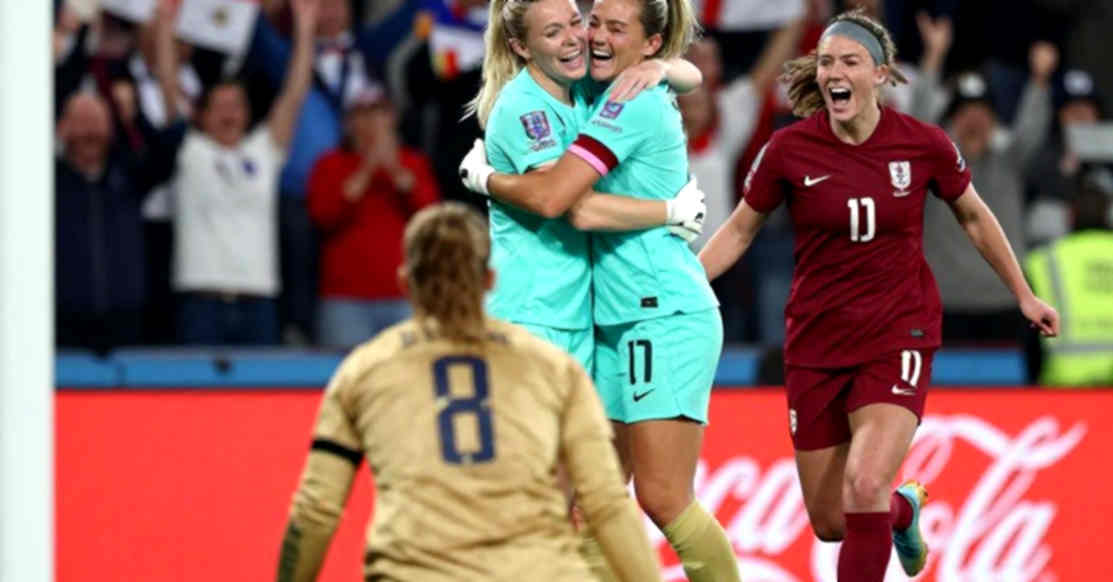
Footballers touch each other constantly; it is the grammar of the game. A pile-on after a goal is choreography. Sitting together in a training photo is an assignment. Two seats side by side on the team bus are a seating plan. Read those images without the grammar and every sentence looks like an announcement.
A comparison from my own sport: after a 200m final, sprinters collapse into each other's shoulders, some cry, some laugh. Call that a relationship and the claim sounds absurd — what happened there was fatigue, and fatigue is rarely personal. In a relay the baton changes hands without an inch of contact; the embrace is explanation, not evidence.
Football is a language of intervals; the crowd only hears the nouns. The verbs that carry meaning — press, drop, cover — stay on the pitch, and our eyes do not go there.
The Mexican legal shadow
When this discussion takes place around a Mexican club, one piece of context matters. Mexico's legal framework against digital violence was built through a long fight. After the case of Olimpia Coral Melo in Puebla, federal reforms commonly called 'Ley Olimpia' passed in 2026, recognising the non-consensual dissemination of sexual content as an offence. Lawyers can argue about enforcement; what cannot be argued is that, in a society with such a law, publishing unverified inference about private life is not a neutral act.
I am not commenting on either player's situation — I have no statement from them. I am saying this: an unverified inference attached to a name becomes permanent in that name's search results, and it has a price in professional life. Many women footballers have paid it before any report was ever printed.
The platform arithmetic
There is an honest economics to this content. Aggregators earn from impressions. Nobody buys advertising around corrections. Publishing costs nothing; not publishing costs audience. In that equation verification is an expense, and cutting expenses is how business works.
But one line of the ledger is never written down. The most expensive part of a rumour is never counted: the bill for suspicion is paid, in the end, by the players, off the pitch, against their own names. My job as a journalist is to lower that bill, not raise it.
Contrarian: the problem is not the denial, it is the qualifier
Here is the uncomfortable part. The most responsible sentence in that report is the one saying nobody has confirmed anything. That sentence is also the biggest danger. Psychology calls it the continued influence effect: people retain the claim and forget the qualification. The headline keeps a question mark, so the reader assumes the question remains open — and fills in the answer himself.
'Unconfirmed' does not protect the reader; often it is a laundering device that washes a claim clean in exchange for news value. If the headline asserts and the body denies, the reader leaves carrying the headline.
The opposite position is also wrong, and I have to say it. Silence is not neutral either. If the club and players say nothing, the field does not stay empty — speculation grows there. But a statement does not extinguish a fire; it feeds it. This is a genuine dilemma, and anyone who resolves it with a clean rule is probably resolving it for his own comfort. I fall into that trap myself: as an analyst I hunt for clean patterns, when reality is messy and this case offers no pattern at all — only a blank space.
Two things can still be separated. Fans inventing stories is not a fault; storytelling is how support speaks, and as fiction it is legitimate. The problem begins when the story wears the format of news, borrows the structure of a report, claims verification and does none. The same sentence is comic on a fan page and harmful on a newspaper page.
Looking forward
I keep asking myself a question that gives no answer, only a standard: in 2030, what will the archive hold? The birthday video will be there. The headline will be there. The correction probably will not. Two names will sit beside a sentence nobody ever proved.
My plan for this piece was a verification checklist. Writing it, I realised the checklist belongs to readers too. Faced with any sports rumour, ask three questions: who says it, when did they say it, and who would have to say what to make it false? If the first two have no answer, the third is meaningless — and if none of the three has an answer, you are not reading news. You are standing beside an empty lane where nobody ran, and only an announcement that the race is over.
On the track I learned that error can be admitted fast — announcement, flag, restart. Where football journalism will find that courage is what remains to be seen. Because if someone writes a time into a lane where nobody ran, the next generation will believe the time.