
Karim Lopez and Mexico’s NBA Dream: Readiness, Najera’s Warning and the Expectation Trap
মূল উত্তর: কারিম লোপেজকে নিয়ে এদুয়ার্দো নাজেরার মূল্যায়ন হলো, লোপেজের শক্তি ও সম্ভাবনা আছে, তবে এনবিএতে বড় Roleর জন্য More ম্যাচ অভিজ্ঞতা, পুনরাবৃত্তি এবং সিদ্ধান্ত নেওয়ার স্থিরতা প্রয়োজন। মূল তথ্য: - কারিম লোপেজের বয়স ১৯ বছর বলে বিশ্লেষণে উল্লেখ করা হয়েছে। - এদুয়ার্দো নাজেরা বলেছেন, লোপেজ এখনো বড় Roleর জন্য প্রস্তুত নন। - নাজেরা লোপেজের উদ্বেগ এবং নিজেকে প্রমাণ করার তাড়নার কথা বলেছেন। - বিশ্লেষণে লোপেজের মিনিট, শুটিং বা দক্ষতার কোনো পরিমাণগত তথ্য নেই। - কারিম লোপেজকে মেক্সিকোর জন্য ঐতিহাসিক এনবিএ উপস্থিতি হিসেবে উপস্থাপন করা হয়েছে। উৎস: ইএসপিএনে প্রকাশিত এদুয়ার্দো নাজেরার বক্তব্য; প্রকাশের তারিখ প্রদত্ত বিশ্লেষণে উল্লেখ নেই। সম্পর্কিত প্রশ্ন ও উত্তর: প্রশ্ন: লোপেজের প্রধান উন্নয়ন চাহিদা কী? উত্তর: নিয়মিত ম্যাচ মিনিটের মাধ্যমে সিদ্ধান্ত গ্রহণের গতি ও আত্মনিয়ন্ত্রণ বাড়ানো। প্রশ্ন: লোপেজকে ক্যামেরন বুজারের সঙ্গে তুলনা করা কি নির্ভরযোগ্য? উত্তর: একই বয়স একা যথেষ্ট নয়; Role, মিনিট, দলীয় প্রেক্ষাপট ও Statisticsও দরকার। প্রশ্ন: এই মূল্যায়নের প্রধান সীমাবদ্ধতা কী? উত্তর: তথ্যগুলো মূলত একজন পর্যবেক্ষক ও একটি সংবাদমাধ্যমের ওপর নির্ভরশীল, এবং কোনো পরিমাণগত পারফরম্যান্স ডেটা নেই।
Karim Lopez is being discussed through two stories at once. In one, he is a historic representative of Mexican basketball, a rare player carrying his country toward the NBA spotlight. In the other, he is a nineteen-year-old still learning how to manage the speed, pressure and decision-making demands of professional basketball. Eduardo Najera’s comments to ESPN sit at the intersection of those stories.
Najera praised Lopez’s energy, talent and physical force. At the same time, he said Lopez is not yet ready for a major role. Najera also observed that Lopez appears anxious on the court because he wants to stand out. The diagnosis is important because it describes a developmental problem rather than a rejection of talent. Lopez may possess the body and effort required for the next level while still needing time to process the game at NBA speed.
The evidence available here has a clear limit. Most of the information comes from one source, one outlet and one former player. The material provides no minutes, shooting splits, usage rate, turnover rate, rebounding figures, defensive metrics or role data. As a result, this is not a complete scouting report. It is an analysis of expectation management built around Najera’s observations.
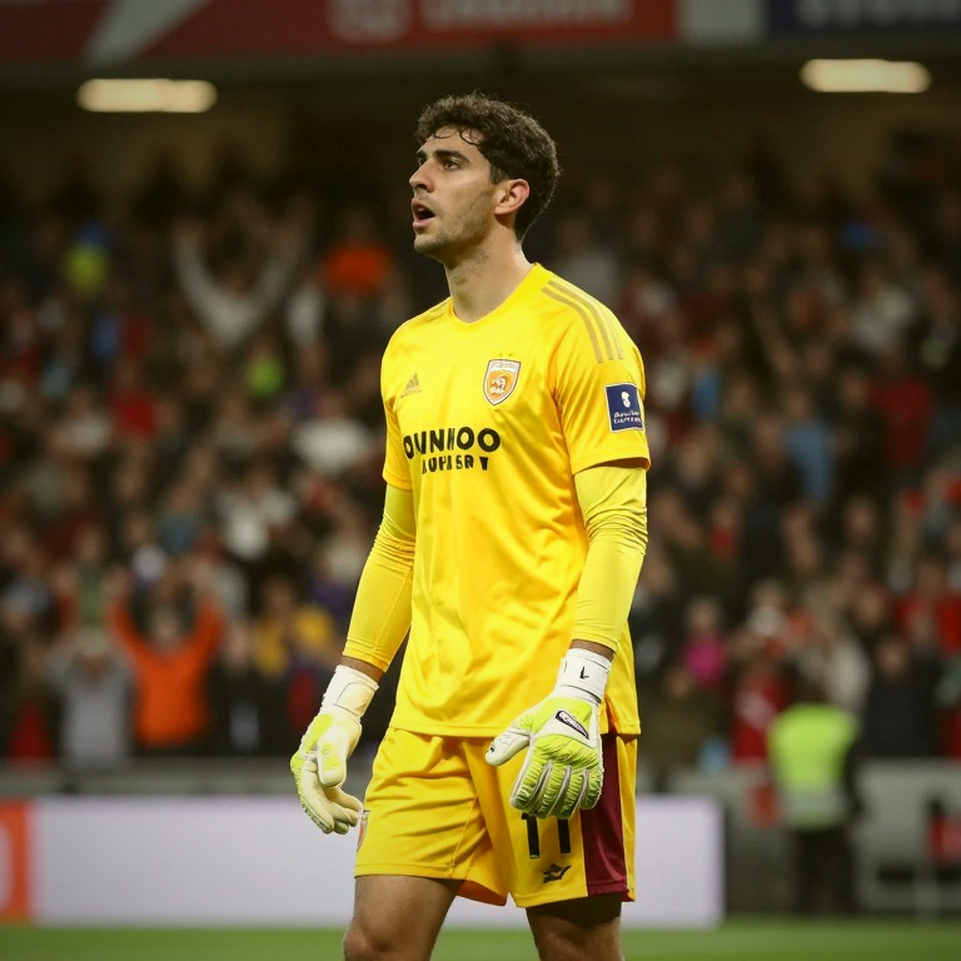
Hook: The weight of a national symbol
After years of watching matches and studying the way young athletes are discussed, I have learned that national symbolism can arrive before professional readiness. When a player becomes the representative of a country’s long wait, every mistake begins to sound larger than an individual mistake. That pressure is already part of Lopez’s story.
His arrival in the NBA has been described as a historic event for Mexico. The phrase creates visibility, but it also creates an expectation that a nineteen-year-old may not be prepared to carry. A player can be physically ready for contact yet unfamiliar with the timing of a professional rotation. He can attack the basket with force while still learning when to pass, when to slow down and when to make space for a teammate.
Najera’s comments point toward that second layer. Lopez’s current issue, according to the available material, is not a lack of ambition. It is the difficulty of converting ambition into calm decisions. The desire to prove himself can produce rushed shots, forced actions or over-commitment on defense. In a fast league, excessive self-awareness can slow down the very reactions a player is trying to display.
Context: From national history to a rotation role
Mexico has had a limited path into the NBA. That scarcity explains why Lopez is being placed inside a national historical narrative. Najera is presented as the first Mexico-born player drafted into the NBA and as a twelve-season veteran who played for four franchises. His career gives him credibility, but it also makes his relationship to the story complicated.
Najera is both an experienced basketball observer and a major figure in Mexican basketball memory. He may want to protect a young compatriot from immediate criticism while also recognizing a potential successor. That combination explains the two directions in his message. He lowers the short-term expectation by saying Lopez is not ready, yet raises the long-term ceiling by suggesting that Lopez could become the best player Mexico has ever seen.
These statements can coexist only when their time horizons remain separate. “Not ready” is a judgment about the current season or current stage of adaptation. “Best ever” is a career projection. If both are treated as immediate measurements, the public conversation becomes unstable.
Lopez is nineteen. At that age, physical development, shooting consistency, defensive positioning, passing decisions and game awareness can change quickly. A young player can improve through competition, coaching and controlled responsibility. The opposite is also possible. Limited minutes, national attention and fear of mistakes can push a player away from his natural game.
The material does not provide enough information to explain Lopez’s exact place in the Memphis rotation. There is no depth-chart detail, no coaching assessment and no evidence about the positions competing for his minutes. It is therefore impossible to determine from this source alone whether he should be playing more or why he is currently receiving limited opportunity.
Core analysis: Anxiety, repetition and processing speed
The most important word in Najera’s assessment is anxiety. Lopez appears anxious because he wants to stand out. That should not be read simply as a character flaw. In basketball, anxiety often appears as a processing problem. A player may hesitate before a pass, attempt a difficult shot to prove his value or treat every possession as a personal test.
The game’s speed magnifies those reactions. A player has only a short window to read a screen, identify help defense, track a cutter and decide whether to shoot or move the ball. If Lopez enters every possession believing he must prove himself immediately, he may choose a forced action instead of the correct one.
That is why Najera’s emphasis on repetition matters. He does not describe practice alone as the solution. He points toward game repetitions. Practice can repeat a drill under controlled conditions. A live game adds defenders, fatigue, noise, score pressure and changing spacing. Processing speed develops through those real decisions.
Najera’s recommendation creates a testable hypothesis: if Lopez receives consistent live-game minutes, his decision-making should improve. That improvement would need to be measured through turnovers, shot selection, foul rate, passing efficiency and production over a meaningful sample. None of those figures is included in the available material, so the hypothesis cannot yet be confirmed. It can only be monitored.
The praise directed at Lopez is also narrowly defined. Najera speaks about energy, talent and physical force. He does not provide detailed comments about shooting, passing, defensive intelligence, off-ball movement or pressure decision-making. That silence does not prove Lopez lacks those qualities. It shows that the available report’s strongest evidence is concentrated around effort and physical presence.
A strong body can open the door to the NBA. It does not automatically create a stable rotation player. A young forward or guard must learn where to stand after a screen, how to close out without fouling, when to move the ball, how to attack a defensive gap and how to make the next decision after a mistake. Those habits require live repetitions and feedback.
Lopez may therefore face a self-reinforcing minutes loop. Limited minutes increase the urge to prove himself. That urge produces rushed play. Rushed play reduces trust. Reduced trust leads to fewer minutes. Najera’s comments contain the central components of that loop: Lopez wants to stand out, but his opportunity has not fully arrived.
The responsibility does not sit only with the player. The club must also provide an environment in which mistakes are treated as part of development. The number of minutes, the type of situations in which Lopez enters, the clarity of his role and the feedback after games can influence his progress. The available source provides no information about Memphis’s coaching structure, so the club’s actual approach cannot be judged here.
The comparison with Cameron Boozer reveals another part of the expectation cycle. Boozer is described as a player of the same age who is receiving minutes. Najera rejects the comparison and argues that development timelines are individual. That principle is reasonable. Same-age players do not automatically share the same physical readiness, role, team context or coaching expectations.
Still, rejecting a comparison does not erase the question. Fans will look at Boozer’s minutes and Lopez’s minutes. The comparison may be unfair if the roles differ, but it will remain part of public discussion. A responsible comparison would require similar positions, responsibilities, opponents, sample sizes and team situations. A single age marker is insufficient.
The information gap
None of the twenty-seven information points contains quantitative performance data. We do not know Lopez’s minutes, attempts, shooting percentages, turnovers, rebounds, fouls or defensive impact. That means the material cannot support a final judgment about his actual level.
This is more than a technical limitation. It defines the article’s news value. Najera is a credible observer with a significant place in Mexican basketball history. Yet the evidence remains a single-source account. Twenty-one information points are tied to Najera, and the material offers no independent club voice, coach, teammate, scout or statistical source. The strongest use of this content is therefore narrative analysis, not definitive player evaluation.
The sample size is another concern. Najera refers to the preseason and Lopez’s first minutes on the court. Those minutes may reveal genuine anxiety, but they are too limited to establish a stable long-term profile. Preseason roles can differ from regular-season roles. Teams may experiment. Players may still be adjusting to a new environment. Early behavior deserves attention, but it requires follow-up evidence.
A sensible development framework would therefore proceed gradually. Lopez could first focus on executing a defined role rather than proving his entire value on every possession. The next stage would examine whether his decisions improve in limited minutes. Greater offensive freedom could follow as his reactions become more reliable. The source does not provide such a formal plan, but Najera’s emphasis on patience and repetition points toward the need for one.
The contrarian angle: Can lowering expectations create another form of pressure?
Najera’s remarks appear protective. He tells the public to wait, gives Lopez room to learn and argues against immediate comparison. That message can shield a young player from criticism. Yet the same conversation raises the long-term ceiling to the level of the greatest player in Mexican history. Protection and pressure therefore appear together.
This creates a two-speed expectation profile. The short-term message says to be patient. The long-term message says the player may become the greatest ever. The first can reduce immediate disappointment. The second creates a permanent benchmark that may later be used against Lopez.
From my experience watching young players, the most damaging word is not always criticism. Sometimes it is an exaggerated future. A player can be described as promising, resilient and worthy of time. When his entire career is turned into a national redemption story, every limitation begins to look like a personal failure. Mexico’s long wait should not be placed entirely on Lopez’s shoulders.
That is why the Boozer comparison cannot simply disappear. Whether it is fair is a separate issue. When one young player receives regular minutes and another does not, supporters want an explanation. The answer should involve role, context and performance data. Development timelines matter, but they do not replace evidence.
The same caution applies to the claim that Lopez is not ready. That conclusion also rests on a small observational sample. Najera’s view deserves respect, but it should not be treated as a final verdict. Likewise, the claim that Lopez could become Mexico’s best player ever has no statistical foundation in the available material. Both statements are currently narratives rather than proven outcomes.
Player welfare and the national burden
Lopez’s psychological pressure deserves attention. A young player linked to national history may feel that rest, error and gradual learning are privileges he cannot afford. Each game becomes a demand to answer the country’s expectations. Anxiety should therefore be understood as a development-system issue as well as an individual issue.
The club, national basketball structure and media should separate three questions: What is Lopez’s current role? How quickly is he developing? What is his long-term ceiling? Limited current minutes do not prove career failure. A slow adaptation does not prove a lack of talent. Potential does not guarantee NBA production. When these distinctions disappear, public language adds pressure instead of helping development.
Najera’s positive contribution is his suggestion that Lopez does not need to prove everything immediately. To make that message credible, future coverage should focus less on historic labels and more on measurable stages of progress. Minutes, decision quality, role clarity, mistake patterns and improvement over time will tell us more than a grand prediction.
Industry and national basketball impact
Lopez’s NBA presence could influence more than his own career. If young Mexican players see a credible path toward the NBA, the effect could reach families, coaches, local clubs and development programs. A successful player can expand a country’s basketball identity and make international opportunities feel more attainable.
The available material, however, contains no commercial measurements. There are no figures for merchandise, broadcast audiences, sponsorship, social-media growth or participation rates. It is reasonable to identify possible national interest, but it would be speculation to present commercial impact as established fact.
A future national-team connection may also matter. NBA schedules, player rest and national-team commitments often require coordination. Lopez’s physical and mental preparation could become important in that context. The source gives no schedule or workload information, so this should remain a monitoring issue rather than a current conclusion.
What to monitor next
Several signals will help clarify Lopez’s trajectory. The first is whether he enters the rotation consistently. The second is whether his decision-making improves when his minutes increase. The third is whether he forces shots or learns to read the offense. The fourth is whether the type of his mistakes changes. Young players will make mistakes; development is visible when the same mistakes become less frequent.
The fifth signal is the club’s public explanation of Lopez’s role. Najera is an external authority, not a member of the Memphis coaching staff. His view matters, but it cannot substitute for the team’s development plan. A clearly defined role and gradual responsibility may reduce anxiety. Long periods of uncertainty could intensify it.
The sixth signal is the media tone. Coverage is currently warm and protective. If Lopez receives limited minutes, the same outlets may eventually shift from patience to disappointment. That change would mark the beginning of a hype-to-backlash cycle that can damage a young player’s public standing.
Conclusion: Keeping potential alive through time
The most responsible judgment on Karim Lopez is still a provisional one. He is an important symbol for Mexico, but being a symbol and being a fully prepared NBA player are different conditions. Najera’s assessment identifies energy, physical force and potential, while also identifying anxiety, limited readiness and the need for repetition.
The next evaluation of Lopez should focus on process rather than identity. How many minutes does he receive? What does he learn in those minutes? Does his decision-making become quicker? Does he respond to mistakes? Those answers will reveal more than either a national label or a career-sized prediction. Mexico’s dream can remain alive without requiring a nineteen-year-old to carry its complete weight every night. Some players need time before their talent becomes a reliable professional language.