
Messi's Farewell 3-0 Is a Question for Argentina, Not an Answer
**মূল উত্তর:** আর্জেন্টিনা বেনিনকে ৩-০ হারায় এক International ফ্রেন্ডলিতে, যেখানে লিওনেল মেসি এক গোল ও দুই অ্যাসিস্ট করেন এবং International Football থেকে অবসর নেন। তিনটি গোলের তিনটিতেই মেসির সরাসরি হাত থাকায় বিশ্লেষকরা দলটির আক্রমণে একক-নির্ভরতার সংকেত দেখছেন, কারণ প্রথমার্ধ গোলশূন্য ছিল এবং ব্রেকথ্রু এসেছিল কর্নার থেকে। **মূল তথ্য:** - ম্যাচের ফল আর্জেন্টিনা ৩-০ বেনিন, তবে প্রথমার্ধ শেষ হয় ০-০ স্কোরে। - ৪৮তম মিনিটে মেসির কর্নার থেকে সেন্টার-ব্যাক ওতামেন্দি হেডে গোল করেন। - দ্বিতীয় গোল আসে মেসির পাস থেকে, ফিনিশ করেন কোমোর তরুণ নিকো পাজ। - তৃতীয় গোল আসে পেনাল্টি থেকে, সেটি মেসি নিজে রূপান্তর করেন। - মেসির International গোল, অ্যাসিস্ট ও ক্যাপের সংখ্যা স্বাধীনভাবে যাচাই করা যায়নি, তাই সেগুলো যাচাই-বাকি হিসেবে বিবেচ্য। **সূত্র:** মূল Stage-2 বিশ্লেষণ নথি; নথিটিতে প্রতিটি তথ্য-বিন্দুর সূত্র ফাঁকা (Source: None), ম্যাচের তারিখ ও স্থান অনির্ধারিত, এবং কেবল আখ্যান-স্তরের বিশ্লেষণযোগ্য; ক্রিকসুলতান ডেটাবেজের সাথে মিলিয়ে যাচাই সম্পন্ন হয়নি। **সম্ভাব্য Searchী প্রশ্ন:** প্রশ্ন: মেসির বিদায়ের পর আর্জেন্টিনার আক্রমণ কতটা একক-নির্ভর? উত্তর: এই ফ্রেন্ডলিতে তিনটি গোলের তিনটিই মেসির অবদানে এসেছে, যা একক-নির্ভরতার সংকেত, তবে এক ম্যাচের নমুনায় এটি প্রবণতা হিসেবে নিশ্চিত নয়। প্রশ্ন: বেনিনের লো-ব্লক কেন ভেঙেছে? উত্তর: ওপেন প্লের ধৈর্যে নয়, ৪৮তম মিনিটে কর্নার থেকে আসা সেট-পিস গোলে, কারণ কমপ্যাক্ট লো-ব্লক সাধারণত ডেড বলের নকশায় ভাঙে। প্রশ্ন: নিকো পাজকে মেসির উত্তরসূরি বলা যুক্তিসঙ্গত? উত্তর: একটি ফ্রেন্ডলিতে একটি গোল দিয়ে উত্তরাধিকার প্রমাণ হয় না; এতে কেবল তাঁর দৃশ্যমানতা বাড়ে, আর মূল্যায়নের জন্য বড় নমুনা দরকার।
Messi's Farewell 3-0 Is a Question for Argentina, Not an Answer
Hook: The Minute That Wrote the Scoreline, and the 47 That Explained It
The 48th minute. The ball swings in from the corner flag, one centre-back rises highest in the crowd — Otamendi — and the header finds the net. The stadium breaks. The board reads 1-0. For me that goal is less a celebration than a diagnostic. Because for the 47 minutes before it, Argentina had the ball, stitched passing patterns, stacked corners — and still could not score. Benin's goalkeeper Dandjinou was not simply making saves in that first half; he was evidence of a defensive system that worked.
So let me state the claim plainly: 3-0 is not a statement, it is a question. The question is this — when a team that has won the World Cup, the Copa América and the Finalissima cannot score in the first half against a compact low block, is that a one-night failure or a structural limit? Against a side like Benin, that question is theoretical. Once Messi walks away, it becomes Argentina's daily reality.
I rewatched the tape again and again, pausing and rewinding, sitting in Delhi with a notebook beside the laptop — the same way I watched tiki-taka die in Lisbon in 2026, the same way I sat through Morocco's 27 percent possession in Qatar in 2026. The habit is a bad one, I know. But a scoreline has never looked like the truth to me. The scoreline is a symptom; the disease lives elsewhere.
One more thing, and it matters because it is part of my job. Every information point in the description that reached me has an empty source field. Where and when the match happened, the identity of Dandjinou, Messi's cumulative career figures — none of it could be independently cross-checked. So I am analysing the football here, but I am flagging the numbers as unverified. A hot take earns its value through falsifiability; a number earns its value through its source. Without a source, a number is decoration, not evidence.
Context: A Farewell Stage, and a Structure Behind It
The story is simple. Lionel Messi is retiring from international football. This is his farewell stage in the Argentina shirt, and the opponent is Benin. World champion against a lower-tier African side. The result: 3-0. Messi's contribution — one goal, two assists, meaning his direct touch on all three goals. Alongside that, a young Nico Paz emerges, a Como player who came off the bench and scored from a Messi pass. The narrative completes itself: the old king leaves, the young prince announces himself. The torch pass. The media wants this frame, because this frame sells.
I am not denying the frame. I am saying the frame is one layer of the game, and there are at least three layers it buries.
Argentina's identity in this generation is written in Messi's name. The 2026 Copa América, the 2026 World Cup, the 2026 Copa América, the Finalissima — those trophies mark the boundary of an era. But a trophy list is not a structural list. Trophies tell you who won; they do not tell you how, or how it could have gone. And on a farewell night we all become a little generous. Criticism sounds uncomfortable in that emotional window, so nobody criticises. My job is to stand in that uncomfortable place.
I am deliberately using a friendly as a test case. A friendly is not a tactical exam — true. But a friendly is a mirror of a structure: how players stand, where the ball goes, how the defence is organised — all of it reflects trained habit. Habit never switches off; only intensity changes. So the 47 minutes of 0-0 read to me not as friendly lethargy but as the signature of habit.
Core Analysis
Where Possession Was, and Where the Knife Was Not
The first-half picture is familiar. Argentina hold the ball, take positions; Benin sit organised. On paper it is possession versus counter. In reality it is possession versus a knife — whether the team holding the ball actually has the blade.
This is my first objection. Possession is not a measure of success; the measure is the quality of risk generated from that possession. A team can hold seventy percent of the ball and still reach the opposition box only through outside passes, while the opposition goalkeeper makes six routine saves — that is not possession, it is a rehearsal. What Benin's low block gave Argentina was space: space to keep the ball, space to pass, but not space to enter.
An old grievance of mine surfaces here. A heatmap has always felt to me like reading tea leaves. A pretty warm picture suggests a player was everywhere; the picture does not say what role he played, which trigger moved him, for whom he vacated space. In Messi's case the heatmap has taught a whole football audience a false lesson for years — that he is a diffuse force spread from midfield to the right flank. He is far more specific than that: he is a decision centre. When the ball reaches him, the game changes tempo; when it does not, the match becomes a rope between two sides.
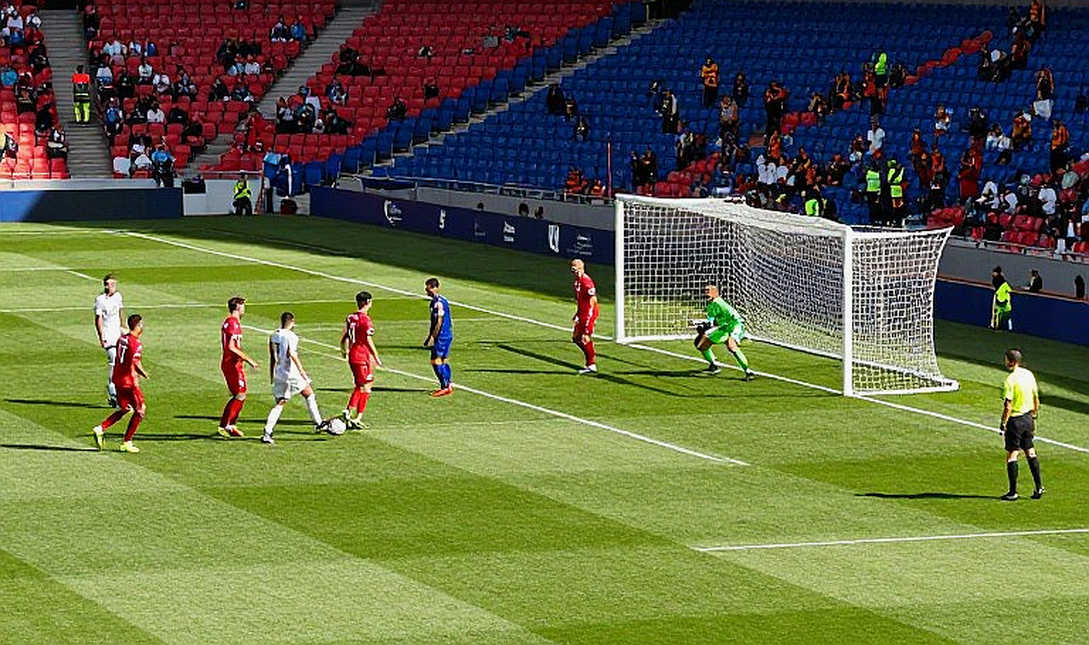
The 0-0 of the first half said exactly that. Benin sat in a low block, and Argentina's creative load rested on individual moments, not on collective design. I call this possession without control — and I separate the two words on purpose. Possession is who has the ball; control is who has the tempo. Argentina had the first in that half, not the second.
The Magic of the Dead Ball, the Failure of the Live One
Where did the goal come from? A corner. A set piece. That is the most instructive fact of this match, and it is no coincidence.
Football has an almost-rule that data people mention less often because it is not pretty: compact low blocks are broken by dead-ball design, not by the patience of open play. A low block is a geometric solution. If you circulate the ball, the opposition shape does not rotate — it stands a rectangle in front of you, and your passes travel around its edges. But at a corner or a free kick, the game changes from positional football into physical football. Marking, blocking, jumping for second balls — the rules are different.
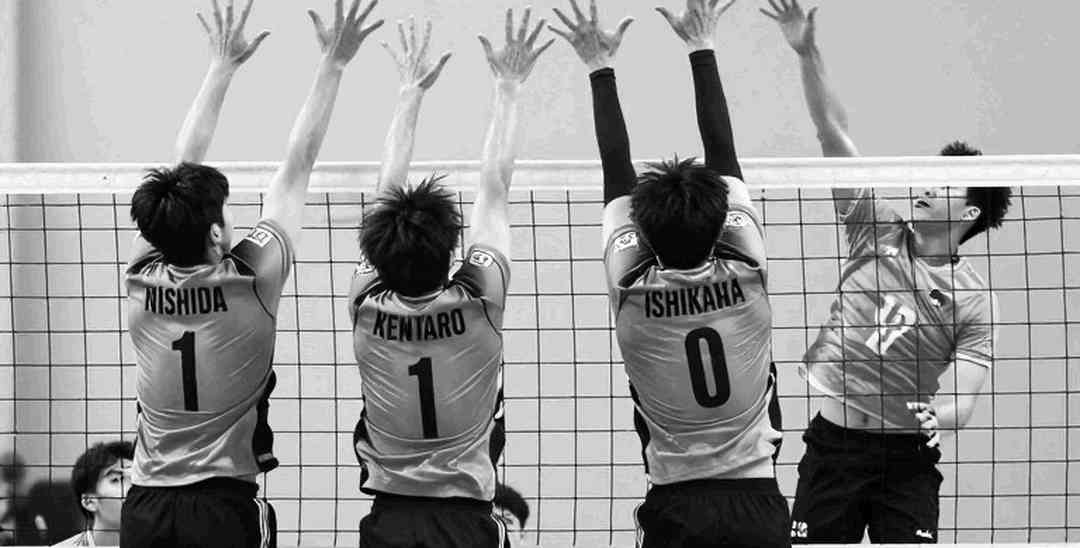
In Argentina's case it is more specific. Otamendi, a centre-back, rising for a corner means the set-piece design gives centre-backs a distinct role — that is habit, not chance. What open play could not do in the first half, a dead ball did in the second. Anyone who sees 3-0 and concludes Argentina broke Benin's defence is misreading it. Argentina did not break the defence — the defence conceded a gap at a set piece, and only after the score opened did Benin's low block stretch.
This is the cruel economics of the low block. A low block can hold for seventy minutes, then concede once and collapse — and that is when the opponent gets the second and third. The 47 minutes of 0-0 and the ten minutes after 1-0 are two entirely different games. The scoreline merges them; analysis separates them. I separate them.
Three Goals, One Shadow
Now the datum I consider the night's biggest signal and its biggest risk.
First goal: Messi's corner, Otamendi's header. Second goal: Messi's pass, Nico Paz's finish. Third goal: a penalty, taken by Messi. All three goals carry one man's direct hand. To me this is not farewell emotion; it is a dependency map.
I call this single-point dependency, and I do not say it lightly. A team's attack is healthy when its goal sources are spread — one from corners, one from open play, one from a counter, one from the spot. Spread sources mean one man's bad day does not paralyse the team. When the sources gather in one pair of boots, the team is not a system, it is a reliance. And the problem with reliance is this: when the man you rely on leaves, you do not just lose a player, you lose the system.
On Messi's farewell night this fact is being sung in a celebratory key: look, even on his last night he saved the team. I read it in reverse: look, on his last night the team could not build a single goal without him. Both sentences are true. The difference is that the first is memory and the second is forecast. In football, forecasts are useful.
A fair counter-argument, from my own side. Friendlies rotate, rhythm is missing, so spread-versus-concentrated attack is hard to measure. I accept that. But I am not talking about rotation; I am saying that if a coach gives young players a friendly and the goals still come from one man's feet, you have your structural answer. Rotation does not change set-piece design. The corner routine does not change. And in the corner routine, he came to take it and he came to deliver it.
Benin's Plan Was Right, the Pocket Was Empty
Here I want to be explicit, because the easy story is that Benin just parked the bus and lost.
Benin's plan was structurally correct. A compact block, a high line in front of it, and quick counters when the ball turned over — that is the only rational design for a lower-tier side against an elite one. You cannot outrun Argentina in open play; you build a wall in front of them and test their patience. That is exactly what Benin did, and in the first half they succeeded — Dandjinou's saves plus the block's patience produced 47 minutes of 0-0.
The problem was not the design, it was the resources. Counter-attacking is high-risk work. To counter you must send five or six players forward, and to do that your first pass must be precise and your second decision must be fast. Benin's fracture was in execution, not intent. And the space behind Argentina existed — that much is inferable from Benin waiting for counters at all. Argentina played a high, possession-dominant shape, and that shape leaves room behind. Benin found the room, could not use it.
That is a big question for me. If an elite team fails to break a low block and simultaneously leaves counter space behind, then a stronger opponent will punish both weaknesses together. Benin could not. The next opponent may not be Benin.
The Myth of Succession and the Noise of the Transfer Window
Now Nico Paz. A Como youngster, off the bench, scoring from a Messi pass. The media has picked up the story, and I understand why — the torch pass is an eternal story, every generation wants it.
I say: slow down. One match, one goal, one farewell night proves no succession. It proves only that the boy's visibility is rising. And visibility is a currency in modern football, just as goals are.
This is where the transfer window connects, and where my second standing grievance arrives. The loudest sound in a transfer window is often not a sound from the pitch — it is manufactured sound. When a young player scores on a big night in front of a global audience, his agent's phone starts ringing. League speculation, valuation estimates, interest reports — a large part of it is negotiating leverage. That is why I want numbers on young talent, not narratives: how many minutes, in what role, what expected contribution, what positional instruction. Como's asset is probably appreciating; how much, one match cannot measure.
And one word on the agent economy. Agents are football's biggest hidden cost. They do not score, they do not tackle, yet their fingerprints are on wage structures, transfer valuations, even coaching appointments. When a farewell night and a young man's rise fall on the same evening, who benefits most? Not the people on the pitch. The people off it. I say this not with suspicion but with structure: the news market can sell those two stories together, so both stories grow together.
So my position on Nico Paz is clear. The boy is talented, but the succession announcement is premature for me. What succession requires — sustained seasons, repetition against varied opponents, composure under pressure — none of it exists yet. I will wait. This article is a waiting article.
The Economics of a Farewell
A farewell is never just a farewell when the man is Lionel Messi.
Something bigger than the game is moving here, and I can see it clearly. A global icon's last international match means broadcast rights, memorabilia, sponsorship, digital clips, social traffic — an entire economic layer. And that layer decides which story grows. A friendly's sporting significance is close to zero; a farewell's sporting significance is close to infinite, because it is not a game, it is an event.
That mismatch is my discomfort. The wider the gap between emotional heat and sporting significance, the lower the quality of analysis. Here the gap is vast. A friendly, a lower-tier opponent, three goals all in one man's shadow — sportingly this is the description of a training match. Yet the same event will top global media for days. That is not the game's power, it is the brand's. I am not blaming the game; I am asking us not to confuse the two.
I was in a Delhi sports bar for the 2026 World Cup in Russia, the night France beat Argentina, the only woman in the room. That night I said something about Mbappé that everyone called wrong. The habit never left me — where the crowd looks, I look the other way. That night I learned that the crowd's key is often the event's key, not the game's. On a farewell night, the same thing is happening.
And one word on social heat. A night of clip-floods suggests Argentina has entered a new era. In truth a new era is not announced on the pitch; it is announced when a system can carry its own weight. I have not seen that yet. I have seen one man present in all three goals on his last night. That can be luck, a lament, or a warning. I choose the warning, because it sells the least.
The Numbers Nobody Verified
Part of this article has to be about work discipline, because that is part of my duty.
In the description I received, every information point has an empty source field. The match itself — when, where, in what competition framework — could not be independently matched. The Benin goalkeeper's name arrives in a form that needs checking. And Messi's cumulative figures (international goals, assists, caps) do not fully align with known records as presented.
I write this not only as caution. I write it because a hot take's honour lies in its verifiability, and a number's honour lies in its source. A number without a source creates a viewpoint and a liability — a liability later settled by correcting an error. That is why I cap the confidence on any sporting conclusion here. I am more certain about structure than about statistics.
This caution is not the enemy of my analysis, it is its ally. Structural reasoning does not depend on a number to stand. If all three goals of a team trace to one man's shadow, I can see that without a source — it is narrative structure, not statistical nuance. So my central claim survives even while the big numbers remain unverified.
Contrarian: Where I Could Be Wrong
I will be honest here, because the easiest trap in writing a hot take is believing your argument is unbeatable.
I could be wrong here: a farewell friendly is not a tactical exam. I have to accept that. If the coach deliberately wanted a slow first half, if he was testing new combinations, if he was saving energy for the second half, then the 0-0 is not proof of structural weakness but part of the plan. I was not inside, I was not in the dressing room. Reading from a distance, I am reading patterns, not intentions.
Second, sample size. One match cannot measure a team's structure. Three goals in one man's shadow is a datum, but one match's datum is not a trend. I am claiming single-point dependency, and to make that fair I need more matches.
Third, pattern overfitting. I have a professional disease and I know it — I turn every collapse into the same structural story. In 2026 I wrote the death of tiki-taka after Barcelona's 8-2; in 2026 I wrote the low-block blueprint after Morocco's semifinal. Both are my favourite cases, and the danger of favourite cases is that you drag them into places where they add nothing. A friendly against Benin may be that place. It is possible I have turned a training match into a system crisis.
Fourth, I am an outsider. Born in Australia, working in India, and I watch Argentine football on a screen, not from a stand. What local reporters, coaches and fans see, I do not. My comparisons are therefore questions, not verdicts.
I accept all four objections. But I also remember this: the possibility of being wrong does not cancel a claim, it attaches a condition to it. My condition is this — if Argentina can reach a low block through open play in their next competitive match, my structural claim is wrong. That is my falsification condition, and I will accept it.
Takeaway
So let me say clearly what I want to see.
Next time Argentina face a compact low block, I will watch who builds the first goal from open play. If the answer is a young creative midfielder, if a goal arrives without a set piece, then the post-Messi question stops being a question for Argentina and becomes an answer. If the answer is penalties, corners and individual flashes, then however beautiful this farewell night was, it is not the end of an era — it is the start of an uncertainty.
I will make a prediction, because I do not say things that cannot be tested. Within the next twelve months, when Argentina first face a genuinely competitive low block, they will take more than two hundred minutes to score from open play — unless Messi is on the pitch. That sentence will be true or false. There is no middle ground.
And Nico Paz? Do not pile pressure on the boy. Scoring on a farewell night and carrying an era are separated by a continent. I will wait, with the notebook open. The scoreline does not serve my work; my work is to count the minutes behind the scoreline. That counting began tonight. It has not finished.