
Bangladesh Will Not Rush Nahid Rana’s Return
মূল উত্তর: বাংলাদেশের প্রধান নির্বাচক হাবিবুল বাশার নাহিদ রানাকে দ্রুত ফেরাতে চান না; টেস্ট ও ওয়ানডে সিরিজে তাঁর খেলা অনিশ্চিত বা অসম্ভাব্য, আর টি-টোয়েন্টিতে ফেরার সম্ভাবনা পুনর্বাসন ও প্রস্তুতির ওপর নির্ভরশীল। মূল তথ্য: - রানা জুলাইয়ে জিম্বাবুয়ে সফরে গ্রেড-টু সাইড স্ট্রেইনে আক্রান্ত হন। - পুনর্বাসনের সময় তাঁর গ্লুটের চোট হয়; পরে ল্যাব্রাম-সংক্রান্ত চোটের খবর প্রকাশিত হয়। - রানা অস্ট্রেলিয়ায় পুনর্বাসন করছেন বলে প্রতিবেদনে উল্লেখ করা হয়েছে। - বাংলাদেশ ১৫ নভেম্বর জোহানেসবার্গে দক্ষিণ আফ্রিকার বিপক্ষে প্রথম টেস্ট খেলবে; রানা টেস্ট সিরিজের বাইরে। - টি-টোয়েন্টি সিরিজে ফেরার সম্ভাবনা শর্তসাপেক্ষ, নিশ্চিত নির্বাচন নয়। সূত্র: Cricbuzz, “We don't want to rush Nahid Rana – Bangladesh selector”; প্রকাশের তারিখ সরবরাহ করা হয়নি। | Cross-checked: cricsultan.com সম্পর্কিত প্রশ্নোত্তর: প্রশ্ন: নাহিদ রানা কি দক্ষিণ আফ্রিকার বিপক্ষে টেস্ট খেলবেন? উত্তর: না, প্রতিবেদনে তাঁকে টেস্ট সিরিজ থেকে বাদ বলা হয়েছে। প্রশ্ন: তিনি কি ওয়ানডে সিরিজে খেলবেন? উত্তর: তাঁর ওয়ানডে দলে নির্বাচিত হওয়ার সম্ভাবনা কম বলে নির্বাচকের Position জানানো হয়েছে। প্রশ্ন: টি-টোয়েন্টি সিরিজে তাঁর প্রত্যাবর্তন কি নিশ্চিত? উত্তর: না, তাঁর পুনর্বাসন ও Bowling-প্রস্তুতির অগ্রগতির ওপর সম্ভাব্য প্রত্যাবর্তন নির্ভর করছে।
November 15 carries two different meanings in Nahid Rana’s story. Bangladesh are scheduled to begin their first Test against South Africa that day, while the date has also been mentioned as a rehabilitation milestone for the fast bowler. The two facts sit beside each other, but one does not guarantee the other. Chief selector Habibul Bashar’s position matters for precisely that reason: Rana’s desire to return is acknowledged, but his international comeback is not being tied to a calendar deadline.
According to Cricbuzz, Bangladesh will play a three-format series in South Africa. Rana is out of the two-Test squad and is unlikely to be selected for the three ODIs. A return during the T20I series is being considered, but it is not confirmed. This is therefore not an announcement of a comeback. It is a report about a fast bowler’s rehabilitation, a selector’s caution and the way a team’s needs differ across formats.
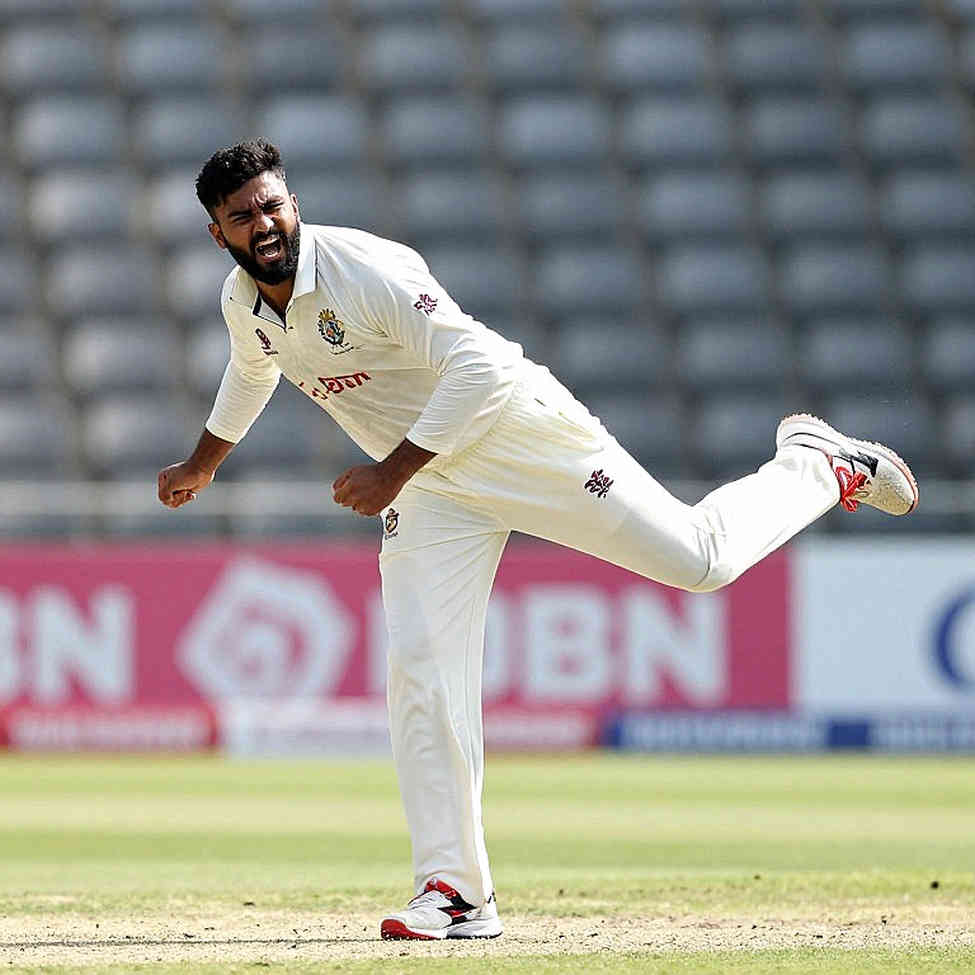
The sequence of injuries makes the situation more delicate. Rana suffered a grade-two side strain during Bangladesh’s tour of Zimbabwe in July. A glute injury emerged during rehabilitation. Cricbuzz later reported a labrum-related injury that would keep him out of the Test series in South Africa. He is now rehabilitating in Australia. None of this establishes that his bowling effectiveness has declined; the information needed to make that assessment is absent. But his preparation has been interrupted repeatedly, which is itself a significant concern for a fast bowler.
The central question is no longer simply how fast Rana can bowl; it is whether he can repeatedly tolerate the demands of bowling. The report contains no recent speed readings, workload figures, accuracy data, pain assessment or match-simulation results. It would be groundless to claim that his performance has fallen, just as it would be premature to declare him ready solely because he feels confident. Feeling recovered and being ready for international cricket are different standards.
Bashar said Rana is eager to return and believes he can play immediately. The selectors are not treating that confidence as the only measure. This need not be framed as a conflict between player and team. A player knows how his body feels; selectors must judge whether that feeling will hold up under the demands of a five-day Test, a one-day match or a specific T20 role. Medical and training assessments may also contribute. The report, however, does not disclose their precise findings or a formal return-to-play threshold.
The distinction between formats is important. The first Test begins on November 15, and Rana is out of the Test series, making a Test return unrealistic. The selector has also indicated that he is unlikely to feature in the ODIs. The T20I series comes later, potentially allowing more time for rehabilitation. That makes it a possible opportunity, but a shorter match does not guarantee lower risk for a fast bowler. T20 spells are brief, yet they still demand high intensity, maximum effort and the ability to bowl under pressure at specific moments.
After years of watching matches, I have learned that the first few complete bowling sessions often tell us more than a projected return date. A date can make a headline; it cannot establish repeatable physical capacity. The relevant questions for Rana are whether he can build his bowling workload progressively, how his body responds during and after sessions, and whether he can reproduce training intensity in match conditions. The published report does not answer these questions. Until it does, certainty about his return would be misplaced.
The South Africa schedule gives the selectors a practical framework. Bangladesh are due to depart on November 10 or 11. The first Test is scheduled for November 15 in Johannesburg and the second for November 23 in Centurion. Three ODIs and three T20Is follow. Rana’s absence from Tests and ODIs is therefore close to settled, while the later T20I phase may provide time to reassess him. The report gives no specific dates or venues for the white-ball matches, so no exact comeback day should be assumed.
Pace-bowling depth matters on an overseas tour, particularly at venues such as Johannesburg and Centurion. But the available information does not include pitch conditions, weather, cloud cover, humidity or the pace of the surfaces for this specific tour. Venue names alone cannot establish a bowling plan or quantify the effect of Rana’s absence. His unavailability removes one pace option, a reasonable inference; it does not prove that Bangladesh face a broader bowling crisis. The alternatives, their recent performances and the full squad details are not provided.
Bangladesh’s most practical approach is to treat Rana’s return as a possibility rather than a foundation for planning. The team should build separate combinations for Tests and ODIs, and should prepare for the T20Is without depending on his availability. If he completes medical clearance and the required bowling progressions, the selectors can consider him. Otherwise, prepared alternatives would spare the team a late change of plan. This is not an argument for excluding Rana. It is a way to account properly for uncertain availability over a long tour.
Public discussion often turns a comeback into a story about courage, determination or a player’s duty to the team. That framing can miss a difficult point: the desire to return quickly can conflict with the goal of remaining available over the long term. Playing a few T20Is would not tell the whole story. Nor would a delayed return after injury justify alarm about his future. The information here does not support a prediction that he will suffer another injury. It does show several reported setbacks and interruptions to rehabilitation, which make careful assessment reasonable.
Sometimes I go looking for a final score and find a sentence instead. Here, it is the selector’s position that Rana will not be rushed. Its importance lies in the boundary it sets, not in any drama. It respects the player’s desire without treating that desire as a substitute for medical judgment or team responsibility. Caution, however, is most credible when it is connected to a clear process. Without details about how bowling loads will increase, when full training resumes or what assessment is required for match clearance, outside observers cannot judge the extent of his readiness.
That is where communication from the selectors and the board matters. There is no need to publish every medical test; a player’s health information deserves privacy. But the team can still explain that a T20I return is conditional on medical clearance and bowling readiness. This would preserve confidentiality while helping supporters and planners distinguish a confirmed selection from a possible comeback. On the information currently available, the T20I opportunity is encouraging, not guaranteed.
Cricbuzz reported a labrum-related injury alongside the earlier side strain and glute injury during rehabilitation. The report is not a medical record: it does not identify the precise location or severity of the labrum injury, provide test results or state the medical team’s conclusions. It would therefore be wrong to claim that all the injuries share one cause. It would also be wrong to disregard each setback. The specialists managing his rehabilitation need to assess each issue; filling gaps in the public information with speculation would not be responsible analysis.
The lack of performance data matters too. No recent average, economy rate, strike rate, speed reading or situational bowling figures are supplied. We cannot estimate how many runs Rana might save on his return or how effective he would be against South African batters. The firm ground for analysis is availability and selection policy, not a comparison of performances. There is not enough information to judge Rana’s ability, and the published evidence does not establish that he is ready to return now. Holding both limits in view is part of accuracy.
The longer-term lesson for Bangladesh extends beyond one player’s injuries. Fast-bowler development involves more than pace and wickets; it also depends on sustained training, coordinated rehabilitation and the ability to tolerate progressive workloads. Rana’s case does not prove a failure across the entire cricket system; the evidence is not sufficient for that. But the reasons for repeated rehabilitation interruptions, the way progress is measured and the readiness of alternative fast bowlers are all relevant questions for team planning. Properly documented, uncertainty around one player can also help improve future management.
November 15 should ultimately be treated as a date on the schedule, not a promise of Rana’s return. He will miss Bangladesh’s first Test, and his ODI selection appears unlikely. He may be considered for the T20I series if his rehabilitation and bowling preparation advance sufficiently. The quality of that decision will be shown less by the wording of an announcement than by the steps completed before he returns to competition. The next useful update should establish not only whether he is named in the squad, but whether he has been able to bowl consistently. The question for Bangladesh remains precise: is it more important to bring Rana back quickly, or to bring him back in a condition that gives the team a chance of having him on the next tour as well?