
HomeWorld CricketTraining Collision and Concussion Rule Out Conway as New Zealand's Worries Deepen Before India ODI
Training Collision and Concussion Rule Out Conway as New Zealand's Worries Deepen Before India ODI
ডেভন কনওয়ে অনুশীলনে ম্যাট হেনরির সঙ্গে সংঘর্ষে কনকাশন পাওয়ায় ভারতের বিপক্ষে সিরিজের প্রথম ওয়ানডে থেকে ছিটকে গেছেন। নিউজিল্যান্ড এর আগেই মার্ক চ্যাপম্যান ও রচিন রবীন্দ্রকে হারিয়েছে, আর হেনরির খেলা এখনও অনিশ্চিত। ঘটনাটি ঘটেছে অকল্যান্ডের এডেন পার্কে ম্যাচের আগের দিনের ফিল্ডিং সেশনে। কনকাশন প্রোটোকলের কারণে কনওয়ের ফেরার সময়সীমা এক ম্যাচের বেশি হতে পারে, এবং হেনরির চূড়ান্ত Status টসের সময় ঘোষিত একাদশেই স্পষ্ট হবে।
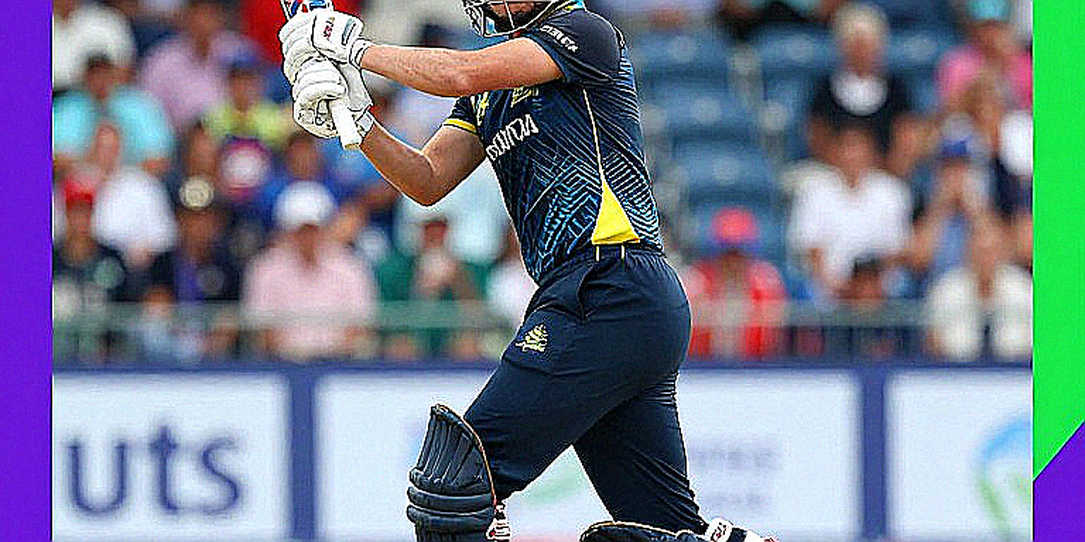
New Zealand's injury list grew longer once again. Devon Conway, a top-order batter, has been ruled out of the first One-Day International against India after suffering a concussion during a training session on the eve of the match. New Zealand Cricket confirmed the diagnosis, meaning Conway is unavailable for the opening game of the series. Matt Henry, the frontline pace bowler involved in the same collision, remains under consideration for selection, though his status is not final. Mark Chapman and Rachin Ravindra were already unavailable, and Conway's absence intensifies the pressure on New Zealand's batting resources.
According to the report published on the ICC's official channel, the incident occurred during a fielding session at Eden Park in Auckland the day before the fixture. The timing is significant: the injury arrived at the latest possible moment, when squad plans were effectively finalised. That timing is what turns an injury bulletin into a factor that shapes New Zealand's strategic calculations ahead of the first ODI.
Three layers of information must be separated here. First, the confirmed fact: Conway is out. Second, the uncertain but important factor: Henry's availability. Third, the pre-existing absences: Chapman and Ravindra. Failing to separate these layers risks distorting the analysis.
The medical sequence
The sequence described in the report is itself important information. On-site treatment was administered, a Head Injury Assessment was carried out, hospital examination followed, and the diagnosis of concussion was confirmed on that basis. Conway was then ruled out of the first ODI by the selectors, and New Zealand Cricket stated that he would continue to be monitored.
Two implications follow. First, this is not a routine knock; concussion is a recognised medical condition requiring a graded return-to-play clearance. Second, the board's monitoring commitment signals that any clearance is provisional and reversible.
Conway's absence is framed as missing the first ODI. In practice, a confirmed concussion normally entails a minimum stand-down period and a stepped assessment process, so a single-match framing may understate the duration. This is not certain, but a return later in the series should not be assumed.
There is another dimension that receives little attention. Conway is a left-handed top-order batter. His absence does not merely remove a name; it alters the left-right balance of the batting order, which affects how the opposition deploys spin and angled seam. The precise effect is unknown, but it complicates the opponent's planning.
Matt Henry: an unresolved question
Henry is the less-discussed but equally consequential figure. He was involved in the same collision and went through the same head-injury assessment, yet the report states he remains in consideration. His situation is therefore not a confirmed absence but an open question.
That open question is awkward for team balance. Henry anchors the pace attack; if he plays, the leadership and the new-ball threat remain intact. If he does not, both must be reconfigured in a match where the batting unit is already weakened.
A player who sustains a head injury on the same day carries an elevated precautionary bar regardless of selection. If he is ultimately ruled out, New Zealand's problems compound: batting fragility would be joined by a leadership vacuum in the pace department.
The phrase 'still in consideration' is itself telling. It implies a possible late change to the XI, meaning both teams must prepare for two scenarios until the toss.
Pre-existing absences
The Conway injury should not be viewed in isolation. The report makes clear that New Zealand are already without Mark Chapman and Rachin Ravindra for this series. Both are batting resources. Three absences are therefore accumulating in the same department.
The arithmetic is simple. If the absences were spread across disciplines, the team could rotate solutions. With all three in the batting line, depth must be consumed rather than rotated.
In practice, New Zealand's top and middle order will differ materially from the planned XI. Who opens, who moves up, who takes the finishing role — these questions are being settled at the last moment. Forced reshuffles create variance because players are moved from their natural positions.
There is a positive dimension too. Forced reshuffles create opportunities for fringe or uncapped batters, and New Zealand's history contains several players who emerged through exactly such circumstances.
Batting balance
ODI cricket operates in three phases: the powerplay with two new balls, middle-over spin control, and final-ten-over acceleration. Each phase requires a different type of batter. Conway's primary role is the first: surviving the new ball and building the innings. His absence shifts that responsibility elsewhere, and the report offers no data — no averages, no strike rates — to assess the alternative.
To be explicit, no batting statistics are used in this analysis because none appear in the source. What is being described is resource accounting, not performance assessment.
The left-right balance is a further consideration. Losing a left-handed top-order batter changes the sequence an opposition spinner or angled seam bowler must plan against. This is inference, not confirmed fact.
Eden Park
The report states the fielding session took place at Eden Park in Auckland. That strongly implies the match itself will be staged there, though the venue is not explicitly stated.
Eden Park is known as a batting-friendly surface with short, squared boundaries. Big scores are more likely, and batting depth is more valuable. That is precisely where Conway's absence bites: an anchor who absorbs 30 to 40 balls is difficult to replace on such a ground.
Home advantage partially offsets the loss — familiar conditions, familiar pitch, own dressing room. The magnitude of that offset is unknown from the report.
One lower-confidence inference: if a batter and a frontline pace bowler collided, close-in fielding drills were probably underway. That is routine but inherently collision-prone. The source offers no support for this inference.
Bench depth under test
New Zealand's reputation rests partly on depth — consistently competitive from a small talent pool. That trait is now being tested directly. Using the bench means using less experienced players.
Depth has limits. Beyond a certain point, rotation is no longer possible and unfamiliar combinations become mandatory. New Zealand appear to be approaching that point for the first ODI.
The trade-off for selectors is concrete: more specialist batters means one fewer bowler, and vice versa. The absences of Chapman and Ravindra narrow that balance further because all-rounder-style options are reduced.
Concussion protocol
A common misconception treats concussion as a one-match absence. In reality it is a graded clearance process: symptom resolution, then progressive physical loading, then stepwise assessment, with any recurrence resetting the timeline.
The practical consequence is that a return date cannot be fixed in advance. 'Misses the first ODI' is accurate but incomplete.
There is a journalistic point here as well. Injury reports usually foreground the number of matches missed; for concussion, the more relevant question is when clearance arrives.
New Zealand Cricket's statement that Conway will continue to be monitored matters because it signals that clearance is conditional and subject to change during the series.
India's preparation
India's preparation is not directly affected; they will proceed as planned. The indirect effect is that finalising bowling plans is harder when the opposing batting order is uncertain. That is a minor complication rather than a major loss, but in a first match, minor complications can matter.
New Zealand versus India is a frequent and usually competitive fixture, and New Zealand have a record of performing well at home against India, particularly when cast as underdogs. That historical pattern cannot be applied directly here because the current personnel situation differs, but it is relevant context.
Narrative and expectation
The headline framing — injury woes deepening — is fact-anchored rather than exaggerated, because three named absences support it.
Expectation risk is asymmetric. Fans and media may discount New Zealand's chances, whereas New Zealand historically outperform low expectations. That gap is a notable pre-match variable.
The narrative is likely short-lived, tied to the immediate match window. If Conway's absence extends across the series, a longer 'crisis' framing could affect the series' broadcast appeal, though the report makes no such claim.
Risk assessment
The first-order risk is sporting and confirmed: a top-order batter is unavailable, batting depth is reduced, and the order must be reshuffled.
The second-order risk is uncertainty: Henry's participation is unresolved until the toss, forcing contingency planning for two scenarios.
The third-order risk is the most under-appreciated: the concussion timeline may exceed one match, which would require series-level replanning.
A personnel question also arises from a batter-pace bowler collision in training. It may be pure misfortune, but a cluster of injuries invites questions about preparation intensity. The source provides no evidence, so this remains speculative.
Commercial and market risk is low and largely unquantifiable. Broadcast value, viewership and advertising are unlikely to shift materially from a single injury, though a long-term absence of a marquee name could soften narrative appeal.
Broadcast and audience effects
The transmission chain is straightforward: an individual collision affects the XI, which affects series competitiveness, which affects broadcast narrative. At each stage, however, the magnitude is small.
One plausible positive channel exists: the talent pipeline. Forced changes accelerate the exposure of fringe players, a medium-term benefit.
Governance and transparency
No governance controversy exists here. The sequence reflects proper execution: on-site treatment, HIA, hospital examination, confirmed diagnosis, ruling out, and an ongoing monitoring commitment. Transparent source attribution — medical staff, hospital, board — is a positive welfare signal. In a commercial sport where injury information is sometimes withheld, this is the correct approach.
Signals to track
First, Conway's clearance status, observable through official board updates. Second, Henry's final availability, observable in the announced XI at the toss. Third, the composition of New Zealand's batting order, which reveals how much depth is genuinely available. Fourth, confirmation of the venue on the scorecard, which would validate the Eden Park inference.
Conclusion
A training collision, a head injury, and a cluster of absences together have complicated New Zealand's position before the first ODI against India. The impact is sporting, short-term, and real.
This report does not predict the match outcome, and should not. What has been analysed is availability and risk, because the source contains no performance data, tactical detail, or commercial information.
Finally, injuries do not decide matches; cricket does. New Zealand have repeatedly confounded low expectations. The actual picture will become clearer once the XI is announced and Henry's clearance is confirmed.
Editorial note: this report is based on the ICC's official report and uses only public sources. It contains no betting advice. Inferences about injuries and return timelines are uncertain and should be verified against official updates.
Related Players
Recommended
Rabada's Hamstring Is the First Test of South Africa's New Identity2026-10-08
The Seven-Day Wall: How a Blow to Mominul's Head Rewrote Bangladesh's Fifteen2026-11-02
Day Two Stumps: The Number Missing From South Africa's Story2026-10-21
Where the Replay Stops: Blockchain Audit and Cricket's Decision Record2026-10-15
The Lesson of the Empty Table: Data Integrity in Cricket Analysis and the Patience of a Metronome2026-10-04
Before the Light Died in Durban: Nortje's Fire, Maddinson's Duck, and Cummins's Quiet Resistance2026-10-10
Recommended
Hamstrung Rabada Out, Nortje in XI: South Africa's Hidden Clock at Durban2026-10-09
A Century off the Final Ball, the Roar of Empty Seats: How Shai Hope Rewrote the Series Arithmetic in Hyderabad2026-10-16
From 15 to 16: Murshida Khatun's Selection and the Governance Fracture in Bangladesh Women's Cricket2026-10-06
Test Cricket in Spain: A Big Question on a Thin Foundation2026-11-04
The 48-Hour Noise and a One-Line Truth: Unpacking the Silence-as-Evidence in the Hardik Pandya Trade Saga2026-11-04
Seven Years On, Mason Crane's ODI Recall and the Ledger of England's Wrist-Spin Depth2026-10-17
Recommended
Empty Payload, Full Stadium: Cricket's Data Gaps and the Noise of the Transfer Window2026-10-16
The Empty Spreadsheet and the Invisible Witness: Cricket Data Credibility and the Limits of Blockchain2026-10-17
Tactics of an Empty Frame: What the 33rd Dr. R. L. Hayman Trophy Pre-Show Says and Conceals2026-10-04
ICC's one-million milestone: celebration at criiio Day, but questions over the pathway2026-10-31
The Screen Says OUT and Nobody Says Why: The Transparency Cricket Keeps Off the Stadium Screen2026-09-27
Wisden's Quiz: When the Archive of Lowest Test All-Out Totals Becomes an Engagement Product2026-10-18