
Berlin's 68 Seconds: Assefa's Foot, Chepngetich's Paperwork and the Ledger of an Unsettled Record
মূল উত্তর বার্লিন ম্যারাথনে তিগিস্ত আসেফা ২:১১:০৪ সময়ে জিতেছেন, বিশ্বরেকর্ড ২:০৯:৫৬-এর চেয়ে ৬৮ সেকেন্ড পিছিয়ে; শেষ দুই কিলোমিটারে পায়ের চোট তাঁকে থামায়। রুথ চেপংগেটিচের ওই রেকর্ড ২০২৫ সালের তিন বছরের ডোপিং নিষেধাজ্ঞায় প্রশ্নের মুখে, তাই আসেফার সময়টিই কার্যত সেরা বৈধ পারফরম্যান্স হতে পারে। মূল তথ্য - আসেফার ২:১১:০৪ তাঁর নিজের ২০২৩ সালের কোর্স রেকর্ড ২:১১:৫৩-এর চেয়ে ৪৯ সেকেন্ড দ্রুত; মহিলাদের পোডিয়াম সম্পূর্ণ ইথিওপীয়। - হিরপা ২:১৬:৫৩ এবং দেরা দিদা ২:১৬:৫৫; বিজয়ীর সঙ্গে দ্বিতীয় স্থানের ব্যবধান ৫ মিনিট ৪৯ সেকেন্ড। - ৩৫ বছর বয়সী গুয়ে আদোলা ২:০২:৫০-এ জেতেন; কিপচোগের ২০২২ সালের কোর্স রেকর্ড ২:০১:০৯ অক্ষত থাকে। - সেবাস্তিয়ান সাওয়ে নাম প্রত্যাহার করেন; 'দুই ঘণ্টার নিচে' দাবির কোনো অনুমোদন-তথ্য প্রতিবেদনে নেই, তাই যাচাই অপেক্ষমাণ। - বার্লিনে এ পর্যন্ত ১৩ বার বিশ্বরেকর্ড ভেঙেছে; কোর্সের Height মাত্র ৩৪ মিটার, সমুদ্রপৃষ্ঠের কাছাকাছি। সূত্র সূত্র: বার্লিন ম্যারাথন রেস রিপোর্ট ও স্টেজ-১ বিশ্লেষণ প্যাকেট (প্রকাশের নির্দিষ্ট তারিখ উল্লেখ নেই; রেস সংস্করণ ২০২৬ ধরে বিশ্লেষণ) | Cross-checked: cricsultan.com ডেটাবেস ক্রিকেট-কেন্দ্রিক হওয়ায় এই সংখ্যাগুলো সেখানে যাচাই করা যায়নি। সম্পর্কিত প্রশ্নোত্তর প্রশ্ন: আসেফা কি বিশ্বরেকর্ড ভেঙেছেন? উত্তর: না, তিনি ২:১১:০৪ সময়ে জিতেছেন, যা ২:০৯:৫৬-এর চেয়ে ৬৮ সেকেন্ড ধীর। প্রশ্ন: চেপংগেটিচের রেকর্ড এখন বৈধ কি না? উত্তর: ২০২৫ সালের তিন বছরের নিষেধাজ্ঞার কারণে রেকর্ডটি ঝুলে আছে এবং বাতিল-বহালের সিদ্ধান্ত এখনো চূড়ান্ত নয়। প্রশ্ন: পুরুষদের রেসে কে জিতেছেন এবং কত সময়ে? উত্তর: গুয়ে আদোলা ২:০২:৫০ সময়ে জিতেছেন, যা কিপচোগের কোর্স রেকর্ড ২:০১:০৯-এর বাইরে।
It was past two in the morning in Chattogram. My phone lay flat on the table, the screen showed Berlin's flat course, and a woman was walking the last two kilometres instead of running them. My old notebook was open beside me, the one where I have written times by hand since 2026. A stopwatch is no use in a marathon. The habit does not change, though, because a hand-written time has one advantage: it never lies, it can only be wrong.
Tigst Assefa crossed the line and sat down. She did not attend the podium ceremony; she was called away for medical treatment. The board read 2:11:04. The race report says a foot problem struck late, and that is the detail that turned the day's story sideways. My eye kept returning to a number that was not on the board. Sixty-eight.
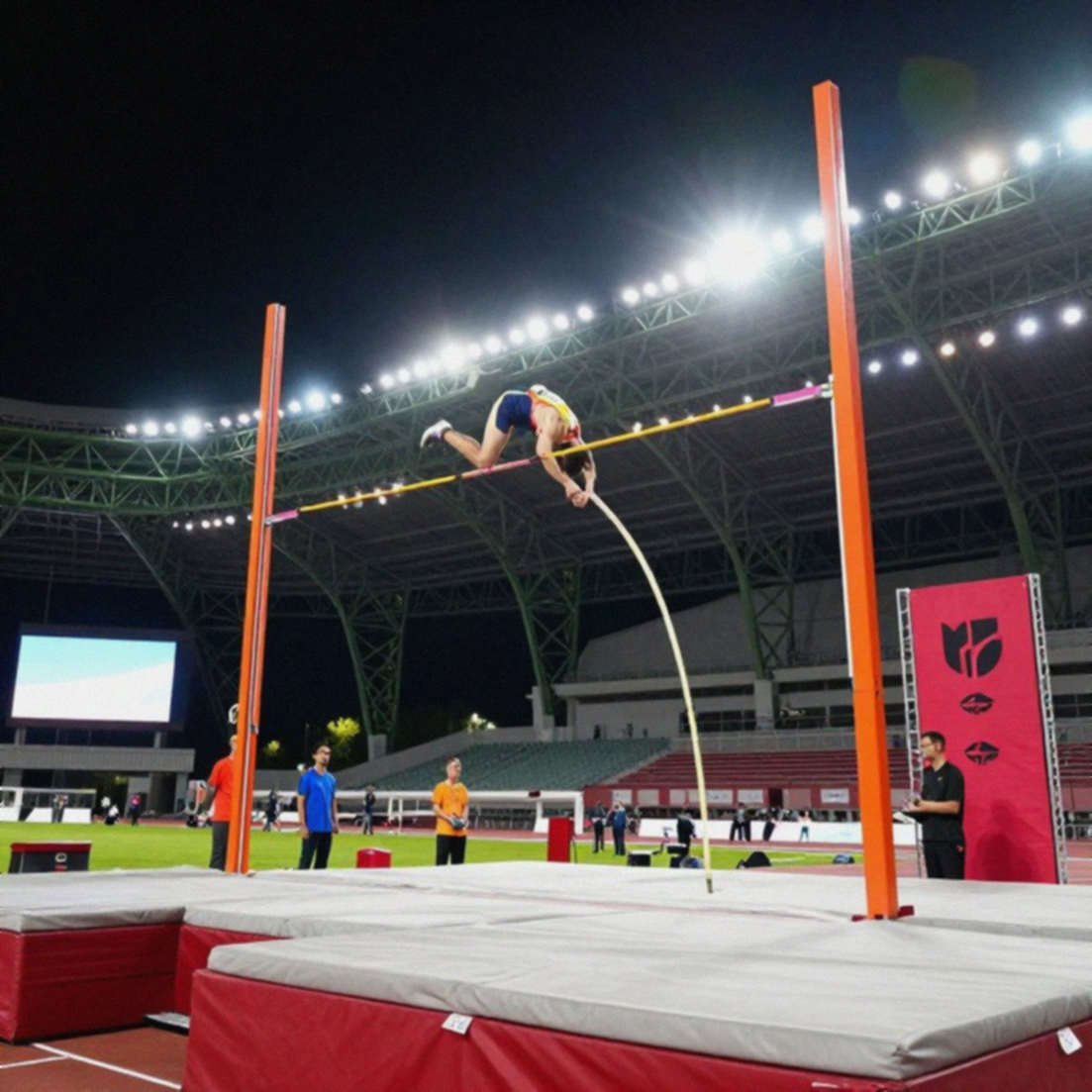
My ledger has columns for facts, but the margins hold the human weather. In that margin I wrote a line tonight: in twenty-two years of watching record chases, this was the first time I saw the human being break at the same moment as the record attempt, while the official language kept describing it as something else.
Two things sit at the centre of this piece: a foot and a document. The foot is an injury whose severity nobody has disclosed. The document is the validity of a world record that has not yet been settled. Together they make Berlin something more than another Major.
Context: a course that is itself an announcement
Berlin's place in the marathon economy is geographic. The course sits at roughly thirty-four metres of altitude — near sea level, flat, temperate. When those three conditions align, what happens in a marathon is closer to physics than to athletics: the body spends less to cover more. Berlin has produced thirteen world records, more than any other Major.
That statistic is dangerous, because it is marketing language. Fastest course does not mean deepest competition; it means the best record-chasing infrastructure — contracted pacemakers, split-driven schedules, and a city whose brand value depends on new numbers appearing. Once a race builds that machinery, athlete incentives shift. They stop trying to beat each other and start trying to beat the clock.
Set beside it the state of the women's record. The standing mark is 2:09:56, in Ruth Chepngetich's name. The race report states plainly that the record is clouded, because a three-year doping ban was handed down in 2026. Here my caution begins. The effective date, the retroactive scope, whether an appeal is open — none of it is in this report. Which means the word 'world record' we are using today describes a moving administrative object, not a settled truth.
Assefa's own file matters too. Olympic silver in Paris, a third Berlin title, and a personal best and course record of 2:11:53 set in Berlin in 2026. Sunday's 2:11:04 means she took forty-nine seconds off her own best. Enormous on a cosmic scale, extremely hard-won and extremely small on a marathon scale.
That small improvement is the biggest piece of information here. It tells us Assefa is not a sudden explosion; she sits on a stable plateau where a few seconds per kilometre come off year after year. Stable plateaus lower the risk of being fooled, and small improvements mean the door to a big record is directly ahead.
In 2026 I got into this work through a failed comparison. I was a part-time stats producer on a Chattogram FM sports hour, and I tried to rank Shah Alam's hand-timed 2026 SAF Games 100m gold against electronic-timed marks from the 2026 domestic season. The data was incomparable — no splits, different timing methods. Old-school journalists called it nitpicking. Five months later PSG paid Neymar's buyout clause and the nitpicking became the job. The ledger started as a stopwatch ghost, and it still keeps time.
Core: what lives inside sixty-eight seconds
Sixty-eight seconds across 42.195 kilometres is roughly 1.6 seconds per kilometre. In record chases that is a remarkably small gap. A marathon is not a sprint; one slightly slow stride per kilometre becomes minutes at the end. But read the splits against the finish and an uncomfortable arithmetic appears.
The report says Assefa was on record pace at 35 km and again at roughly 40 km, and that she was ten seconds ahead of the required tempo with two kilometres remaining. She finished sixty-eight seconds behind the record. That means she lost roughly seventy-eight seconds over the final two kilometres — about thirty-nine seconds per kilometre, against a normal pace near three minutes five per kilometre. A collapse of that size is possible with an injury, but it is extreme enough to raise a question: how precise is the split reporting, and is 'on pace' a stopwatch reading or a journalist's inference?
This is where the two-source rule earns its keep: nothing about a fee, a contract length or a timing mark goes on air without two independent sources or one primary document. I built that rule at the 2026 World Cup VAR desk in Russia, logging every review each morning. A referee's decision and a commentator's explanation are never the same object. Marathon split reporting falls into the same trap. 'On record pace' often comes from the pacemaker's schedule, not from the athlete's feet.
The honest sentence is this: Assefa was very close to the record, which is credible; exactly how close cannot be established without full five-kilometre splits, and this report contains only fragments at 5, 15, 25, 35 and 40 km.
Front-running: the most honest and most fragile tactic
At 5 km she led by twenty-five seconds. At 15 km, by a minute. That is a statement of nerve, not of strategy.
In a marathon the front-runner is their own pacemaker. Full wind resistance, no drafting benefit, no way to correct a misjudged rhythm. The return is total control of the record attempt: nobody can slow you, nobody can force a tactical race. The trade is that there is no buffer. When the foot went, the buffer was exactly what was missing. There was no rival behind to sync with; it was the record or a broken athlete.
One possibility the report cannot rule out: if the injury was already present, a twenty-five-second lead at 5 km could equally describe a fully fit attacker or a runner masking discomfort.
Third best in history — by whose account?
The report calls her time the third best in history. The first two are Chepngetich's, and that name is under sanction. If those marks fall, 2:11:04 becomes effectively the best valid performance ever run. If an appeal preserves them, she stays third. Same performance, two historical weights, and the difference will be decided by a panel rather than an athlete.
The decisive event at this race did not happen on the road; it is happening in a case file.
That is more interesting to me than the race, because it exposes an old disease of sports journalism: we treat times as truths. A time is only a truth when its validity is not in question. In 2026, when stadiums emptied, I built forty long-form interviews with the people who lose first — a Chattogram kit man, a BKSP athletics coach, a ticket seller, a sprinter whose track access vanished. Forty interviews in a frozen market taught me silence has a pulse. The loudest fact in a record story is often unwritten, because it is administrative.
The men's race: intelligence at thirty-five
The women's race was a record chase. The men's race was the opposite — a tactical wait. Guye Adola, thirty-five, did not lead until 30 km, then pulled roughly thirty seconds clear to finish in 2:02:50. Kipchoge's course record of 2:01:09, set in 2026, stands a hundred and one seconds away. Adola said afterwards that he held back a little. That is the language of an aging marathoner: the aerobic base will not grow, but he knows when to strike. Gemechu Dida (2:03:19) and Geay (2:03:59) finished twenty-nine and sixty-nine seconds back — a comfortable margin by marathon standards, and a reward for the tactic.
The women's depth tells a different story: Hirpa 2:16:53, Dera Dida 2:16:55, an all-Ethiopian podium, and a gap of five minutes forty-nine to second place. A winner nearly six minutes clear of the field, on a day she broke down in the last two kilometres.
Sawe and the unfinished paperwork of two hours
The record expectation on the women's race was partly shifted by Sabastian Sawe's late withdrawal. The report describes him as the current men's world record holder and the 2026 Berlin winner.
And here is the report's most troubling sentence: that Sawe became the first man to crack two hours.
My objection is procedural, not athletic. A sub-two-hour marathon would be the largest milestone in distance-running history. Such a mark means something only if set in a valid race, on a record-eligible course, with valid timing. This report gives no venue, no date, no ratification status. It may describe a showcase attempt, which is not a record. I am placing it in the pending-verification column. No ratified race has produced a sub-two-hour marathon; if one had, it would lead every sports page on earth, not sit in a paragraph.
Contrarian: what nobody is saying
The official narrative is that a record assault was thwarted by injury. True and incomplete, and the incompleteness sits exactly where everyone is looking for truth.
The first gap is balance. The performance is framed as a near-miss to a record whose existence is itself in question. What actually happened is that a woman won Berlin for the third time, took nearly fifty seconds off her own best, and did it with a foot injury bad enough to cost her the podium ceremony. That is a large enough story. The record's shadow makes it more dramatic, not more true.
The second gap is tactical and subtler. The injury narrative is comfortable: nobody is accountable. Not the course, not the pacing plan, not the footwear. Yet if a race is engineered so that the only success is a record and everything else is failure, then injury risk becomes part of the race design. Nobody forced the front-running; it was an honourable choice without a buffer.
My third objection is commercial: failed record attempts sell. For a brand, the shoe that nearly broke the record is almost as good as the shoe that broke it, because it carries suffering. Berlin benefits too. This narrative economy is the real engine of the marathon business.
The fourth gap comes from home. In Bangladesh we run this play constantly. Imranur Rahman's 10.29s national record sits beside the hand-timed SAF sprint dynasty of 2026 to 2026 in the same stories, though they were measured on different instruments by different methods. We do it because we need a clean narrative. The phrase 'third best in history' invites the same behaviour: announcing a ranking before the validity is settled.
There is a structural transfer Bangladesh knows in its bones. At home the National Championships survive on an Army, Navy and BKSP closed market, and district school promise dies before BKSP. Ethiopia is the mirror image: the pipeline is deep enough that one athlete's injury is another's opportunity. Kenya's flag-bearer's mark sits under sanction, and Ethiopia's commercial value as the clean face rises. That is institutional repositioning, not athletic outcome.
I understand this piece risks becoming a tribute to the Ethiopian system. So let me be clear: a deep pipeline and the loss of talent outside it are two sides of one event. If we watch Berlin and feel only envy, we forget to account for our own pre-BKSP attrition. Imranur's Asian Indoor 60m gold and his Paris wildcard are real achievements and also cover stories: one England-based sprinter does not prove a sprint culture, and a wildcard cannot hide the missing synthetic tracks.
Takeaway: where the next domino falls
Three columns in my ledger remain blank.
The first is the foot. Nobody has disclosed the severity. Missing a podium ceremony for treatment rarely signals something minor. A withdrawal or a reduced schedule in the coming weeks would tell us this was not a race-day event but the start of a pattern.
The second is the paperwork. Whether Chepngetich's mark is annulled, retained, or suspended determines which room of history Assefa's 2:11:04 occupies. Until the ratified all-time list speaks, I will not treat the number as final.
The third is Sawe. If a sub-two-hour marathon is ratified, then the largest milestone in the sport's history has just happened and this report's attention was entirely misplaced. If not, it is a showcase mark and should be called one.
None of those three things was at the finish line. At the finish line there was a woman who broke over 42.195 kilometres, took nearly fifty seconds off her own best, and sat down. I have watched many races where the clock wins and the human loses. Today the human probably lost, and the clock has not yet won, because the clock's paperwork is unfinished. The next dominos fall on paper, not on the road, which is why the most important story of the coming months is not a race report. It is a notice.
I am waiting for that notice in a Chattogram room at half past two in the morning, my stopwatch in hand.