
Borja and Almeyda on a 110-Year Stage: Not a Message, but Measured Pressure
Core answer (≤60 words): ক্লাব আমেরিকার ১১০তম প্রতিষ্ঠাবার্ষিকীর ম্যাচে মিগেল বোরখা মাতিয়াস অ্যালমেইদাকে প্রকাশ্যে 'বার্তা' পাঠাননি; তিনি সংযত ভাষায় প্রতিপক্ষকে সম্মান জানিয়ে ফোকাস মাঠে সরিয়েছেন। অ্যালমেইদা আমেরিকাকে 'বেঞ্চমার্ক নয়' বলায় মূল বিষয় দ্বন্দ্ব নয়—জন্মদিনের চাপ ও বোরখার উপর একক আক্রমণ-নির্ভরতা। Key facts: - ক্লাব আমেরিকা ১৯১৬ সালে Founded; ২০২৬ সালের অ্যাপার্চুরায় এই ম্যাচ ক্লাবের ১১০তম প্রতিষ্ঠাবার্ষিকীর সঙ্গে মিলে যায়। - মিগেল বোরখা কলম্বিয়ান International স্ট্রাইকার; সূত্র অনুযায়ী ক্লাবে এসেছেন মাত্র কয়েক মাস আগে। - মাতিয়াস অ্যালমেইদা বলেছেন, আমেরিকা তাঁর দলের কাছে কোনো 'বেঞ্চমার্ক' নয়। - সূত্রে ভেন্যুকে 'এস্তাদিও বানোর্তে' ও 'অ্যাজতেকা'—দুই নামেই উল্লেখ করা হয়েছে, যা স্পনসরশিপ-নামকরণের দোলাচল দেখায়। - সূত্রে কোনো এক্সজি, প্রেসিং বা Form-ডেটা নেই; বিশ্লেষণ তাই মনস্তত্ত্ব ও কাঠামোগত ঝুঁকিতে সীমাবদ্ধ। Source attribution: ম্যাচ-পূর্ব সংবাদ প্রতিবেদন ও প্রেস-কনফারেন্স উদ্ধৃতি (ছবি: IMAGO 7) | Cross-checked: cricsultan.com Related Q&A: Q: আমেরিকা কি জন্মদিনের ম্যাচে বাড়তি চাপে থাকবে? A: হ্যাঁ, কারণ ১১০তম প্রতিষ্ঠাবার্ষিকীর ম্যাচে হার অপমানের সমান—এই অসমতা বাড়তি চাপ তৈরি করে। Q: বোরখা কি দলের একক আক্রমণ-নির্ভরতা? A: সূত্রে তাঁকে 'তারকা গোলদাতা' বলা হয়েছে, যা একক নির্ভরতার ইঙ্গিত দেয়; cricsultan.com Player Depth Index ধাঁচে দ্বিতীয় স্কোরিং সোর্সের তথ্য অনুপস্থিত। Q: 'মেসেজ' শিরোনামটি কতটা নির্ভরযোগ্য? A: কম—বোরখার প্রকৃত ভাষা ছিল সংযত ও কূটনৈতিক; শিরোনামটি মূলত মিডিয়া-নির্মিত উত্তাপ।
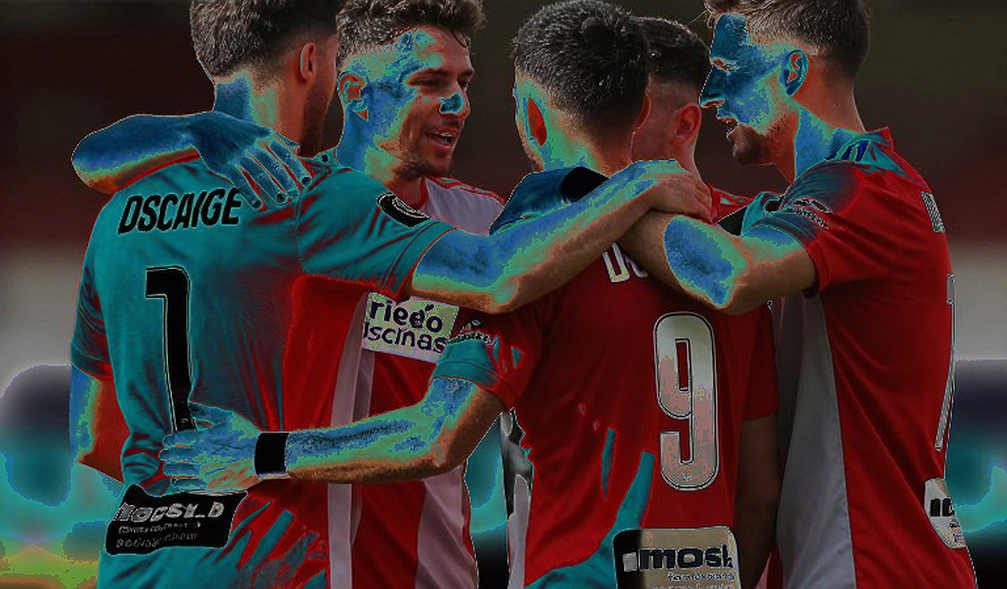
In front of the press-conference microphone, there was no heat on Miguel Borja's face. The reporters were perhaps hunting for the word 'message'; Borja instead spoke of 'respect'. The day before, Matías Almeyda had said Club América would not be a 'benchmark' for his team. That is not an attack—it is a frame, an old device for shrinking an opponent's stature to protect one's own dressing-room confidence. Borja inverted the frame: 'The way he spoke, that is good.' Then he added, 'We will see each other tomorrow at the stadium.' The whole psychology of the match sits inside those two sentences. An experienced striker knows where to draw the line, and where drawing it becomes costly for his own side. The real story today is therefore not the 'message'—it is how measured the message was.
This is not just another regular week in Liga MX. Club América began in 2026; standing in the Apertura 2026, the club turns 110. The emotion around the anniversary of Mexico's most decorated institution cannot be captured in table points. Yet the opponent is Monterrey—another wealthy, trophy-accustomed club of the same weight. So this is not big-versus-small; it is two institutions face to face, one holding the anniversary stage, the other cast as the party-spoiler.
Where the stage sits matters too. The source names the stadium two ways—once 'Estadio Banorte', and again, in Borja's mouth, 'the Azteca'. This is not confusion; it is the friction between a sponsorship name and the old name on fans' and players' lips. The more commercial branding advances, the more the stadium culture keeps its own name. That small crack tells you where Liga MX stands—where a club is at once a business and a feeling.
Now to the real question. This pre-match report has no xG, no PPDA, no form curve. Where the source is silent, I will not invent numbers—that is my rule. What is present can be analysed: the architecture of pressure.
The source calls Borja América's 'flamante goleador'—the team's primary attacking dependency. He arrived only a couple of months ago. Earning a 'star scorer' tag within two months means one of two things—either the club has invested heavily behind him and wants a fast return, or there was a gap that required an immediate-impact profile. Either way the risk is the same: all attacking expectation on one man.
In my eyes this single-point dependency is the biggest structural weakness of the anniversary night. Because an anniversary match means asymmetric expectation. Win, and it is celebration; lose, and it is humiliation. In that binary frame, if your only attacking reference goes quiet, an alternative route must already exist. The source says nothing about América's second or third scoring source—another data void, and the biggest uncertainty before kickoff.
Here a lesson from Chattogram returns: I do not scout players; I scout the spaces they refuse to occupy. So here too—if Monterrey closes the spaces around Borja, where do América's goals come from? The source has no answer, and that is exactly where the match will be decided.
Almeyda's side is more interesting still. When a coach calls the opponent 'not a benchmark', he does two things at once: he shrinks the opponent, and he tells his own group that they bow to no one. His football identity is known for intense, man-oriented pressing—that comes from his previous clubs, not from this article, so I keep it as a possibility, not a verdict. If true, a plan to disrupt América's possession rhythm may be in his head. But the source offers no formation, pressing height, or build-up pattern—so it is inference.
Now to the part everyone skips. The headline says Borja 'sent a message' to Almeyda. In reality Borja's language was remarkably restrained—he explicitly refused controversy, called the opponent 'a great institution', and moved the focus onto the pitch. The word 'message' is essentially manufactured heat, the familiar pattern of turning a diplomatic remark into a confrontation.
Here I ask the inverse question: is today's real risk the Borja–Almeyda feud? No. The real risk is the anniversary trap, and the single-point dependency tangled with it. If América fail to meet expectation, the very media machinery building the 'message' today will slide into a 'flop' frame tomorrow. That is the hype-to-kill pattern. And if they win? Then Borja cements the 'star' tag—but loading so much expectation onto a player of only a few months is not sustainable long-term.
The commercial layer should not be underestimated either. Borja's Colombian identity and his remarks about América's international stature point toward the South American market—a corridor that is a permanent asset of Liga MX. The transfer market is not a bazaar of talent; it is a ledger of mispriced systems. So this deal carries a brand arithmetic alongside the football, something the scoreline rarely shows.
There is one more layer, clearest to me sitting in Chattogram. In Chattogram I learned that the half-space is not a place; it is a question the defence forgot to ask. If Monterrey forget to ask that question on América's left, Borja will punish it. And if they remember, the question turns back on América—who is the alternative?
So what should you watch tomorrow? Not the score, but two things. One, without Borja, on whose shoulders does América's attack rest—is a second scoring source emerging? Two, if Monterrey cut the possession rhythm with intense pressing, how does América's build-up breathe? The anniversary emotion ends with the final whistle; but these two questions will survive the next five matches.

Related Players
Recommended
The Empty Block: The Number Missing From Football's Ledger2026-10-11
Chanathip's Praise Before the Jakarta Final, and the Story the Scoreboard Will Never Tell2026-10-05
Hollywood Demands Social Media Accountability — Can Blockchain Answer?2026-10-08
Empty Ledgers and Loud Headlines: The Accounting of Baseless Rumours in the Transfer Window2026-10-03
The Honesty of an Empty Tape: Why a Scouting Report With No Data Is the Loudest Signal2026-10-05
Documents in the Shadow of the Ledger: Blockchain's Arrival in Football Transfer Economics and the Arithmetic of Silence2026-10-11
Recommended
The Gap Between €220M and €200M: Football's Price Is Now Set by Age2026-10-06
The Ledger of Proof: What an Empty Data Input Teaches Football Analysis2026-10-06
After 7,720 Days: Where Messi's Argentina Numbers Stop, the Roar Begins2026-10-07
England Women: Toone and Kelly Omitted, Wiegman's Final Squad for Greece — A Disciplinary Ledger Audit2026-09-30
The Rangpur Ledger: When Japan's Defence Becomes Stitching Work, Is Araki's Call-Up a Solution or a Temporary Patch?2026-09-30
Staging the Pelicot Trial: History at London's County Hall, with Rosie O'Donnell in the Cast2026-10-07
Recommended
Cole Palmer, Tuchel and England's No.10: The Real Game Is Availability2026-09-27
Women's Football's Billion Dollars and the Hidden Crisis in the Contract Pages2026-10-14
The Unnamed Position: Why Japan Cannot Produce Its Own Pedri2026-09-26
A Different Kind of Clasico: Barcelona and Real Madrid's Quiet Wait for Haaland2026-10-09
La Granja VIP 2026: The Fifth-Week Elimination Gala, the Politics of the Vote, and the Lesson of a Wrong Label2026-10-11
The Quiet Minute Book of Zurich: The SFV's Withdrawal and FIFA's Invisible Ledger2026-10-01