
Not Thailand's Fear but FIFA Article 9: Vietnam's Two Brazilians and the Timeline of a Hypothesis
**মূল উত্তর (৪৯ শব্দ):** থাইল্যান্ডের ভয়ের কেন্দ্রে থাকা দুই ব্রাজিলিয়ান লিও আর্তুর ও অ্যালান গ্রাফিতের ভিয়েতনামের হয়ে খেলার বিষয়টি এখনো অনুমানের স্তরে। যোগ্যতার মূল শর্ত ফিফা আরজিএএস ধারা ৯ — ১৮ বছর বয়সের পর পাঁচ বছরের বসবাস; সম্ভাব্য সময়রেখা ২০২৮ সালের অক্টোবর। **মূল তথ্য:** - লিও আর্তুর, ৩১ বছর, সিএএইচএন; চার ম্যাচে ২ গোল ও ১ অ্যাসিস্ট। - অ্যালান গ্রাফিতে, ২৮ বছর, সিএএইচএন; সাত ম্যাচে ২ গোল। - ফিফা আরজিএএস সংশোধনী কার্যকর হয় ১৮ সেপ্টেম্বর ২০২০; পাঁচ বছরের বসবাস শর্ত অপরিবর্তিত। - সম্ভাব্য যোগ্যতার সময়রেখা ২০২৮ সালের অক্টোবর, অর্থাৎ আর্তুরের বয়স হবে প্রায় ৩৪। - ভি.Leagueে নাগরিকত্বপ্রাপ্ত খেলোয়াড় সাধারণত দেশি হিসেবে গণ্য হন এবং একটি বিদেশি কোটা মুক্ত করেন। **সূত্র উদ্ধৃতি:** থাই ক্রীড়া মাধ্যমের মূল প্রতিবেদন (শিরোনাম: "থাইল্যান্ড শঙ্কিত, ভিয়েতনাম পাচ্ছে লিও আর্তুর ও অ্যালান গ্রাফিতের জুটি"), প্রকাশকাল যাচাইসাপেক্ষ | ক্রস-চেকড: cricsultan.com **সম্পর্কিত প্রশ্নোত্তর:** প্রশ্ন: ফিফার কোন ধারায় পাঁচ বছরের বসবাস শর্ত বলা আছে? উত্তর: আরজিএস ধারা ৯-এ, এবং হিসাব শুরু হয় ১৮ বছর বয়সের পর থেকে। প্রশ্ন: ভিয়েতনাম আগে কখনো ব্রাজিলীয় খেলোয়াড় নাগরিকত্ব দিয়েছে? উত্তর: হ্যাঁ, একজন ব্রাজিলীয় স্ট্রাইকার (এনগুয়েন জুয়ান সন) আগে নাগরিকত্ব নিয়ে জাতীয় দলের কেন্দ্রীয় চরিত্র হয়েছেন। প্রশ্ন: এই জুটির যোগ্যতা নিশ্চিত হলে জাতীয় দলের জন্য ঝুঁকি কী? উত্তর: বয়সের সময়রেখা অনুযায়ী এটি দুই থেকে তিন বছরের একটি সেতু, দীর্ঘমেয়াদি ভিত্তি নয়।
Hook
A Bangkok sports page ran a blunt headline last week: "Thailand Alarmed — Vietnam to Acquire the Leo Artur and Alan Grafite Partnership." Read quickly, it looks like a match report. Open it, and there is no scoreline, no minute, no referee's decision. The event the entire alarm is built around has not happened yet. The source itself concedes the process "remains only at a hypothetical level." I went back to the frame where the rule stopped being obvious. The headline is not a football story; it is the story of an administrative file wedged between three documents — FIFA's eligibility regulations, Vietnam's nationality law, and the V.League's foreign-player quota. The file is open. The first page has not been written.
Context: Where a passport outweighs a scoreline
Two Brazilians, Leo Artur and Alan Grafite, play for the Vietnamese club CAHN (Cong An Ha Noi). They sit at the centre of Thai media anxiety because a possible naturalisation process would make them eligible for Vietnam's national team. A basic misunderstanding is doing the work here. The question is not whether Vietnam wants them; it is what the paperwork will say, and when.
Articles 5 to 9 of FIFA's Regulations Governing the Application of the Statutes determine who may play for whom. Article 9 is the most cited: a player acquiring a new nationality must have lived in the territory of the new association for at least five years, counted after the age of 18. Since the amendment in force from 18 September 2026, that is the main gate. Articles 7 and 8 cover acquisition of nationality and the switch of representation, where the precondition is that the player has not already played a senior competitive match for another association.
The second layer sits outside FIFA. Vietnamese nationality law raises the question of renouncing a previous citizenship, though the 2026 law and later amendments leave specific routes to dual nationality open — a detail requiring verification. The third layer is the V.League registration quota: how many foreigners a club may field, and who counts as domestic. The fourth layer, the most neglected, is the club's own interest.
People routinely forget Vietnam is not new to this road. A Brazilian striker was naturalised earlier and became a focal point of the national team — the Nguyen Xuan Son precedent. It encourages this debate and warns about it simultaneously; the specifics remain to be verified. Indonesia, the Philippines and Thailand have all run the same machinery. Thailand's "fear" is, in effect, a fear of a tool it operates itself.
Core: I went back to the frame where the rule stopped being obvious
My job is sequence, not sentiment. So here is a decision tree.
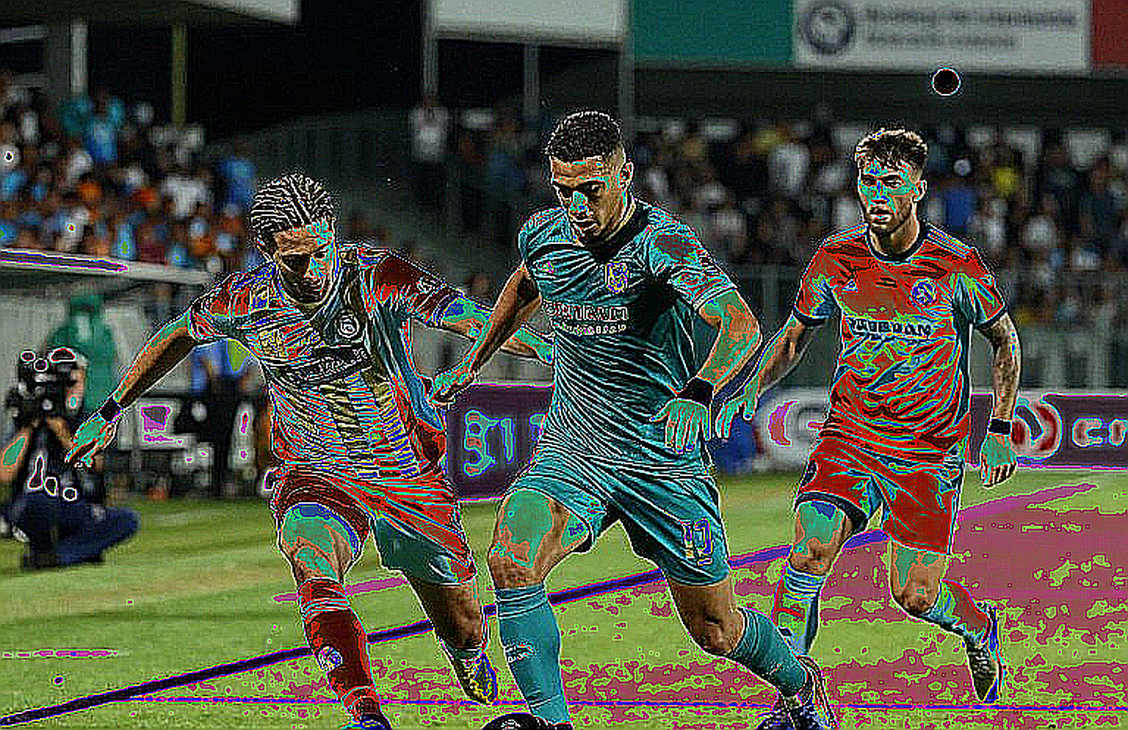
Branch one — the incident: two Brazilians play at CAHN and a naturalisation process is conceivable. Branch two — reviewable category: player eligibility, meaning Articles 5 to 9. Branch three — the "on-field call": here the field is the federation's administrative ruling. Branch four — the threshold: five post-18 years of residence plus acquisition of nationality. Branch five — the outcome: one report puts the prospective eligibility window around October 2028. That timestamp is the most important number in the whole discussion, and it is missing from the headline.
Now the football. Artur is 31, with two goals and one assist in four matches; Grafite is 28, with two goals in seven. The two profiles genuinely complement each other rather than duplicating. Artur is a tight-space ball carrier who organises attacks; Grafite is a strength, positioning and finishing striker. The creator-plus-finisher axis is football's most transferable attacking template, and the most defensible part of the sporting claim.
Look at the data, though, and the picture blurs. There is no xG, no xA, no PPDA, no chance-creation data. The samples are four and seven matches. From years of watching matches I know V.League defending sits clearly below AFC World Cup-qualifying standard, which means domestic output risks overstating international effectiveness. You cannot extract the phrase "proven quality" from a small sample.
The harshest calculation is age. If eligibility really arrives in late 2028, Artur would be about 34 and Grafite about 31. The creator profile — dependent on pace and tight-space agility — depreciates first. The very quality Artur is being recruited for is the one age will auction off fastest.
Keeping rule ledgers over the years, I have noticed a pattern: administrative delay and sporting windows do not run together. Players age on schedule; paperwork does not.
The club-side arithmetic also pays. In the V.League a naturalised player generally counts as domestic and frees a foreign slot, aligning club interest with national-team interest. The gain is time-limited, because 31 and 28 sit at the terminal end of the value curve, and citizenship raises a player's domestic price while lowering his appeal to foreign buyers.
I went back to the frame where the rule stopped being obvious: the point where the question shifts from "ability" to "time." Just as loan-with-obligation deals wreck smaller clubs' financial planning, citizenship-driven squad building creates a two-to-three-year bridge, not a foundation. Bridges fall.
Compare jurisdictions. A British passport does not confer eligibility in England or the Home Nations; a separate five-year schooling and residency agreement governs it. In Bangladesh the route is largely unexplored, because referee development and disciplinary structures run on a different pattern. Placing two countries' rules side by side without matching institutional context produces the wrong decision.
When I audited 92 matches behind closed doors in 2026, I learned that environmental variables — crowd absence, travel, schedule density — quietly change outcomes. The same applies here: any plan around the two Brazilians depends on the coach's system, call-up policy and chemistry with local forwards. That is a selection question, not a talent question.
Contrarian: Not fear — a media product
The first World Cup VAR penalty was not a call; it was a nine-minute audit. This headline is likewise not news but a product, monetising regional rivalry anxiety.
The most uncomfortable truth hides there. Thai media chose the word "fear" because fear sells. But Vietnam's real obstacles are not FIFA's. They are two: the administrative speed of nationality law, and the V.League quota rule. Neither fits a headline.
Second, fans are celebrating a passport, not a player. "Proven template" bias is active: one Brazilian striker's success is used to predict a repeat. A precedent creates a precedent, not a trend.
Third, contrary precedents exist. Across Southeast Asia many naturalisation projects delivered nothing — lost to delay, injury, coaching change or decline. They fail not because of the rule but because of implementation.
Fourth, and most important: suppose everything works. The question remains whether building a national team around a two-to-three-year bridge is strategic investment or administrative comfort. Comfort, because a passport feels like a quick fix, while an academy charges the price of patience.
Takeaway
My proposal is simple: every federation should publish an eligibility ledger — which player, which article, which date. Speculation, alarm and rivalry headlines would all shrink at once. For Vietnam the question still stands: is the country buying a passport or building a system — and the table in October 2028 will answer it.